The air in Houston corporate suites is chilled to a precise 68 degrees, but the maps on the wall are burning. For nearly a decade, the massive oil reserves stretching beneath the Venezuelan soil were treated by Wall Street like a ghost ship—vast, legendary, but entirely unreachable. Trillions of barrels of heavy crude locked away under a blanket of strict sanctions and diplomatic ice.
Then came the spark. Meanwhile, you can read other events here: Inside the NBA Finals Ticketing Crisis Nobody is Talking About.
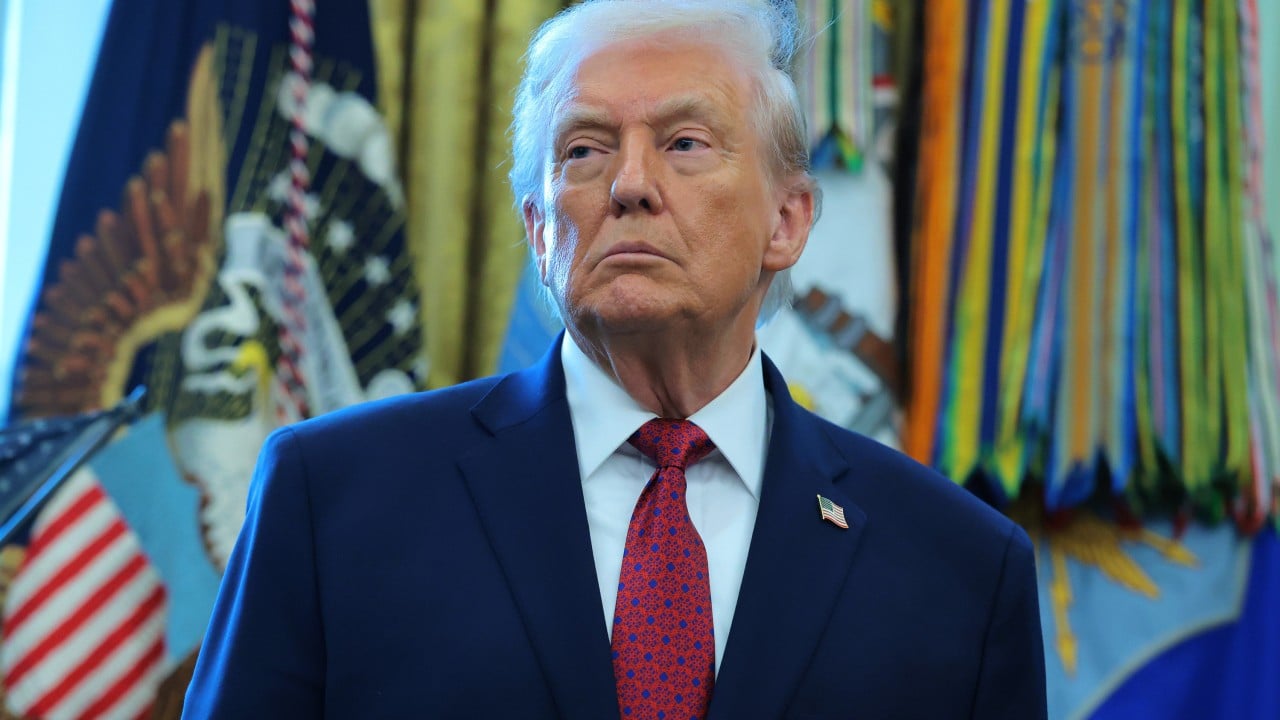
When Donald Trump floated the prospect of a $100 billion opening in Venezuela’s energy sector, it didn't just rattle diplomatic cages. It sent an electric jolt straight through the veins of risk-tolerant capital. Suddenly, the frozen tickers started moving. Private equity funds began quietly pooling capital. Old oil hands started dusting off contacts in Caracas. A gold rush was quiet, intense, and building momentum in the shadows long before the public took notice.
To understand the sheer scale of what is happening, you have to leave the boardroom and look at the dirt. To understand the complete picture, we recommend the excellent article by The Economist.
The Weight of Heavy Crude
Imagine trying to pump cold molasses through a straw. That is the physical reality of the Orinoco Belt. Venezuela sits on the largest proven oil reserves on the planet, but this is not the sweet, light crude that spurts easily from Saudi sands. It is thick. It is stubborn. It requires massive infrastructure, specialized diluents, and an uninterrupted flow of electricity just to keep it moving.
For years, that infrastructure has been rotting. Walk through the refineries of Puerto La Cruz or look out over the waters of Lake Maracaibo, and you will see a monument to decay. Rusting platforms tilt into the water like dying monuments. Pipelines leak into the soil.
But where a casual observer sees a environmental disaster, a specific breed of distressed-asset investor sees something else.
Value.
Consider a hypothetical fund manager we will call Marcus. Marcus spent the 2010s buying up fractured shale assets in West Texas. He knows how to squeeze blood from a stone. For guys like Marcus, the calculation isn't about whether Venezuela is stable today. It is about the delta—the massive gap between what an asset is worth when it is broken and what it fetches the moment the political gears shift.
When the political rhetoric in Washington shifted toward a potential $100 billion windfall, Marcus didn't wait for a formal bill to pass. He couldn't afford to. In the high-stakes world of energy arbitrage, if you wait for the green light, you are already too late. You buy when the sky is gray, hoping for dawn.
The Invisible Stakes of the Sanctions Game
The mechanism driving this sudden surge of investor adrenaline is complex, but it boils down to a high-stakes game of regulatory chicken.
For years, the U.S. Office of Foreign Assets Control (OFAC) held a tight noose around Venezuela’s state oil company, PDVSA. Doing business there meant risking catastrophic fines and reputational ruin. But the global energy map has warped significantly. With conflicts squeezing traditional supply lines and global demand refusing to plateau, Western economies are desperate for heavy crude—the exact kind required by complex Gulf Coast refineries to produce diesel and jet fuel.
The hunger is real.
The money started moving through intricate legal loopholes and specific, time-limited licenses. Chevron got a foot in the door early, proving that American majors could still extract value from the chaos. Now, the secondary wave of capital is arriving. These aren't the household names; these are the boutique hedge funds, the aggressive family offices, and the offshore vehicles willing to navigate the dense legal gray zone.
They are betting on a simple premise: policy follows necessity. If a political administration promises to unleash energy independence and drive down domestic fuel costs, the massive, untapped pool of Venezuelan oil becomes an impossible target to ignore. The $100 billion figure thrown into the public arena isn't just a random number; it represents the estimated capital required to rebuild the country’s shattered production capacity back to its historic peaks.
Reclaiming the Ghost Rigs
But how do you actually deploy billions of dollars into a country where the currency has historically fluctuated wildly and the legal system is a labyrinth?
You do it through debt.
Before the first new drill bit even touches the ground, the real battle is fought over Venezuelan bonds. Billions of dollars in defaulted sovereign and PDVSA debt have been trading for pennies on the dollar in secondary markets. For years, these bonds were radioactive. Wall Street firms banned their traders from even touching them.
But as the geopolitical temperature shifted, those pennies began to look like fortunes.
American funds began aggressively quietly buying up these distressed bonds. Why? Because in any future restructuring of the Venezuelan energy sector, those pieces of paper represent a seat at the table. They are the keys to the kingdom. If a fund owns enough defaulted debt, it can eventually swap that paper for physical assets—a percentage of a joint-venture drilling project, a stake in a shipping terminal, or direct access to a producing field.
It is a strategy born of pure patience and icy nerves.
The danger, of course, is that the floor can drop out at any moment. A sudden shift in foreign policy, an unexpected election result, or a sudden tightening of enforcement can instantly turn a prized portfolio back into worthless digital ink. Everyone playing this game knows the risks. They remember 2019. They remember the sudden freezes and the overnight losses.
Yet, the capital keeps coming.
The Reality on the Ground
While the financial engineering happens in Manhattan and Miami, the actual execution relies on a fragile, human network.
Think of the local engineers who stayed behind when the multinational corporations fled a decade ago. These are the people who kept the facilities running with nothing but duct tape, salvaged parts, and sheer pride. They know every valve, every temperamental generator, and every shifting current in the lake.
When a foreign fund partners with a local operator under a specialized license, it is these engineers who actually climb back onto the rusting platforms. They are the ones who face the heat, the blackouts, and the logistical nightmares of a supply chain that has been broken for a generation.
The return of American capital isn't just an abstract line on a spreadsheet for these communities. It means the return of regular paychecks in a stable currency. It means the local machine shops open their doors again. It means the tugboats get fresh fuel.
But it is a deeply uneasy alliance. The memory of sudden nationalizations and abrupt exits hangs heavy over every handshake. Trust is the rarest commodity in the Orinoco, far scarcer than the oil itself.
The Choke Point
The true bottleneck of this entire operation isn't a lack of money or a lack of oil. It is the physical capacity to export.
A pipeline can only hold so much pressure. A tanker can only hold so many barrels. Years of neglect mean that even if a fund successfully ramps up production at a wellhead, getting that oil to a refinery in Texas or Louisiana is a logistical nightmare. The deep-water ports are silted up. The dredging vessels have been abandoned.
This is where the $100 billion estimate reveals its true nature. It is not a prize to be won; it is a bill that must be paid just to get back to zero.
Investors are forcing themselves to answer a brutal question: how much are you willing to spend to build a road through a swamp when you don't even own the swamp?
The funds that are winning are the ones focusing on small, highly efficient interventions. They aren't trying to fix the whole system. They are isolating specific fields, repairing dedicated pipelines directly to secure terminals, and bypassing the broken state infrastructure entirely wherever possible. It is surgical investing. High margin, tight control, minimal exposure to the wider chaos.
The Ripple Effect Across the Gulf
The momentum generated by this shift is already rewriting trade routes across the Caribbean.
Shipping lanes that had grown quiet are seeing a resurgence of activity. Gulf Coast refineries, specifically designed decades ago to process the heavy, sour crude of the region, are recalibrating their systems. For years, these facilities had to rely on expensive, convoluted blends from various corners of the globe to mimic the specific chemistry they were built for.
The return of direct shipments feels like a homecoming for the machinery.
But the geopolitical stakes extend far beyond the balance sheets of Texas refiners. Every barrel of oil that moves from Venezuela to the United States is a barrel that doesn't move to state-backed buyers in Asia. It is a subtle, economic tug-of-war disguised as commercial enterprise. The private funds rushing in are acting as the vanguard of a broader economic realignment, pulling an isolated energy giant back into the Western orbit through the sheer, irresistible force of profit.
It is a reminded that capital rarely waits for history to write its final chapter. Capital prefers to hold the pen.
The sun sets over the water of Maracaibo, casting long, dark shadows across the metallic skeletons of the old rigs. Somewhere beneath the surface, the pressure is building, just as it has for millennia. The money will keep coming, flowing through the legal cracks and the political shifts, drawn inexorably to the dark wealth waiting in the dark.