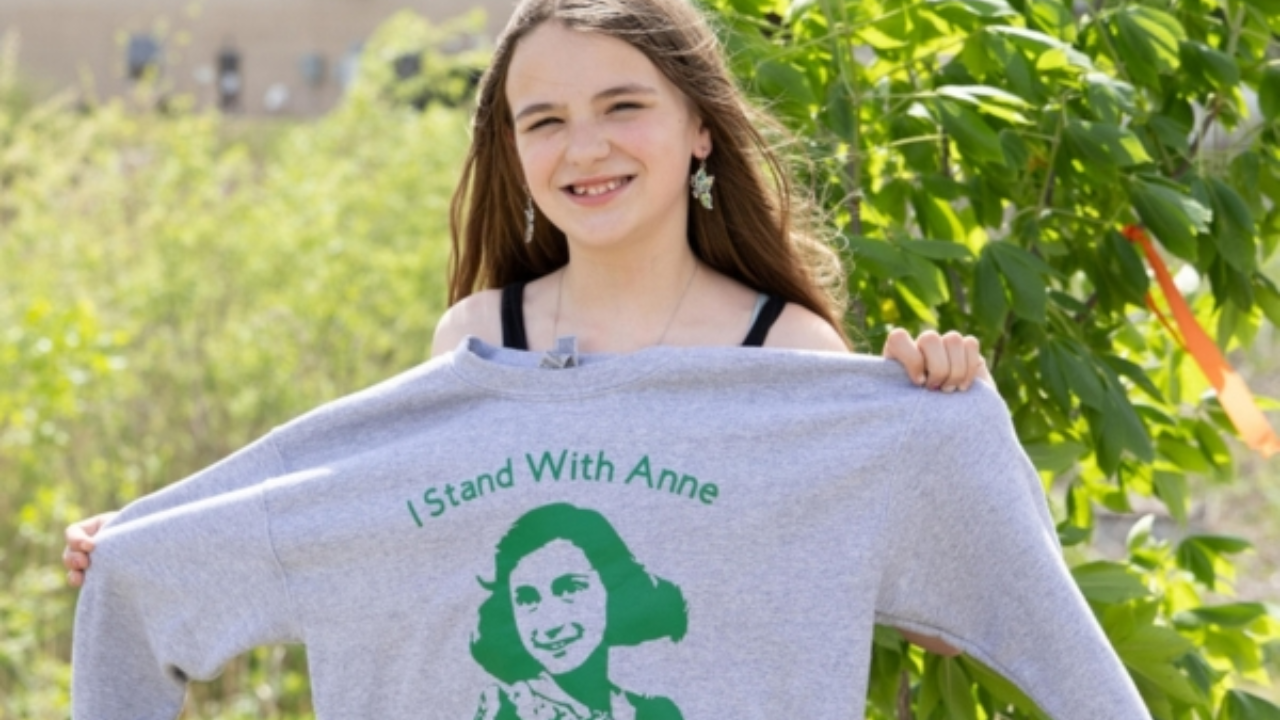
In the quiet town of Fairmont, Minnesota, a twelve-year-old girl named Natalie Flaherty managed to ship more than 100,000 handmade bracelets across fifty states and fifty countries, securing the prestigious $10,000 Gloria Barron Prize for Young Heroes. The media loves a neat narrative. A child reads about history, picks up a string of beads, and counters global bigotry one wrist at a time. It is a heartwarming snapshot for an evening broadcast. Yet beneath the viral headlines and the feel-good accolades lies a more complex architecture of youth activism, community mobilization, and the heavy psychological burden placed on children who step into the vacuum left by institutional failure.
When Natalie began her "I Stand with Anne" campaign at the age of ten, following a project that connected her to the life and diary of Anne Frank, the mechanics of distribution were modest. A Halloween idea snowballed into a logistical behemoth. Beads arrived in bulk. Packaging tables took over domestic living spaces. Postage costs mounted. Adults often praise youth initiatives of this scale as pure manifestations of generational hope, but they rarely examine the infrastructure required to sustain them. Grassroots movements of this size do not run on sentimentality alone; they require adult labor, financial backing, postal logistics, and a community willing to absorb the overflow of an adolescent's expanding crusade. If you found value in this piece, you should check out: this related article.
The broader cultural context surrounding this initiative is uncomfortable. We live in an era marked by a sharp resurgence of antisemitism and public xenophobia, documented meticulously by watchdogs across North America and Europe. That a child felt compelled to manufacture 100,000 reminders of historical atrocities is a indictment of our educational and political climate. Children do not naturally invent anti-hate campaigns in a vacuum; they react to the ambient hostility of the culture they inherit. When adults fail to police the boundaries of public discourse, children pick up the slack. The Gloria Barron Prize rewards the extraordinary efforts of young people, but every such award given for combating rising hate is also a quiet monument to adult dereliction of duty.
Consider the mechanics of the distribution network. Reaching fifty countries demands more than youthful enthusiasm. It requires customs declarations, international shipping fees, media coordination, and digital outreach strategies that rival small non-profits. The transition from a local craft project to an international symbol required a tight-knit Midwestern community to rally around a child's vision. Local civic groups, postal workers, family members, and online donors became the invisible scaffolding holding the project upright. Without this localized support system, the initiative would have stalled out within its first five hundred units, buried under the weight of international postage rates and administrative fatigue. For another angle on this story, refer to the latest coverage from The Guardian.
The financial injection of the $10,000 prize changes the trajectory for a middle-schooler navigating public attention. Suddenly, a civic gesture is professionalized. The paradox of youth heroism is that the moment an act of pure conscience receives institutional validation, it enters the machinery of public relations. Press releases go out. Interviews are scheduled. The child is cast as an ambassador of moral clarity for a world that refuses to fix its own fractures. There is a fine line between celebrating an inspiring initiative and voyeuristically consuming a child's emotional labor in the fight against historical ignorance.
We must ask what happens when the cameras drift away. The bracelets will continue to circulate, tied to wrists in classrooms from Minnesota to distant corners of the globe. But the deeper disease of prejudice will not be cured by plastic beads, no matter how sincere the intent. Real systemic change requires legislative courage, curricular integrity, and difficult conversations at dinner tables where hatred is often first normalized. Natalie Flaherty built a global bridge out of thread and plastic, but the rest of us are still standing on opposite banks, watching her cross it alone.