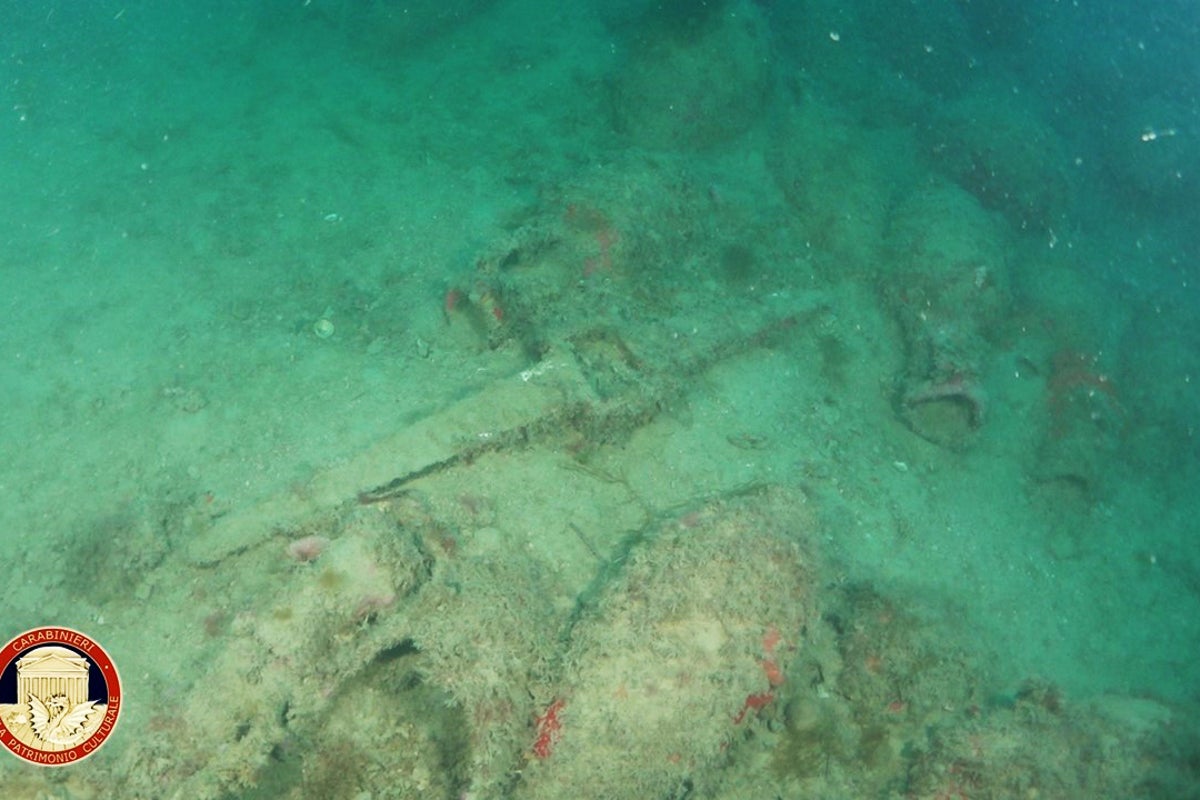
Every marine archaeologist and breathless headline writer loves a good nautical party story. Mention a newly discovered Roman wreck sitting two hundred feet down near some sun-bleached Mediterranean island, packed to the gunwales with hundreds of terracotta amphorae, and the collective media instantly defaults to the same tired trope. They call it an ancient booze cruise. They picture toga-clad patricians sloshing Falernian wine on the deck of a rolling galley, singing bawdy sea shanties, and living out a classical hedonistic fantasy.
It is lazy journalism, historical illiteracy, and a fundamental misunderstanding of how the ancient economy actually operated.
I have spent decades looking at maritime trade infrastructure, analyzing logistics bottlenecks, and tracking cargo manifests from the Punic Wars through the peak of the empire. I have seen multi-million-dollar research grants wasted on romanticizing what were effectively grim, high-stakes bulk cargo freighters. That two-thousand-year-old vessel sitting off the coast of Fiskardo or Ischia was not a floating fraternity house. It was an industrial-scale transport asset operating in an unforgiving, hyper-competitive logistics network.
Stop romanticizing ancient maritime commerce as a Mediterranean vacation. The reality is far more brutal, far more sophisticated, and entirely stripped of your modern romantic notions.
The Amphora Myth and the Gross Misunderstanding of Cargo
Let us dismantle the most pervasive misconception right out of the gate. When people see three hundred amphorae packed into a hull, their brains jump straight to consumption. They assume this ship was stocked with the ancient equivalent of fine vintage claret meant to be popped open at a senators' banquet.
That is not what an amphora is. An amphora is a shipping container. It is the corrugated cardboard box or the standard intermodal shipping container of antiquity.
Equating an amphora-laden shipwreck with a luxury drinking vessel is like discovering a sunken 210-foot container ship off the coast of Long Beach, seeing twenty thousand steel boxes marked "electronics," and concluding that the captain was running an Apple store for dolphins.
Those ceramic vessels carried wine, yes, but they also carried fish paste, olive oil, grain, and vinegar. More importantly, the wine transported in these bulk commercial freighters was rarely the prized, aged nectar poets write about. It was cheap, heavily adulterated ration wine. It was cut with seawater, seasoned with pitch, and spiked with lead acetate or herbs to keep it from turning to vinegar during a bumpy voyage across the open sea. It was the caloric fuel of the ancient Mediterranean proletariat. Slaves, legionaries, and dock workers drank it because water safety was a gamble and calories were currency.
When a ship went down with hundreds of these jars, it was not the Titanic carrying first-class champagne. It was a bulk carrier hauling low-margin commodities from an agrarian production hub to a high-density urban deficit center like Rome or Alexandria.
The Brutal Math of Ancient Logistics
To understand why these ships sank, you have to look past the romantic aura of the deep blue sea and examine the balance sheet of a Roman merchant, a negotiator.
Maritime transport was the only way to move mass volume in the ancient world. Overland transport by wagon was so punishingly expensive due to fodder costs and primitive road networks that doubling the distance overland could triple the price of goods. If you wanted to feed a million people in the city of Rome, you had to put things on water.
Yet, sea trade was a terrifying gamble. Shipwreck rates were astronomical. Insurance markets, while existing in embryonic forms of bottomry loans, carried punishing interest rates that could easily reach thirty percent per voyage if the risk profile was high.
Imagine a scenario where a merchant finances a hull, leases space to multiple independent traders, loads three hundred amphorae of varying grades of Campanian wine, and sets sail in October.
The ancient shipping season officially closed around mid-September for a reason. Vegetius and other chroniclers noted that navigation became hazardous by autumn, yet greedy merchants routinely pushed their luck to capture out-of-season pricing spikes in regional markets. They sailed into the teeth of autumnal gales with crews of underpaid, overworked sailors who had zero safety gear, no modern meteorological instruments, and no GPS.
When a sudden squall smashed the hull against a rocky shoals near Cephalonia or Ventotene, nobody onboard was lamenting the loss of their vintage party fuel. They were drowning in the freezing dark because a calculated business risk went sideways. The cargo wasn't a cultural treasure; it was a failed speculative play on regional commodity arbitrage.
The Engineering Reality of the Hull
Look closely at the recovery reports of these ancient wrecks. The construction techniques tell a story of ruthless economic efficiency, not artisanal craftsmanship.
Classical Mediterranean shipbuilders used the shell-first mortise-and-tenon method. It was immensely labor-intensive, requiring thousands of precise wooden joints locking the hull planks together before internal framing was heavily integrated. Why? Because it created a watertight, resilient monocoque structure that could absorb the shifting, grinding weight of hundreds of heavy, liquid-filled ceramic jars stacked tier upon tier.
Those jars were not casually stowed. They were meticulously wedged into place using brushwood, ballast stones, and sometimes specialized wooden frames to prevent shifting. If a cargo of amphorae shifted during a heavy roll in the open sea, the free-surface effect and the rolling mass would compromise the ship's center of gravity, capsizing the vessel instantly.
The crew spent weeks loading these ships with dead weight that could shift at any moment. The physical labor was backbreaking. Every amphora weighed between thirty and fifty kilograms when full. Loading three hundred to a thousand of them manually into the bilge of a listing wooden hull meant hoisting immense tonnage with crude rope pulleys and wooden capstans.
There was no joy in this labor. It was industrial drudgery executed by enslaved or poorly compensated free laborers whose lives were viewed as an acceptable operational overhead by the shipowners sitting safely in a coastal villa in Puteoli.
Disrupting the Archaeological Narrative
Why do museums and documentary crews continue to push the "ancient booze cruise" narrative? Because nuance doesn't sell ad revenue.
A headline reading "Roman Merchant Vessel Suffers Mid-Level Logistical Failure Due to Poor Seasonal Risk Management and Slump in Regional Olive Oil and Ration Wine Demand" doesn't pop on a smartphone screen.
Instead, we get the sanitized, Disneyfied version of antiquity. We are fed the fantasy that the ancient world was just a sun-drenched festival where everyone wore clean white linens and debated philosophy while sipping fine vintages off the coast of Capri.
The historical record demands a harsher lens. The Mediterranean was a hyper-capitalist, cutthroat arena where piracy, embezzlement, sudden storms, and structural debt destruction kept everyone from the dockworker to the senator on the edge of ruin.
When marine archaeologists pull a pristine amphora out of the silt today, we should stop treating it like a lost bottle of Dom Pérignon. We should view it for what it truly was: an artifact of extreme economic pressure, grueling labor, and the relentless, grinding machinery of an empire that had to move millions of tons of calories just to keep from starving itself to death.
Stop looking at these wrecks as ancient party boats. They were the cargo trucks of a brutal, ancient corporate machine. And most of the time, they crashed.