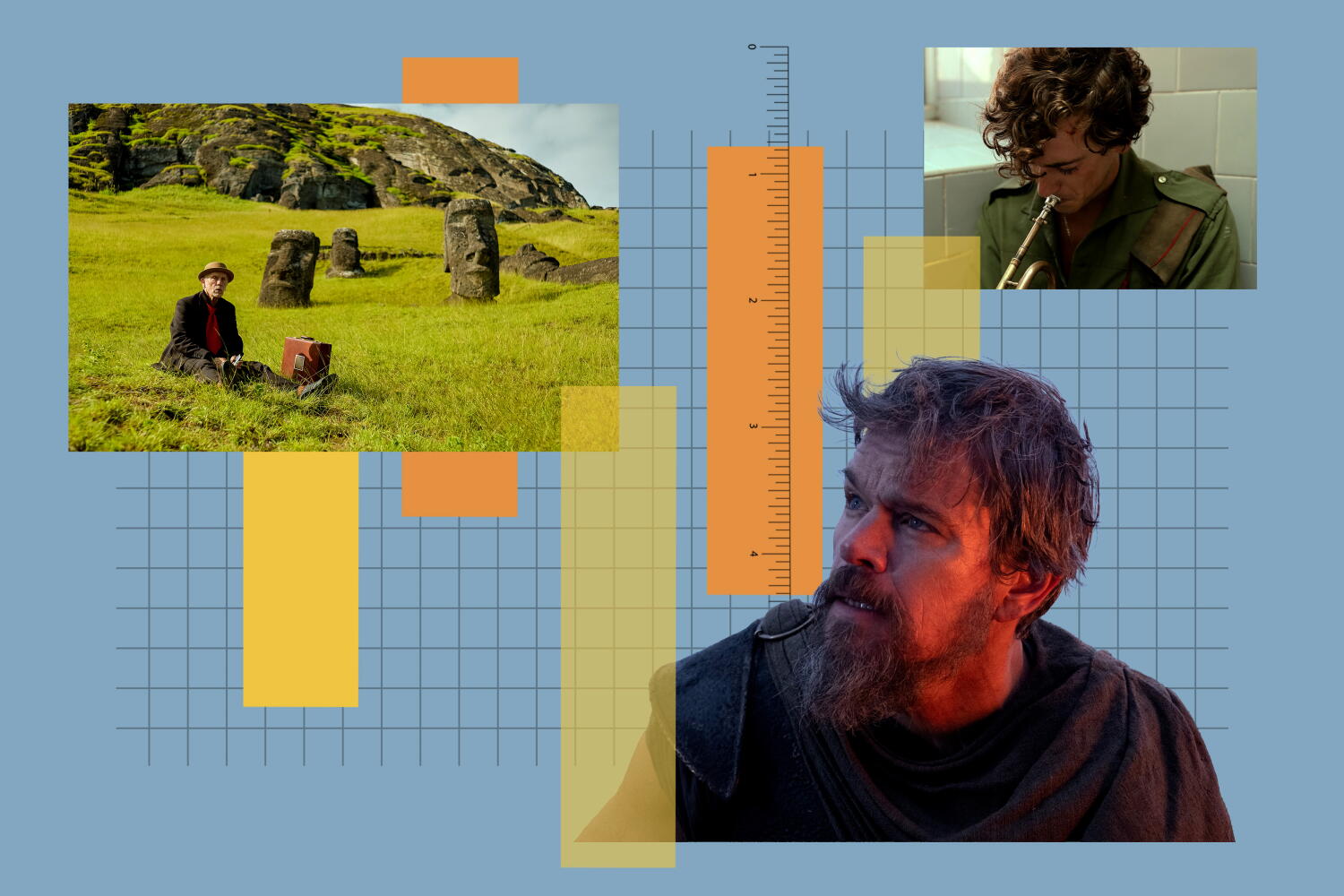
Conventional awards journalism treats the Academy Awards as a linear horse race driven by vague notions of "buzz," "momentum," and "goodwill." When evaluating the 2027 Best Picture field, standard punditry relies on surface-level binary narratives—pitting Christopher Nolan’s summer colossus The Odyssey against festival darlings like Javier Calvo and Javier Ambrossi’s La Bola Negra—while failing to account for the mathematical realities of the preferential ballot. In a ranked-choice system with roughly 10,000 voting members across 19 branches, a film does not win by securing the highest volume of passionate first-place votes; it wins by minimizing polarization and accumulating second- and third-place consensus placements during instant-runoff redistributions.
To forecast the 99th Academy Awards accurately, we must strip away subjective critical consensus and model the race through four structural variables: Branch Concentration, The Recency Penalty, The Technical-to-Above-the-Line Conversion Rate, and The International Bloc Expansion.
The Mechanics of the Preferential Ballot
Before evaluating individual contenders, analysts must account for the scoring mechanism. Since 2009, Best Picture has utilized an instant-runoff preferential voting system. Voters rank up to 10 nominees in order of preference. If no film achieves a mathematical majority (50% plus one) of first-place votes on the initial count, the lowest-ranking film is eliminated, and its ballots are redistributed to the second-choice films listed on those specific ballots. This process repeats until a single film crosses the 50% threshold.
This mathematical architecture creates two distinct pathways to victory, alongside a fatal trap:
- The Plurality Juggernaut: A film enters the final rounds with such an overwhelming lead in number-one votes (typically 35% to 42%) that it requires only a modest fraction of redistributed second- and third-place votes to cross 50%.
- The Consensus Sponge: A film starts with a modest 12% to 18% share of number-one votes but sits at number two or three on over 60% of all ballots, absorbing votes steadily as polarizing frontrunners or niche contenders are eliminated.
- The Polarizing Trap: A film commands a fiercely loyal fanbase (25% first-place votes) but is actively disliked by the remaining electorate, resulting in rankings of eighth, ninth, or tenth on non-supporter ballots. When lower-tier films are eliminated, the polarizing contender receives virtually zero redistributed votes and stalls out around 30%.
Every contender in the 2027 cycle must be evaluated against these three structural profiles rather than generic critical acclaim.
Tier 1: The Plurality Juggernaut and the Recency Penalty
The Odyssey (Universal Pictures)
By every traditional metric, Christopher Nolan’s adaptation of Homer’s epic is the prohibitive frontrunner. Having grossed over $1.7 billion globally on a $250 million production budget, the film functions as an industry stabilizer—a theatrical event that validates the studio exhibition model. In Oscar economics, box-office dominance of this magnitude acts as a proxy for broad branch appeal, ensuring visibility across the Actors, Directors, Cinematographers, Sound, Visual Effects, and Production Design branches.
However, The Odyssey faces a documented historical friction: The Recency Penalty. Nolan swept Best Picture and Best Director at the 96th Academy Awards in 2024 for Oppenheimer. In the nearly century-long history of the Academy, only two directors—William Wyler (Mrs. Miniver in 1942, The Best Years of Our Lives in 1946) and David Lean (The Bridge on the River Kwai in 1957, Lawrence of Arabia in 1962)—have directed back-to-back Best Picture winners across consecutive feature releases.
The operational mechanism behind this penalty is psychological fatigue within the Actors Branch, which comprises the largest single voting bloc in the Academy (roughly 1,300 members). Actors drive Best Picture outcomes because their preferences dominate the raw ballot pool. While technical branches (Cinematography, Editing, Sound, Production Design) reward craft execution regardless of recent trophies, the Actors Branch often uses its number-one slot to spread institutional validation to new voices or overdue veterans. The Odyssey will easily lead the nomination tally—likely securing 11 to 13 nominations across craft and acting categories (Matt Damon, Anne Hathaway, Samantha Morton)—and it holds the highest floor of any contender. Yet its path to victory relies entirely on the Plurality Juggernaut model: it must secure enough number-one votes on the first ballot so that the Recency Penalty cannot sink its second- and third-place rankings.
Tier 2: The Consensus Sponges and International Expansion
Over the past decade, the Academy’s aggressive recruitment of international members has altered the demographic baseline of the electorate. Non-U.S. voters now account for over 20% of the total membership, creating a disciplined, cinephile-leaning voting bloc that frequently coordinates around non-English-language auteurs.
La Bola Negra (Netflix)
Directed by Javier Calvo and Javier Ambrossi ("Los Javis"), La Bola Negra represents the primary structural threat to The Odyssey. Having won the Best Director prize at the Cannes Film Festival and the People's Choice Award at the Toronto International Film Festival (TIFF), the film possesses the exact dual-festival pedigree that historically bridges the gap between international highbrow tastes and mainstream North American emotional appeal.
The film’s structure—three interconnected narratives tracing queer men across a century of Spanish history—operates as an ideal Consensus Sponge. Unlike The Odyssey, which risks alienation among voters who view it as a masculine, scale-obsessed spectacle (a critique already surfaced by literary purists), La Bola Negra hits the emotional and thematic triggers favored by the Actors and Writers branches.
Crucially, Netflix altered its distribution calculus for this title, granting it an exclusive 46-day theatrical window prior to streaming. In previous cycles, Netflix contenders suffered from a theatrical exhibition penalty, wherein older branch members refused to rank streaming-first titles at the top of their ballots. By securing a robust theatrical footprint in Spain and strong platform grosses in North America, La Bola Negra neutralizes the traditional anti-streamer bias. If The Odyssey stalls at 38% on the preferential ballot due to Nolan fatigue, La Bola Negra is positioned to absorb the redistributed votes from eliminated indie and international contenders.
Wild Horse Nine (Searchlight Pictures)
Martin McDonagh’s Wild Horse Nine exemplifies the Veteran Narrative, an under-quantified variable in Oscar forecasting. McDonagh is a six-time Academy Award nominee without a competitive feature win, and Searchlight Pictures remains the most efficient campaign apparatus in the industry at converting mid-budget, script-driven films into Best Picture winners (Nomadland, The Shape of Water, Birdman).
With an ensemble led by John Malkovich and Sam Rockwell, the film targets the exact intersection of the Writers and Actors branches. Its limitation is a low ceiling in below-the-line craft categories. Historically, films without nominations in Best Film Editing or at least two technical design categories rarely win Best Picture. Wild Horse Nine functions as a spoiler: it will siphon crucial first- and second-place votes from the Actors Branch away from The Odyssey, compressing the frontrunner's margin and inadvertently aiding La Bola Negra.
Tier 3: The Sci-Fi Ceiling and Craft Conversion
A persistent analytical error in early awards forecasting is treating technical dominance as synonymous with Best Picture viability. Two major studio releases illustrate the Technical-to-Above-the-Line Conversion Rate problem.
Dune: Part Three (Warner Bros.)
Denis Villeneuve’s conclusion to his Frank Herbert adaptation will dominate below-the-line categories, projecting as a lock for Visual Effects, Sound, Cinematography, Production Design, and Costume Design. However, hard science fiction faces an institutional glass ceiling in Best Picture. The narrative trajectory of Dune: Part Three—which pivots Timothée Chalamet’s Paul Atreides from a messianic hero into a tyrannical emperor waging a holy war—deliberately subverts traditional audience catharsis.
While the Craft branches will reward the film’s technical execution, the Actors Branch rarely places bleak, anti-heroic sci-fi epics in the top three slots of a preferential ballot. Without acting nominations to anchor its support within the largest branch—a weakness that plagued Dune: Part Two—the film operates as a classic nomination leader that lacks a viable path to 50% on the final ballot.
Project Hail Mary (Amazon MGM)
Directed by Phil Lord and Christopher Miller and starring Ryan Gosling, Project Hail Mary occupies the inverse position of Dune: Part Three. Adapted from Andy Weir’s novel, the film offers high-concept sci-fi wrapped in an earnest, problem-solving narrative that plays well with general audiences and the Producers Guild of America (PGA).
The PGA utilizes the exact same preferential ballot system as the Academy, making it the single most accurate statistical predictor of Best Picture outcomes. Crowd-pleasing, optimistic studio films frequently overperform on PGA ballots because voters feel comfortable placing them in the number-two or number-three slots. Yet Project Hail Mary suffers from a prestige deficit: Lord and Miller are viewed primarily as commercial innovators rather than traditional auteurs, which limits the film's support in the Directors Branch. A Best Picture nomination is highly probable, but a win requires a level of highbrow critical validation the film does not possess.
Tier 4: The Bubble Contenders and Niche Risks
The remaining slots in a 10-film lineup are governed by Branch Concentration—the ability of a single, passionate branch to force a film onto the ballot through concentrated number-one votes, even if the broader Academy ignores it.
- You Can See Everything (A24): Co-directed by Nathan Fielder and Lance Oppenheim, this 174-minute hybrid chronicle of Elizabeth Holmes and Theranos tests the structural boundaries of the Academy. Because it blends documentary footage with scripted reenactments, it faces eligibility friction with the Directors Guild of America (DGA) and ideological resistance from purists in the Documentary Branch. Its path to a Best Picture nomination relies on critics' groups (LAFCA, NYFCC) elevating its editing and performance elements. Even if nominated, its formal audacity makes it a textbook Polarizing Trap—it will receive high rankings from experimental cinephiles and low rankings from traditionalists, capping its preferential ballot ceiling.
- I Play Rocky: As a meta-narrative chronicling the underdog production of the 1976 Best Picture winner, this title triggers the Academy's well-documented narcissism regarding movies about making movies. Led by a breakout performance from Anthony Ippolito, it targets the Actors Branch directly. However, without major auteur backing or technical category traction, it risks peaking too early in the fall festival cycle before larger studio campaigns crowd it out in January.
- The Invite & The Debut: Olivia Wilde’s The Invite and Jesse Eisenberg’s The Debut (anchored by Julianne Moore and Paul Giamatti) represent the low-budget, dialogue-heavy indie tier. Both depend entirely on the Writers and Actors branches. In a year crowded with massive theatrical spectacles (The Odyssey, Dune: Part Three, Project Hail Mary) and an international juggernaut (La Bola Negra), small-scale chamber dramas struggle to generate the mandatory screen-time visibility required to survive the first round of preferential eliminations.
- The Further Mis-Adventures of Cliff Booth & Fjord: David Fincher’s continuation of Quentin Tarantino’s Once Upon a Time in Hollywood universe and Cristian Mungiu’s Fjord serve as high-pedigree wildcards. Fincher commands immense respect across technical branches, while Mungiu represents the austere European arthouse faction. However, Fincher’s cold, clinical tone historically underperforms on warm-blooded preferential ballots, and Fjord faces stiff competition from La Bola Negra for the exact same international voting bloc.
Limitations of Early-Season Modeling
Forecasting the 2027 Best Picture race in November carries inherent structural blind spots that no statistical model can fully eliminate:
- Unseen Late-Breaker Distortion: Major studio contenders releasing in December—most notably Dune: Part Three—have not yet been screened for the full voting body. Early projections rely on pedigree and trailer metrics rather than actual audience reception. A critical misfire or an unexpected masterpiece in late December immediately invalidates fall tier rankings.
- Guild Divergence: Precursor data from the DGA, PGA, SAG, and WGA will not materialize until January and February. Until the Actors Branch reveals its actual preferences via SAG ensemble nominations, any projection of a film’s preferential ballot strength remains an educated hypothesis based on historical demographic behavior.
- Campaign Narrative Volatility: Between November and final voting in February, external controversies, poorly received press tours, or rival smear campaigns can rapidly convert a Consensus Sponge into a Polarizing Trap.
The Strategic Play for Campaigners and Analysts
To navigate the 2027 race accurately, discard all box-office narratives and track the Director-Editing-SAG Alignment. Over the past 15 years, virtually every Best Picture winner has secured nominations in Best Director, Best Film Editing, and the SAG Award for Outstanding Performance by a Cast in a Motion Picture.
Apply this three-point filter when evaluating the precursors in January:
- Monitor The Odyssey at SAG: If The Odyssey lands a SAG Ensemble nomination alongside its inevitable DGA and ACE Eddie (Editing) nods, the Recency Penalty has failed to materialize. At that point, its plurality lead is insurmountable, and it will win Best Picture regardless of La Bola Negra's festival momentum.
- Track La Bola Negra's Below-the-Line Penetration: If La Bola Negra secures an Oscar nomination for Best Film Editing alongside Best Director, it signals that the film has broken out of the international bloc and penetrated the core Hollywood craft branches. Combine that craft support with a PGA top-three placement, and La Bola Negra becomes the statistical favorite to overtake The Odyssey on the fourth or fifth round of preferential ballot redistributions.
- Fade Non-Editing Contenders: Immediately eliminate any film from win contention—regardless of critical praise or acting wins—that misses a Best Film Editing nomination on Oscar morning, as it lacks the cross-branch structural consensus required to survive an instant-runoff count.