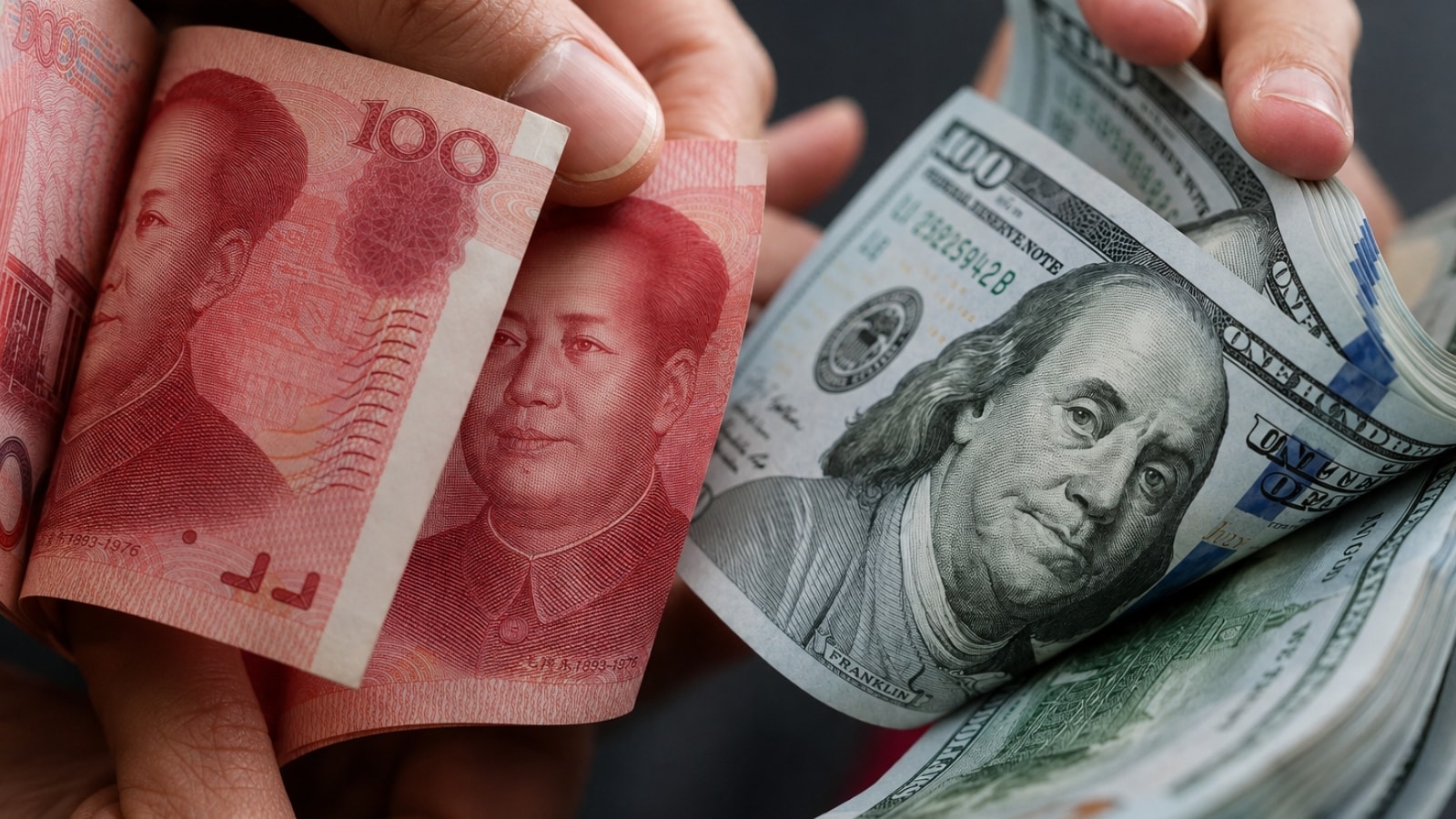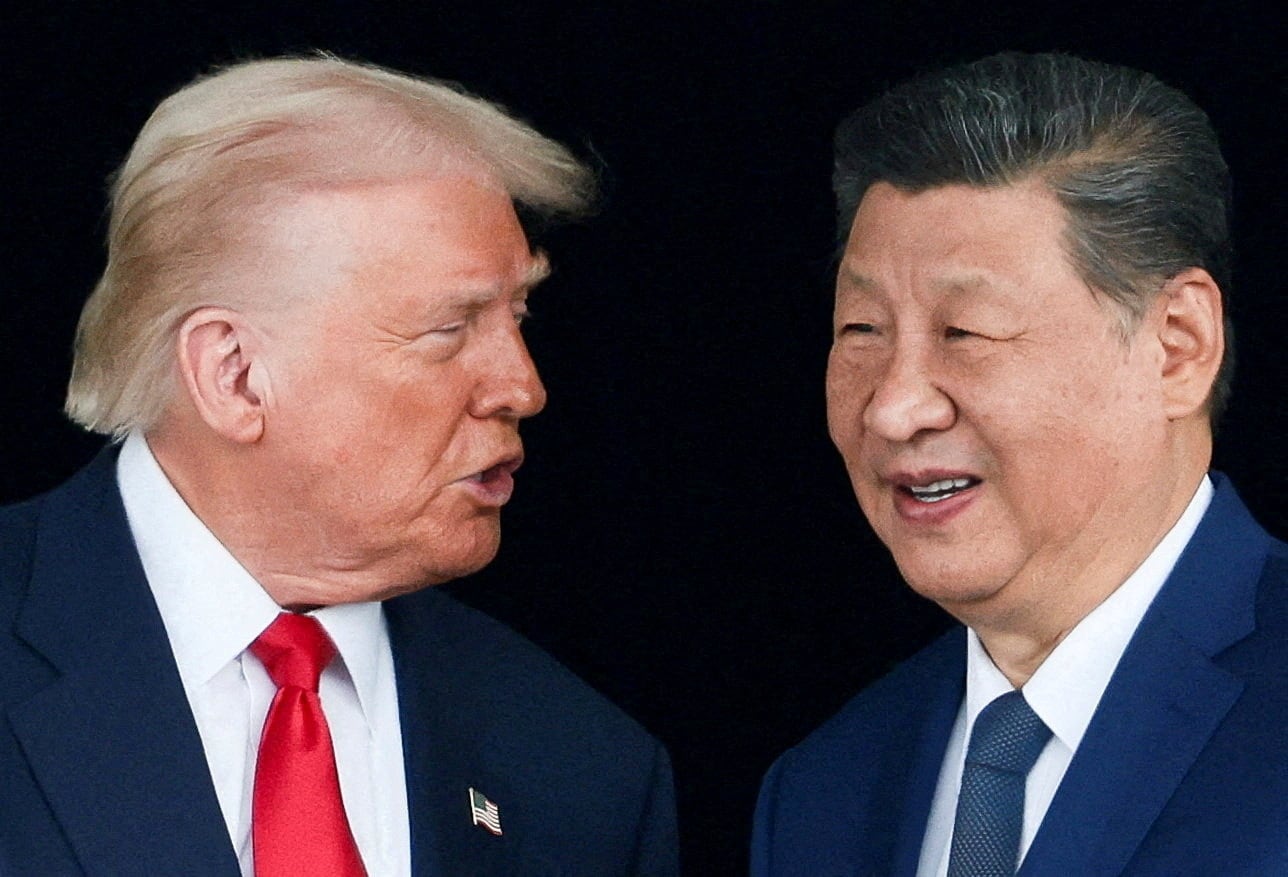
Donald Trump and Xi Jinping are moving toward a narrow deal to strip away tariffs on $30 billion of imports, signaling a tactical retreat in a decade-long economic conflict. The core of this maneuver is a managed trade agreement designed to ease inflationary pressure in the United States while giving Beijing a much-needed outlet for its industrial overcapacity. By focusing on specific categories—likely semiconductors, agricultural machinery, and specialized chemicals—both leaders are attempting to stabilize a volatile relationship without appearing weak to their domestic bases.
This is not a return to free trade. It is a calculated surgical strike on specific line items that have become too expensive for American businesses to absorb and too difficult for Chinese factories to offload elsewhere. While the headline figure of $30 billion sounds massive, it represents a fraction of the total trade volume, serving as a pressure valve rather than a total reset of the tariff architecture.
The Architecture of Managed Trade
For decades, the global economy operated under the assumption that markets, not bureaucrats, should dictate the flow of goods. That era is dead. What we are seeing now is the rise of a highly curated trade model where governments pick winners and losers based on national security and domestic political polling.
The $30 billion in question isn't a random selection. It is a carefully vetted list of components and raw materials that the U.S. manufacturing sector desperately needs to remain competitive. When the U.S. places a 25% tax on a specialized sensor that can only be sourced from a specific province in China, the American company buying that sensor doesn't always find a new supplier in Vietnam or Mexico. Often, they just pay more, or they stop making the product altogether.
By removing these specific frictions, the Trump administration can claim a win for American industry. Simultaneously, Xi Jinping gets to demonstrate that China remains an indispensable node in the global supply chain, despite the "de-risking" rhetoric coming from Western capitals.
The Illusion of De-Coupling
The primary reason this deal is happening now is that "de-coupling" has proven to be far more expensive than anyone anticipated. You cannot move a trillion-dollar supply chain overnight without breaking the back of the middle class.
Consider the complexity of modern electronics. A single device might contain parts from twenty different countries, but the final assembly and the production of low-margin, high-volume components still rely heavily on Chinese infrastructure. When these items are taxed at the border, it creates a cascading effect of price increases. The $30 billion tariff cut is an admission that, in certain sectors, there is no viable alternative to Chinese production.
Beijing knows this. They have spent years building "moats" around specific industrial processes. If you want to build a high-capacity battery or a specialized industrial drone, you almost certainly need a component that is refined or manufactured in China. This trade push is less about friendship and more about mutual exhaustion.
Why Beijing Is Bending
China’s economy is currently facing its most significant headwinds since the late 1990s. The property sector is in a controlled demolition, consumer confidence is at historic lows, and the youth unemployment rate remains a sensitive state secret. Xi Jinping needs a win.
Removing tariffs on $30 billion of exports provides a lifeline to Chinese factory owners who are currently operating on razor-thin margins. It also serves a broader strategic purpose: it drives a wedge between the U.S. and its allies. If Washington is willing to cut deals with Beijing to protect its own economy, it becomes much harder for the U.S. to convince the European Union or Japan to maintain a hardline stance on trade restrictions.
The Problem of Overcapacity
The biggest threat to this deal isn't political—it's structural. China is currently producing far more than its own people can consume. This "overcapacity" is being dumped onto global markets at prices that are often lower than the cost of production.
The U.S. trade negotiators are walking a tightrope. They want to lower costs for American consumers, but they cannot allow a flood of cheap Chinese goods to wipe out what is left of the American manufacturing base. This is why the deal is "managed." It isn't a blanket removal of tariffs; it is a quota-based system where specific volumes are allowed in at lower rates.
This creates a massive bureaucratic nightmare. To manage $30 billion in trade, you need thousands of pages of regulations, hundreds of inspectors, and a constant stream of data sharing between two governments that don't trust each other.
The Hidden Cost of the Middleman
As these two giants negotiate, a third player has emerged: the "re-routing" economy. Over the last four years, trade between China and Mexico, and China and Vietnam, has exploded.
A significant portion of the goods that were supposed to be blocked by tariffs simply took a detour. A Chinese company ships parts to a factory in Tijuana, where they are "assembled" and sent across the border as Mexican-made products. Everyone in the industry knows this is happening. The $30 billion tariff cut is, in some ways, an attempt to bring this trade back into the light where it can be taxed and monitored directly, rather than allowing the profit to be siphoned off by middlemen in third-party countries.
The Logistics of the Rollback
Implementation will be messy. There is a fundamental difference in how the two systems operate. The U.S. uses a transparent, though often slow, legal process for tariff exclusions. China operates through state-owned enterprises and opaque subsidies.
When the U.S. agrees to cut a tariff, the benefit goes directly to the importer. When China agrees to "purchase" more American goods as part of a managed trade push, it often means the government orders a state-owned company to buy Boeing planes or Iowa soybeans regardless of whether they need them. This creates artificial markets that collapse the moment the political winds shift.
The Semiconductor Shadow
The most contentious part of these negotiations involves high-tech components. The U.S. is currently engaged in a "chip war," restricting China’s access to the most advanced semiconductors. However, the world doesn't just run on 3-nanometer chips. It runs on "legacy chips"—the older, simpler semiconductors used in cars, washing machines, and medical devices.
China has cornered the market on these legacy chips. By including these in the $30 billion rollback, the Trump administration would provide immediate relief to the American automotive and appliance industries. The risk is that this further embeds Chinese technology into the American infrastructure, creating a long-term dependency that the national security establishment is desperate to avoid.
The Geopolitical Price Tag
Nothing in international trade is free. If the U.S. gives ground on tariffs, what is Beijing giving up?
Reliable sources suggest that the "ask" from the American side involves more than just buying soybeans. It involves intellectual property protections and, more importantly, a commitment to stop the forced transfer of technology from American companies operating in China.
The problem is that China has made these promises before. In 2020, the "Phase One" deal included similar commitments, most of which were never fully realized. The skeptical observer would argue that this new $30 billion push is simply a way to keep the dialogue open while both sides prepare for the next round of escalation.
The Fragility of the Agreement
The most dangerous aspect of managed trade is its inherent instability. Because these deals are built on executive orders and memorandum of understandings rather than formal treaties, they can be torn up in an afternoon.
One flare-up in the South China Sea or a disagreement over currency manipulation could send the $30 billion deal into the shredder. This creates a climate of "perpetual uncertainty" for businesses. If you are a CEO, do you invest in a new supply chain based on a temporary tariff cut? Probably not. You take the short-term profit and keep your bags packed.
The Inflation Factor
For the Trump administration, the primary driver is the cost of living. Tariffs are, essentially, a consumption tax paid by the domestic population. In an era where "inflation" is the most potent word in American politics, keeping tariffs on basic industrial inputs is a political liability.
By framing the tariff cut as a "negotiated win," the administration can lower prices while maintaining its "America First" credentials. It is a masterful piece of political theater, but it does little to address the underlying reality: the U.S. and China are locked in a systemic rivalry that no amount of managed trade can resolve.
The Reality of the Factory Floor
Walk through any mid-sized manufacturing plant in the Midwest and you will see the tension. The owner wants cheap steel and affordable components to keep the lights on. The workers want protection from a global superpower that subsidizes its industries to the hilt.
The $30 billion deal is a band-aid for the owner, but it does nothing for the long-term viability of the worker. If the goal is to bring manufacturing back to the U.S., lowering tariffs on Chinese imports is counter-intuitive. If the goal is to lower prices for the consumer today, it is the only lever left to pull.
Trade policy has become a series of trade-offs where there are no "good" options, only "less bad" ones. This deal is the embodiment of that reality. It is a truce, not a peace treaty. It provides a momentary gasp of air for a global economy that has been underwater for years, but the pressure is still building.
Businesses should not view this as a return to the status quo. The walls are still there; they are just moving the gates a few feet to the left. The smart move is to use this window of lower costs to diversify, not to double down on a relationship that remains fundamentally broken. The next shock is not a matter of if, but when. Relying on the stability of a managed trade agreement between two superpowers in a cold war is not a business strategy—it is a gamble.
If you are waiting for a clear signal that the trade war is over, you are looking at the wrong map. The $30 billion cut is a tactical adjustment in a much larger, much longer campaign. Use the temporary relief to build resilience, because the era of predictable, low-friction global trade is never coming back. This is the new normal: a world where every shipment is a political statement and every price tag is subject to change without notice. Prepare accordingly.