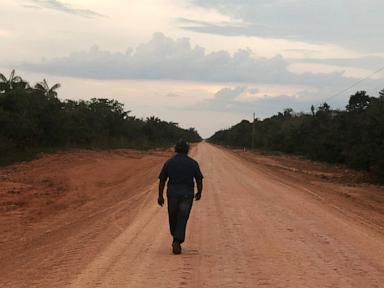
A $75 million infrastructure package to pave a highway through the world’s most critical rainforest, wrapped neatly in a glossy "environmental protection plan." It sounds like a balanced compromise. It looks like sustainable development.
It is a complete fantasy. Also making headlines in related news: Why Ukraine EU Membership Still Matters in 2026.
The mainstream media swallowed the press release whole. They are busy debating whether the mitigation budget is large enough, or if the satellite monitoring tech will catch illegal loggers. They are asking the wrong questions because they do not understand how frontier economics actually work.
Infrastructure spending in a lawless ecosystem does not develop a region; it subsidizes its destruction. Adding an eco-protection rider to a jungle highway project is like handing out a fire extinguisher with a tank of gasoline. More insights into this topic are covered by TIME.
Here is the brutal truth about what happens when you cut asphalt through the Amazon, and why the current conversation is dangerously naive.
The 55 Kilometer Illusion
Let us address the immediate logical flaw that every major news outlet missed. Seventy-five million dollars is an incredibly small amount of money for tropical highway engineering.
In civil engineering, building a durable, all-weather road through a rainforest requires massive drainage systems, elevated foundations, and constant maintenance against torrential downpours. A standard two-lane highway in a developed country costs anywhere from $2 million to $5 million per mile. In a remote jungle, logistical complications cause those costs to skyrocket.
At best, $75 million buys you a few dozen kilometers of properly paved road or a superficial coat of asphalt over an existing dirt track. It does not fund a high-tech, heavily monitored, green transport corridor.
When governments announce these small budgets alongside grand environmental promises, it means one of two things:
- The project will quickly run out of money, leaving a half-built mud track that invites illegal land grabbers without providing any real economic utility.
- The initial budget is a foot in the door, designed to pass environmental scrutiny before massive cost overruns drain public funds later.
By celebrating this specific dollar amount as a victory for both commerce and conservation, analysts ignore the basic math of heavy construction.
The Fishbone Effect Always Wins
The core argument for the environmental plan is that strict enforcement will keep the damage contained strictly to the highway corridor. This ignores a decades-old reality of tropical deforestation known as the fishbone pattern.
When a main road is paved through a dense forest, it does not just create a single line of transit. It creates a spine. Speculators, illegal loggers, and cattle ranchers quickly build unauthorized secondary dirt tracks perpendicular to the main highway. They push deep into public lands and indigenous reserves.
A government cannot police thousands of miles of spontaneous, unmapped dirt roads with a $75 million budget that is already mostly allocated to asphalt. Once the main artery is open, the capillary network of destruction expands autonomously.
The Flawed Premise of Green Enforcement
The public relations strategy relies heavily on promising real-time satellite data and rapid-response enforcement teams to stop illegal clearing along the route.
This sounds impressive in a boardroom. On the ground, it fails completely.
Deforestation monitoring systems like Brazil's DETER are highly sophisticated. They detect tree canopy loss with incredible accuracy. But knowing a crime is happening is not the same as stopping it.
When a satellite flags an illegal clearing in a remote part of the Amazon, the logistics of stopping it are a nightmare. Enforcement teams must fly in via helicopter or drive for hours down treacherous tracks. By the time they arrive, the loggers are gone, the equipment is hidden, or the forest is already ablaze.
Furthermore, enforcement is an administrative and political problem, not a technological one. Local land registries are often chaotic, filled with overlapping claims and fraudulent titles. Corrupt local officials easily legitimize stolen land.
Thinking that better cameras can solve a deep-seated lack of institutional presence is a costly mistake.
The Real Economic Driver
Proponents argue that the highway is vital for connecting isolated communities and lowering transport costs for agricultural goods like soy and beef.
This argument reverses cause and effect. The highway does not serve existing, legitimate economic demand in the deep jungle; it creates speculative land value.
In the Amazon, untouched forest has very low financial value on the open market. But forest land located within twenty miles of a paved road instantly becomes incredibly valuable for cattle ranching or land speculation.
The primary economic activity triggered by a new jungle road is not efficient trade. It is land grabbing.
Speculators clear the forest not because they are desperate to farm it immediately, but to establish physical possession and claim ownership. Paving the road acts as a massive financial incentive for this behavior. No environmental plan can counter a financial incentive that turns worthless jungle into prime real estate overnight.
A Real Solution
If a government genuinely wants to develop the Amazon region without destroying it, it must stop building roads.
True development in the 21st century requires a completely different approach to connectivity:
- Invest in River Logistics: The Amazon basin possesses the largest natural river transport network on earth. Upgrading ports, barging efficiency, and river safety is far cheaper and vastly less destructive than carving highways through pristine jungle.
- Prioritize Digital Infrastructure: High-speed internet and digital banking provide remote communities with access to the global service economy, distance education, and telemedicine without displacing a single tree.
- Enforce Existing Land Titles: Before spending a single dollar on new infrastructure, fund the complete auditing and socialization of the land registry to eliminate fraudulent claims.
Building a highway and calling it green is an outdated approach. It uses 20th-century industrial solutions to address complex, modern ecological realities. The $75 million plan is not a breakthrough in sustainable development. It is simply a traditional, destructive infrastructure project wrapped in modern public relations language.
The asphalt will roll out. The forest will recede. The fishbone will expand. No amount of green rhetoric will change the laws of frontier economics.