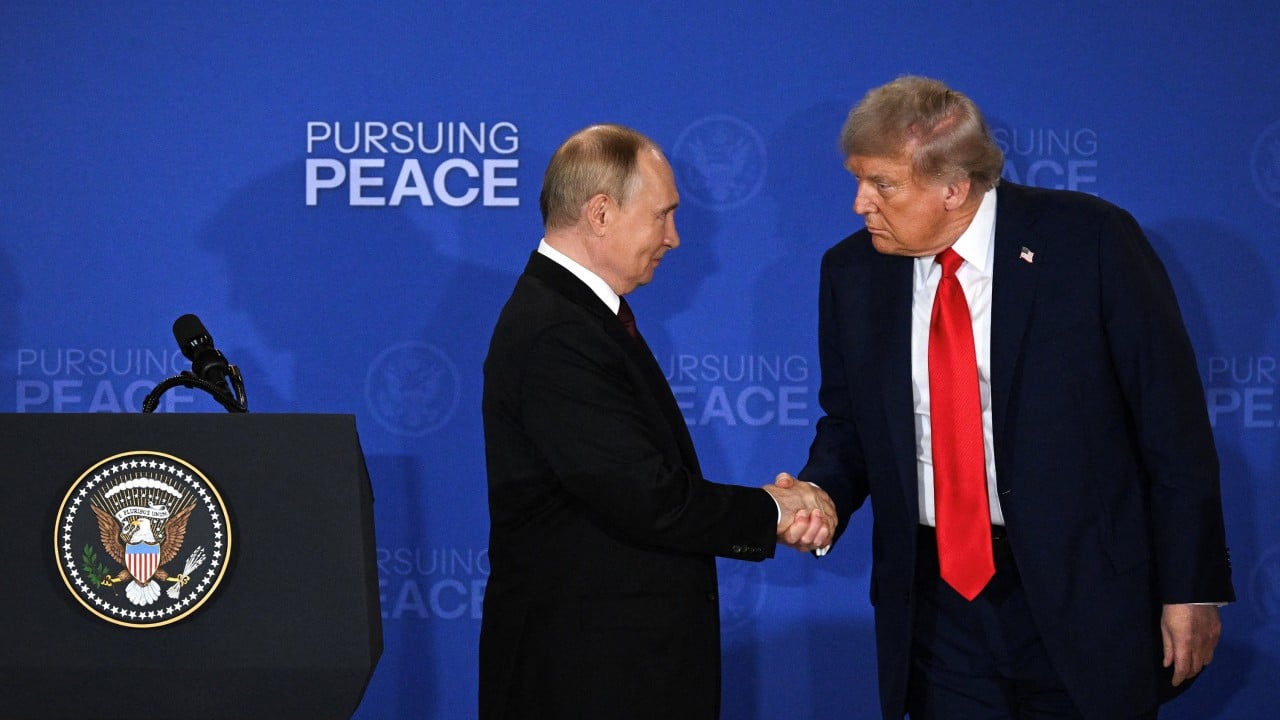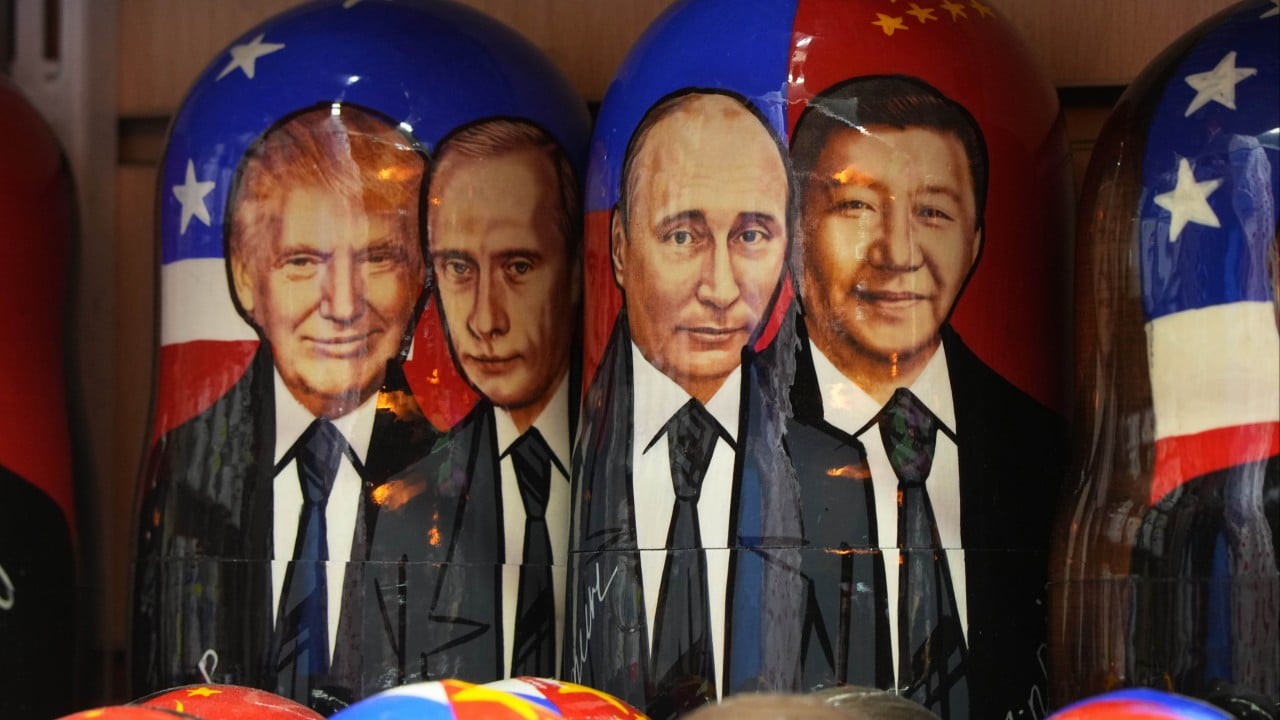
Everybody loves a good diplomatic photo op, and getting Xi Jinping, Vladimir Putin, and Donald Trump in the same room at an Asia-Pacific Economic Cooperation summit sounds like peak geopolitical theater.
One massive hurdle stands in the way. It's the International Criminal Court arrest warrant hanging over Vladimir Putin's head.
Since March 2023, the ICC has maintained an active warrant for Putin over the unlawful deportation of children from occupied areas of Ukraine. That single piece of paper changes everything about where the Russian president can travel without risking arrest, and it directly dictates whether a three-way handshake at APEC is even remotely possible.
You can't just wave away international treaties when 124 countries are legally obligated to detain a sitting head of state the moment his plane touches their tarmac.
The ICC Arrest Warrant Problem Nobody Can Ignore
Let's look at the basic math of international law. APEC has 21 member economies, and a huge chunk of them—including Australia, Canada, Japan, New Zealand, Peru, and South Korea—are States Parties to the Rome Statute.
If Putin flies into any of those nations for an APEC summit, the host government faces an impossible choice. Either they arrest the Russian president at the airport and spark an immediate global crisis, or they ignore their binding legal obligations under the ICC and shred their own diplomatic credibility.
Neither option works.
We've already seen how this plays out in real life. Back in August 2023, Putin skipped the BRICS summit in Johannesburg because South Africa, as an ICC member, couldn't guarantee he wouldn't be arrested. He sent Foreign Minister Sergey Lavrov instead and dialed in via video link.
Then in September 2024, Putin actually traveled to Mongolia—another ICC member—and wasn't arrested, which triggered massive international backlash and formal non-compliance findings from the court. Mongolia only got away with it because it's landlocked between Russia and China and depends entirely on Moscow for fuel and electricity. Major APEC hosts don't have that excuse, and they certainly don't have the appetite for that kind of diplomatic fallout.
Honestly, host nations usually solve this headache long before the summit even starts. They quietly tell Moscow through backchannels that Putin isn't welcome in person, or Moscow simply decides not to risk the humiliation of an uncertain welcome.
Why Host Rotations Make or Break a Three-Way Summit
APEC doesn't happen in a vacuum; it rotates among its 21 members every year. Where the summit is held completely determines whether Putin can show up.
Think about the recent and upcoming APEC calendar. When the United States hosted in San Francisco in 2023, Putin didn't go—obviously, given U.S. sanctions and visa bans, even though the U.S. isn't an ICC member. When Peru hosted in 2024 and South Korea hosted in 2025, both countries were bound by the Rome Statute, making a Putin appearance virtually impossible.
Now shift the map to a non-ICC member. China hosts APEC in Shenzhen in November 2026. China isn't a party to the Rome Statute, and Xi Jinping isn't going to arrest his "no limits" partner. Vietnam hosts in 2027, and Vietnam isn't an ICC member either.
Suddenly, the legal trap disappears.
When the summit lands in a non-ICC country like China or Vietnam, the ICC warrant stops being a physical barrier to Putin's plane landing. That's when the real political calculations take over, and those calculations are way messier than a simple court warrant.
The Domestic Politics and Sanctions Web
Even if the host country won't arrest Putin, getting Xi, Putin, and Trump together requires navigating a minefield of domestic politics, sanctions, and ego.
Start with Donald Trump. Trump has repeatedly bragged about his personal rapport with both Xi and Putin, arguing he can end wars and strike massive trade deals through direct, one-on-one diplomacy. On paper, a three-way meeting in Asia fits his style perfectly.
Reality gets in the way fast.
For an American president to sit down with Putin while the war in Ukraine drags on—or while heavy U.S. sanctions remain locked in place by Congress—creates massive political friction back home. Even if Trump wants a deal, his own administration has to weigh what a photo op with Putin costs in terms of alliances with Japan, South Korea, and European partners.
You also have to look at U.S.-China trade tensions. Tariffs, tech restrictions, and disputes over Taiwan don't vanish just because everyone is wearing matching APEC shirts. If Washington and Beijing are locked in an active tariff escalation, the White House might downgrade its participation or skip a leaders' summit altogether to avoid looking weak.
What Xi Jinping Actually Wants Out of APEC
Xi doesn't want chaos at his own party. When China hosts APEC, Beijing's primary goal is projecting stability, economic leadership, and regional influence—especially as an alternative to American protectionism.
Having Trump and Putin show up in China gives Xi an incredible stage to look like the central power broker of the global order. It sends an unmistakable message to the rest of Asia that Washington and Moscow both have to come through Beijing.
Yet Xi is deeply cautious. If a Trump-Putin encounter threatens to hijack the entire summit and turn APEC into a circus about Ukraine or bilateral U.S.-Russia drama, Beijing will quietly steer the schedule to keep them separated. Chinese diplomats choreograph these summits down to the minute; nothing happens by accident.
Historical Precedents Show How Rare This Actually Is
People talk about a Xi-Putin-Trump summit like it's a normal occurrence, but history shows how rare genuine three-way breakthroughs really are at APEC.
During Trump's first term, he and Putin were both at the 2017 APEC summit in Da Nang, Vietnam. They didn't even hold a formal bilateral meeting. They exchanged a few words while walking to the official group photo, issued a joint statement on Syria, and went their separate ways. The White House cited scheduling conflicts, though the political storm around Russia back in Washington made a formal sit-down toxic.
In 2018, APEC in Papua New Guinea fell apart so badly over U.S.-China trade disputes that leaders couldn't even agree on a final communique for the first time in the forum's history. Trump didn't even attend that one, sending Vice President Mike Pence instead.
APEC is designed as an economic forum, not a security council. Its consensus-based format means big geopolitical rivalries usually freeze the room rather than produce grand bargains.
Secondary Obstacles That Can Derail the Room
Beyond the ICC warrant and superpower rivalries, a handful of practical roadblocks regularly torpedo high-stakes summitry before anyone boards a flight.
- Airspace and flight routing: Putin's presidential Ilyushin Il-96 can't fly over European Union airspace, the U.S., Canada, or several Asian allies due to sanctions and overflight bans. Depending on where APEC is held, flying Putin there requires complicated, circuitous routes over friendly territory—sometimes making the trip logistically brutal.
- Security demands: Both the U.S. Secret Service and Russia's Federal Protective Service (FSO) demand total control over their leaders' immediate environments. Coordinating a joint room with Chinese security in the middle is a logistical nightmare that takes months of advance work.
- Health and domestic crises: Authoritarian leaders hate leaving home when domestic stability feels shaky. Putin canceled trips during moments of internal tension in Russia, and Xi skipped the G20 summit in New Delhi in 2023 without giving a clear public explanation.
- Pre-summit deliverables: Leaders of major powers rarely sit down unless their diplomats have already agreed on what the meeting will produce. Nobody flies halfway around the world just to get ambushed on live television without a pre-negotiated win.
How to Watch for Real Signals Before Any Summit
If you want to know whether Xi, Putin, and Trump will actually end up in the same room at an upcoming APEC summit, ignore the breathless cable news speculation and watch the boring diplomatic groundwork instead.
First, check the host country's Rome Statute status. If the host is an ICC member, Putin isn't coming—full stop. Second, watch whether the U.S. Secretary of State, the Russian Foreign Minister, and China's top diplomat hold preparatory meetings at least four to six weeks before the summit. High-level leaders don't improvise trilateral summits; their foreign ministries build the script months in advance. Finally, look at the rhetoric around tariffs and Ukraine in the 30 days leading up to the event. When Washington and Moscow or Washington and Beijing start trading fresh sanctions right before APEC, the handshake is already dead.