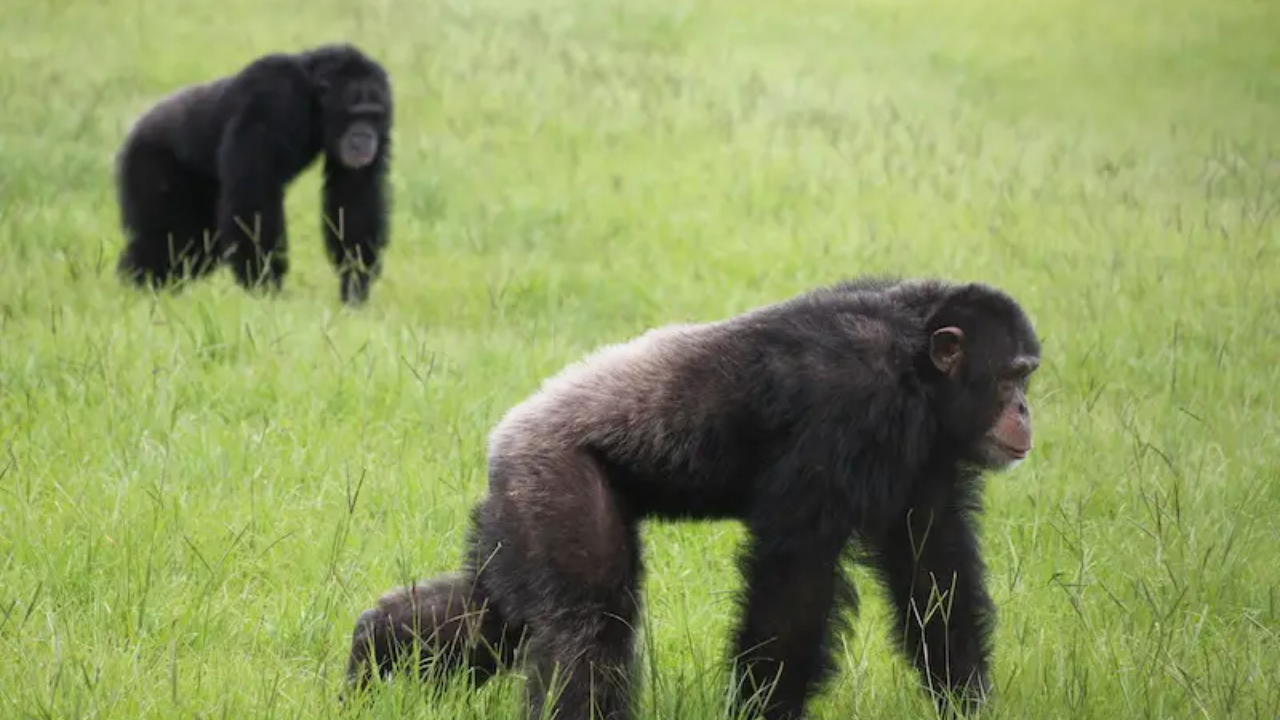
When severe regional flooding severed ground access to a Florida chimpanzee sanctuary, standard terrestrial logistics failed, forcing operators to deploy unmanned aerial vehicles to sustain an isolated primate. This operational pivot demonstrates how consumer-grade and commercial drone platforms bypass broken infrastructure during acute environmental disruptions, transforming a localized wildlife crisis into a functional blueprint for last-mile emergency logistics.
Traditional emergency management relies on road networks, flat-bottom watercraft, or manned rotary-wing aircraft. Each carries severe structural vulnerabilities during a flood event. Ground vehicles hydroplane or stall when water depth exceeds axle clearance. Watercraft require navigable channels free of submerged fencing, downed power lines, and dense vegetation—obstacles ubiquitous in rural sanctuaries built on low-lying subtropical terrain. Manned helicopters introduce prohibitive financial costs, strict pilot availability constraints, and rotor wash capable of injuring captive animals or destroying lightweight enclosure structures. Unmanned aerial systems eliminate the human-in-the-loop payload penalty and operate below the structural disturbance threshold of manned aviation. Meanwhile, you can find related events here: Why the Viral Jensen Huang Resignation Rumor Exposes Silicon Valley’s Biggest Blind Spot.
The Anatomy of Terrestrial Supply Chain Collapse
Sanctuary operations depend on high-frequency, low-latency supply chains. Captive great apes require daily caloric intake calibrated to body mass, metabolic rate, and behavioral enrichment needs, alongside uninterrupted access to potable water and essential pharmaceuticals. Under normal operating conditions, internal access roads function as predictable arteries moving bulk produce, hydration fluids, and medical supplies from central commissaries to distributed habitats.
Severe precipitation events disrupt this system through three sequential failure modes: To see the full picture, we recommend the detailed report by Ars Technica.
- Permeability Saturation: Florida’s flat topography and high water table mean heavy rainfall rapidly exceeds soil infiltration capacity. Once the vadose zone saturates, surface runoff accumulates across low-gradient access roads.
- Structural Isolation: Rising water converts elevated habitat islands or fenced compounds into disconnected nodes. Standard utility vehicles lose traction, and submerged culverts create invisible washout hazards that prevent heavy equipment deployment.
- Human Access Denial: Safety protocols prohibit staff from wading through opaque floodwaters due to displaced wildlife—specifically venomous snakes and crocodilians—alongside electrocution risks from compromised grid infrastructure and waterborne pathogens.
At the moment ground transit becomes unsafe for personnel, the sanctuary enters a state of logistical siege. Conventional wisdom suggests waiting for floodwaters to recede, yet biological systems operate on strict metabolic clocks. Dehydration in primates initiates cellular stress within 24 hours, and missed doses of chronic medications—such as cardiac drugs or anticonvulsants common in aging sanctuary populations—trigger acute physiological decompensation.
The Physics and Economics of Small-Payload Aerial Logistics
To bridge the spatial gap without risking human life, operators must shift from high-capacity ground transport to high-frequency, low-capacity aerial sorties. This transition is governed by the fundamental aerodynamic trade-off between payload mass, battery energy density, and flight endurance.
Commercial multi-rotor platforms operate on strict mass budgets. Every gram allocated to cargo reduces available flight time by increasing the rotational velocity required from the brushless motors to generate sufficient lift. In a sanctuary flooding scenario, the operational envelope is defined by short-range, out-and-back trajectories—typically under two kilometers round-trip. Because transit distances are minimal, operators can sacrifice battery endurance in favor of maximum payload capacity without risking mid-air power depletion.
The operational workflow breaks down into four distinct phases:
- Payload Packaging and Center-of-Gravity Calibration: Loose produce or liquid containers shift during flight, destabilizing the flight controller's proportional-integral-derivative (PID) loops. Supplies must be consolidated into compact, rigid, or tightly tethered bundles suspended directly beneath the airframe's center of mass. High-density calories—such as primate biscuits, bananas, and electrolyte-rich hydration packs—maximize nutritional value per gram of lift capacity.
- Drop-Zone Identification and Obstacle Clearance: Unlike open agricultural fields, primate sanctuaries contain dense canopy cover, vertical climbing structures, and perimeter wiring. The pilot must identify a clear vertical corridor within the enclosure, relying on first-person-view (FPV) telemetry or downward-facing optical sensors to avoid snagging tethers on habitat infrastructure.
- Release Mechanism Execution: Advanced setups utilize servo-actuated payload release hooks controlled via an auxiliary channel on the transmitter. Where specialized hardware is unavailable, operators rely on low-altitude hover drops, descending to within two meters of the ground to minimize impact velocity before disengaging the load.
- Behavioral Acclimation Management: Introducing a noisy, high-frequency mechanical object into an animal enclosure carries a high risk of triggering a fight-or-flight response. Chimpanzees exhibit complex cognitive processing and neophobia toward unfamiliar stimuli. Operators must execute slow, predictable vertical descents rather than rapid lateral approaches, allowing the animal to visually track the aircraft and associate the acoustic signature with food delivery rather than predation.
Comparative Logistics Matrix: Flooded Terrain Response
Evaluating the drone deployment against alternative emergency methods clarifies why unmanned platforms outperformed traditional interventions in this specific environment.
- Wading Personnel: Zero capital equipment cost, high tactical precision, but unacceptable risk to human life from submerged hazards, currents, and displaced fauna.
- Flat-Bottom Watercraft (Jon Boats/Airboats): High payload capacity (hundreds of kilograms), yet severely constrained by submerged perimeter fencing, shallow water depth variations, and acoustic disruption from airboat engines that induce severe panic in captive primates.
- Manned Helicopters: Unlimited range and massive lift capability, entirely invalidated by deployment costs exceeding thousands of dollars per hour, lack of immediate availability during regional disasters, and destructive rotor downwash over lightweight aviary or primate netting.
- Multi-Rotor Drones: Low payload capacity (typically 1 to 5 kilograms for accessible commercial units), limited by precipitation and high wind gusts, yet unmatched in rapid deployment, zero human physical risk, minimal acoustic footprint at altitude, and pinpoint delivery accuracy inside fenced perimeters.
Operational Limitations and Failure Modes
While the Florida deployment validated the concept of aerial primate resupply, treating drones as a universal solution ignores hard physical and regulatory constraints. Extreme weather events rarely present uniform conditions; flooding frequently coincides with sustained high winds and heavy rain bands that ground standard non-weather-sealed aircraft.
Moisture ingress into unsealed electronic speed controllers (ESCs) or flight controllers causes immediate catastrophic short circuits. Wind speeds exceeding 10 to 12 meters per second force multi-rotor craft to pitch aggressively to maintain station, rapidly draining lithium-polymer batteries and increasing the risk of lateral drift into enclosure fencing.
Battery logistics present a secondary bottleneck. Sustained resupply operations across multiple isolated habitats require a continuous rotation of charged cells. If the sanctuary has lost primary grid power due to the same storm event, drone operations become entirely dependent on backup diesel generators or portable solar arrays to replenish battery banks. Without a closed-loop charging infrastructure, an aerial resupply bridge collapses within hours.
Regulatory friction also constrains emergency execution. In the United States, commercial unmanned operations fall under Federal Aviation Administration (FAA) Part 107 regulations, which restrict flight over people, mandate visual line-of-sight (VLOS), and cap maximum takeoff weight at 55 pounds (25 kilograms) without specialized waivers. While emergency waivers exist, bureaucratic processing times lag behind acute crisis timelines, forcing sanctuary personnel to operate strictly within visual line-of-sight parameters and clear weather windows.
Primate Cognition and Mechanical Interaction
A critical variable absent from standard supply chain models is the biological receiver's behavioral response. Unlike delivering medical supplies to human disaster victims who understand the mechanics of an airdrop, delivering food to a stranded chimpanzee requires managing interspecies communication through machine behavior.
Chimpanzees possess high intelligence, tool-use capabilities, and strong territorial instincts. When a multi-rotor aircraft enters an enclosure, the animal evaluates it as a novel intruder. The high-pitched whine of small propellers mimics the acoustic frequency of swarming insects or aggressive avian species, initially provoking defensive displays, vocalizations, or projectile throwing.
Success hinges on rapid operant conditioning. By executing a consistent flight profile—approaching at a steady altitude, hovering motionless at a designated drop point, releasing the food payload, and immediately ascending—the operator establishes a predictable cause-and-effect sequence. Once the chimpanzee links the visual and auditory cues of the drone with immediate caloric reward, defensive posturing subsides into expectant foraging behavior. However, operators must never land the aircraft inside the enclosure; a grounded drone becomes a novel object subject to immediate mechanical disassembly by an animal possessing roughly four times the upper-body strength of an adult human.
Scaling the Micro-Logistics Model for Wildlife Infrastructure
The successful resupply of a single stranded primate exposes a systemic vulnerability across zoological institutions, wildlife sanctuaries, and agricultural facilities situated in climate-vulnerable zones. Relying on ad-hoc, improvised drone deployments during active emergencies introduces unnecessary failure risks.
Facilities operating in floodplains, hurricane corridors, or wildfire zones must formalize unmanned aerial resupply into their standard disaster preparedness protocols before infrastructure fails. This requires three concrete operational investments:
- Dedicated Weather-Resistant Hardware: Institutions should maintain at least two ingress-protected (IP43 or higher) heavy-lift multi-rotor platforms equipped with mechanical payload release mechanisms, eliminating reliance on improvised tethers or fair-weather hobbyist aircraft.
- Pre-Mapped Drop Corridors and Geofencing: Operators must map 3D flight paths and designate clear drop zones within every animal enclosure during blue-sky conditions, programming obstacle-avoidance parameters and safe altitudes into flight planning software ahead of time.
- Behavioral Desensitization Drills: Just as sanctuaries train animals for voluntary veterinary injections using positive reinforcement, staff should conduct periodic, non-emergency drone flyovers and food drops. Conditioning captive populations to accept aerial deliveries under calm conditions eliminates acute stress responses during an actual environmental emergency.
As extreme weather events increasingly outpace the resilience of rural civil engineering, last-mile biological sustainment cannot depend on paved roads. Integrating localized, short-range unmanned aviation into facility operations converts isolated enclosures from vulnerable traps into accessible nodes, ensuring continuity of care when the surrounding landscape goes underwater.