Washington used to treat artificial intelligence like a shiny science fair project that belonged in a House subcommittee hearing once a year. Those days are dead. Right now, the AI debate sits squarely at the center of American politics, shaping campaign ads, breaking traditional party alliances, and forcing lawmakers to pick sides on issues most of them barely understood three years ago.
If you're paying attention to the 2026 midterm cycle, you've already seen the shift. Candidates aren't just talking about inflation, border security, or healthcare anymore. They're fighting over data center power grids in rural Virginia, algorithmic bias in hiring tools, and whether Silicon Valley executives should write their own safety rules.
Let's be honest about why this happened so fast. Voters started feeling the friction in their daily lives. When your electric bill jumps because a massive server farm moved into your county, or when your teenager's school district starts grading essays with software nobody vetted, technology stops being an abstract concept. It becomes a kitchen-table issue.
How the AI Debate Broke Traditional Party Lines
One of the wildest things about covering tech policy right now is watching old political coalitions fracture in real time. You can't predict a politician's stance on artificial intelligence just by looking at the letter next to their name.
Take the Republican side of the aisle. You have a pro-market wing arguing that heavy regulation will hand global dominance straight to Beijing. Their logic is simple: keep Washington out of the way so American companies can out-innovate everyone else. Then you have the populist wing, which views Big Tech with deep suspicion. These lawmakers worry about automated job losses in manufacturing towns, corporate censorship baked into language models, and massive energy subsidies going to trillion-dollar tech giants.
Democrats are just as split. Progressive lawmakers focus heavily on civil rights, worker protections, and copyright theft affecting writers, musicians, and visual artists. They want strict federal guardrails before new models hit the public. Meanwhile, moderate Democrats in tech-heavy states like California, Washington, and Massachusetts argue that overregulating open-source software will crush startups and hand a permanent monopoly to the three or four companies rich enough to afford compliance lawyers.
This internal friction explains why Congress has struggled to pass a single comprehensive federal framework, even after years of high-profile hearings and executive orders.
The Battle Over State Laws Versus Federal Preemption
Because Congress remains gridlocked, state legislatures stepped into the vacuum. And frankly, they've created a regulatory patchwork that has tech executives sweating.
California set off a firestorm with its push for strict frontier model safety rules, forcing companies to test their largest systems for catastrophic risks before release. Colorado passed sweeping legislation targeting algorithmic discrimination in housing, employment, and lending. Utah enacted disclosure rules requiring companies to tell consumers when they're interacting with a generative bot rather than a human being.
Here is where the political fight gets intense. Tech lobbyists are begging Congress to pass federal preemption—a single national standard that would wipe out state-level AI laws. They argue that a startup in Austin shouldn't have to comply with fifty different state rulebooks just to launch an app.
State attorneys general and consumer advocates are pushing back hard. Their argument? Whenever Congress passes a "uniform national standard" for tech, it usually ends up being weaker than the toughest state laws. We saw the exact same playbook play out with data privacy over the last decade. Until federal lawmakers prove they have the spine to pass real protections, states aren't backing down.
Deepfakes and Campaign Ads Hit a Breaking Point
Nothing wakes up a politician faster than a threat to their own reelection. That's why synthetic media—specifically audio and video deepfakes—became the fastest-moving part of the political AI debate.
We already saw early warning shots during the 2024 primaries, when robocalls using a cloned voice of President Joe Biden told New Hampshire voters to stay home. By 2026, the tools became cheaper, sharper, and accessible to any campaign consultant with a laptop and a credit card.
What Campaigns Are Actually Doing
If you look closely at political spending this cycle, campaigns are using generative tools in three distinct ways:
- Hyper-targeted micro-messaging: Campaigns generate thousands of slight variations of digital ads tailored to specific zip codes, dialects, and local economic concerns.
- Opposition research at scale: Staffers feed decades of public transcripts, voting records, and local news clips into language models to spot contradictions in an opponent's record within minutes.
- Synthetic attack ads: Super PACs increasingly rely on AI-generated imagery and voiceovers to depict hypothetical disaster scenarios if an opponent wins, often burying tiny disclaimers in the corner of the screen.
The Federal Election Commission has faced intense pressure to police deceptive AI content in campaign ads, while platforms like Meta, Google, and X have rolled out inconsistent labeling policies. Many states didn't wait for Washington, passing laws banning deceptive synthetic media within 60 or 90 days of an election. First Amendment lawyers are already challenging several of those statutes in federal court, arguing that political satire and parody—even using synthetic tools—still enjoy constitutional protection.
Energy Grids and the Local Backlash Nobody Saw Coming
If you want to understand where the AI debate gets personal for everyday voters, look at local county commission meetings across the Midwest and the South.
Training and running massive AI models requires staggering amounts of electricity and water for cooling. Tech companies have raced to build hyperscale data centers in places like Northern Virginia, Ohio, Texas, and Georgia, drawn by tax breaks and cheap land.
At first, local politicians loved the ribbon-cutting ceremonies. Data centers bring huge property tax revenues without adding kids to local school districts.
Then the utility bills arrived.
Grid operators like PJM Interconnection—which manages the electrical grid across 13 states and Washington, D.C.—have warned of tightening power supplies driven largely by data center demand. Residents started noticing higher transmission fees on their monthly statements. Farmers and homeowners in drought-prone areas began questioning why local water boards approved millions of gallons a day for server cooling while restricting residential lawn watering.
Suddenly, zoning boards are rejecting data center permits. Local candidates are winning primaries simply by promising to stop new server farms from straining neighborhood transformers. Even nuclear power entered the chat, with tech giants signing direct deals to restart retired reactors or fund small modular reactors just to keep their clusters running 24/7.
Jobs, Unions, and the White-Collar Anxiety
For twenty years, automation was mostly framed as a blue-collar issue. Politicians talked about assembly line robots and self-driving trucks.
Generative AI flipped that script overnight. Now, the loudest political pressure comes from white-collar workers, creative professionals, and service industry employees who suddenly see their daily tasks automated.
Hollywood writers and actors proved during their strikes that collective bargaining over AI protections isn't a fringe demand—it's a core labor issue. Since then, healthcare nurses have pushed back against automated patient-triage algorithms that override clinical judgment. Customer service workers, graphic designers, paralegals, and junior software developers are all asking lawmakers the same question: who captures the financial upside when a company replaces half its entry-level staff with software?
Politicians on both sides are scrambling for an answer. Some propose tax incentives for companies that invest in human retraining rather than pure headcount reduction. Others float ideas like an "automation tax" or mandatory human-in-the-loop rules for high-stakes decisions in medicine, banking, and criminal justice. None of these proposals have an easy path forward, mainly because measuring how many jobs were lost specifically to AI versus broader economic shifts is notoriously messy.
National Security and the Race With Beijing
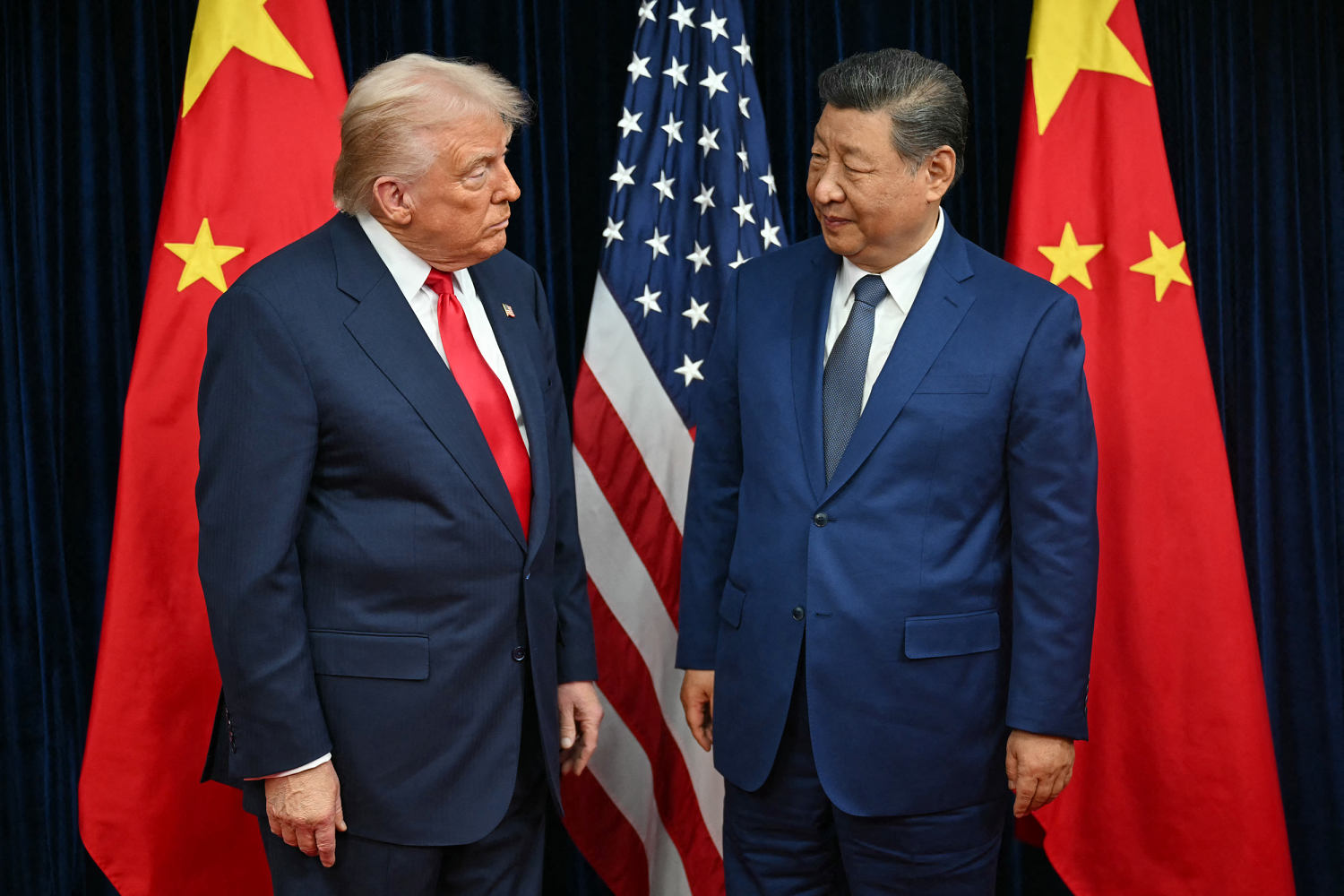
Whenever domestic debates stall out, Washington falls back on national security. Right now, hawkishness toward China is one of the few things uniting Democrats and Republicans on Capitol Hill.
Lawmakers view advanced AI models as dual-use technology—tools that can accelerate medical research on Tuesday and assist with cyberattacks or autonomous drone targeting on Wednesday. The U.S. government has tightened export controls on high-end semiconductor chips, trying to choke off Beijing's access to the computing power needed to train frontier systems.
At the same time, the Pentagon is pouring billions into defense tech startups, moving away from slow, traditional defense contractors in favor of companies building autonomous software and battlefield analytics. Critics worry this arms race mentality makes international safety agreements nearly impossible. If Washington and Beijing both treat slowing down as unilateral surrender, neither side wants to hit the brakes first.
How to Cut Through the Political Noise
If you're trying to make sense of what politicians actually stand for when they talk about artificial intelligence, stop listening to their press releases. Everyone claims they want "responsible innovation." That phrase means nothing.
Instead, watch where they land on four concrete battlegrounds:
- Liability: Should AI developers be held legally responsible when their tools cause real-world harm, or should they get broad legal shields similar to Section 230 for social media platforms?
- Copyright and Training Data: Should tech companies have to license and pay for books, journalism, music, and art used to train their models, or does scraping the open web count as fair use?
- Open-Source Weights: Should developers be free to release powerful model weights publicly for anyone to download and modify, or should frontier models stay locked behind corporate APIs with government oversight?
- Utility Costs: Should data centers pay for their own grid upgrades and dedicated power generation, or should regular residential ratepayers absorb those infrastructure costs?
Look up how your congressional representatives and state legislators vote on those four specific questions. That tells you everything you need to know about who they're actually representing when the cameras turn off.