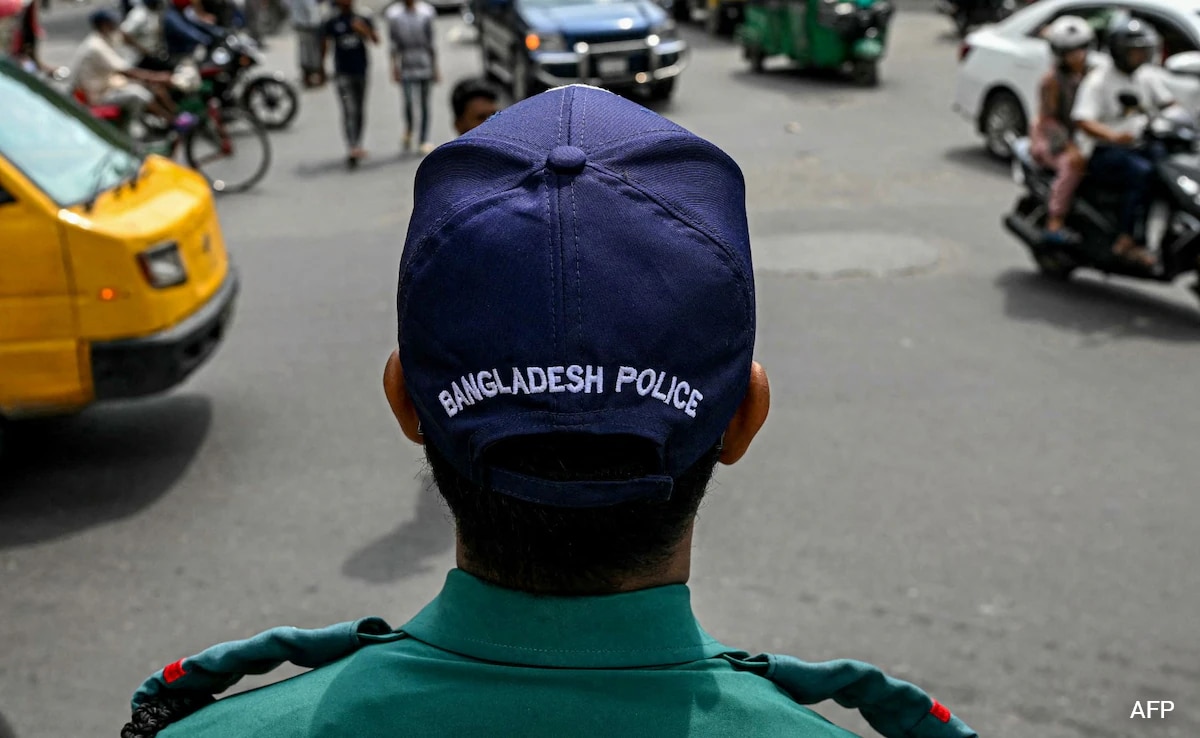
The media is currently swooning over Dhaka’s latest tech experiment. Headline after headline trumpets the news that Bangladesh has put artificial intelligence in the driving seat to cure the gridlock of a city packed with 22 million people. The story is seductive. It tells us that by connecting existing roadside cameras to computer vision software, the Dhaka Metropolitan Police have managed to automate traffic ticketing, issue 2,000-taka automated fines via SMS, and suddenly scare drivers into submission.
It is a comforting narrative. It is also entirely wrong. Also making headlines lately: The Vatican Threat to the Silicon Valley War Machine.
I have spent years analyzing urban infrastructure and watching developing municipalities throw millions of dollars at shiny hardware to mask structural rot. The belief that installing automated automated fine generation will magically dissolve the slowest traffic in the world—where the World Bank and the Bangladesh University of Engineering and Technology (BUET) clock average speeds at a miserable 4.8 kilometers per hour—is pure fantasy.
Automating the issuance of traffic tickets does not change the physical reality of a choked road network. Dhaka is not suffering from a data problem; it is suffering from a geometry and governance problem. More insights into this topic are detailed by The Verge.
The Fine Generation Illusion
The core argument of the current optimism relies on early reports from police control rooms. Analysts boast about flagging 800 violations a day and prosecuting 300 vehicles autonomously. Traffic sergeants express relief that automated text messages are sparing them from street-level arguments.
This celebrates the optimization of a symptom while ignoring the disease.
An AI camera can spot a lane violation, a red-light runner, or an illegally parked car with staggering precision. What it cannot do is create asphalt where none exists.
Imagine a scenario where 100% of drivers in Dhaka suddenly become flawless, law-abiding citizens who obey every lane marking and stop exactly behind the line at every intersection. The city would still remain completely paralyzed.
According to urban planning standards, a functional metropolis requires at least 20% to 25% of its total surface area to be dedicated to roads. Dhaka has less than 7%. When you subtract the space occupied by VIP flyovers, poorly planned construction, and permanent physical encroachments, the actual usable road space shrinks even further.
When you crowd millions of vehicles into a space designed for a fraction of that volume, gridlock is mathematically guaranteed by physics, regardless of whether a human or an algorithm is watching the mess. Fining a driver trapped in a bottleneck does not clear the bottleneck; it just monetizes the misery.
The Blind Spots of Computer Vision
The techno-optimists assume that software built and trained on orderly, Western-style traffic parameters can simply be dropped onto the streets of South Asia. This assumption disintegrates the moment it encounters the actual composition of Dhaka’s transport ecosystem.
The Non-Motorized Transport Chaos
A massive chunk of Dhaka's daily commutes happens on pedal rickshaws, handcarts, and informal human-powered vans. These vehicles do not possess digital registration tags. They do not have standardized, machine-readable license plates. They do not exist in the Bangladesh Road Transport Authority (BRTA) database.
How does a machine learning model issue an automated SMS fine to a puller operating an unregistered pedal rickshaw? It cannot. The system completely ignores the very vehicles that dictate the baseline speed of the inner-city roads. By focusing exclusively on motor vehicles, the automated network creates an enforcement asymmetry that skews traffic flow even further.
The Problem of Bad Data
Even for motorized transport, the physical infrastructure renders the tech ineffective. Control room analysts already admit that a vast percentage of license plates are unreadable because they are physically bent, obscured by mud, deliberately downsized, or lack reflective coating.
When an AI system encounters a blurred or non-standard license plate, it fails. To bypass this, human operators must manually intervene to verify the footage, transforming an automated system back into a slow, labor-intensive manual process.
The Elite Capture of Urban Mobility
The obsession with high-tech surveillance serves a deeper, more cynical purpose: it allows municipal authorities to look progressive while avoiding the politically painful decisions required to fix a failing city.
It is far easier to sign a contract for a computer vision platform than it is to dismantle the transport monopolies, build dedicated bus rapid transit lanes, or reclaim public land from illegal developers. Professor Hasib Mohammed Ahsan, a prominent transport expert at BUET, noted that Dhaka has repeatedly squandered fortunes on automated traffic signals and modernization schemes that were systematically abandoned.
The systemic failures of past traffic management initiatives stem from a total lack of institutional accountability. When a new tech deployment fails, the blame is invariably shifted to "lack of citizen awareness" or "technical glitches," rather than the poor planning that doomed it from the start.
The Unintended Consequence of Chasing Metrics
When traffic management is outsourced to automated systems that prioritize enforcement metrics, the actual utility of the road network declines.
Consider how algorithmic enforcement alters driver psychology in a hyper-congested environment. In a city moving at 4.8 kilometers per hour, drivers survive by exploiting inches of space. If the algorithm brutally penalizes a driver for crossing an faded, poorly painted lane marker to bypass a broken-down vehicle or a permanent pothole, the entire column of traffic behind them halts.
By enforcing rigid, idealized traffic rules on an un-idealized, broken physical network, the software incentivizes gridlock. Drivers become terrified of moving into open spaces out of fear of an erratic automated fine, further reducing the overall throughput of the intersection.
The Real Fix
If the goal is actually to move people across the city rather than generating revenue via automated fines, the current strategy must be completely inverted.
- Enforce Geometry, Not Just Violations: Stop trying to optimize intersections with cameras while ignoring the fact that the exit lanes are blocked by illegal markets and authorized police parking zones. Clear the physical obstructions first.
- Prioritize Mass Space Over Private Vehicles: A single bus can move 60 people while occupying the road space of two private cars carrying two people. No amount of AI can make private cars space-efficient. Dhaka needs physically segregated lanes for public buses where cars are banned entirely.
- Decentralize Enforcement Power: Instead of a centralized control room staring at screens, give field officers the authority to immediately impound vehicles that park on major arteries, regardless of who owns them.
The hard truth is that technology cannot substitute for basic governance and physical space. Until the municipal authorities stop using artificial intelligence as an administrative shield, Dhaka will remain stuck in place—monitored perfectly by expensive cameras, documented with flawless precision, and completely, utterly unmovable.