The global humanitarian complex is facing a reckoning, and the institutional response is entirely predictable. They are begging for more cash.
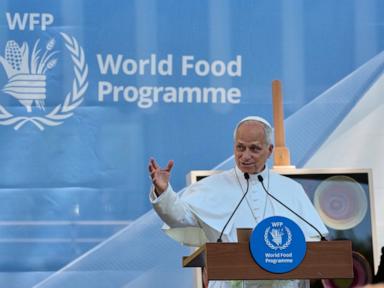
Pope Leo XIV recently sounded the alarm, warning that wars are being "fed" faster than people as international aid dries up. The consensus among NGOs, UN bureaucrats, and religious leaders is simple: donor fatigue is a moral failing, budgets are shrinking, and if we just inject billions more dollars into conflict zones, we can stabilize the human wreckage.
It is a comforting narrative. It is also fundamentally wrong.
The assumption that a lack of funding is the primary bottleneck to peace is a lazy consensus. For three decades, I have analyzed geopolitical supply chains and resource allocation in destabilized zones. I have watched well-meaning donor capital inadvertently subsidize warlords, distort local economies, and extend the shelf-life of conflicts that would have otherwise burnt out.
The harsh reality nobody wants to admit is that aid money does not just feed people. It feeds the war economy itself.
The Subsidized Conflict Loop
When a humanitarian organization steps into a conflict zone to handle food, medicine, and sanitation, they are not operating in a vacuum. They are altering the logistics of the war.
In any prolonged conflict, state and non-state actors face a massive financial burden: they must govern and sustain the population under their control, or face internal collapse. When international agencies take over the civilian survival checklist, they effectively lift the overhead costs of occupying a territory. The combatants are handed a massive fiscal reprieve. Every dollar the international community spends on bread and bandages is a dollar the local militia does not have to spend on domestic stability. They can redirect their entire budget toward ammunition, fuel, and recruitment.
This is the parasite mechanics of modern asymmetric warfare. Aid becomes a structural subsidy for ongoing hostility.
Consider how resource diversion functions on the ground. To distribute food in a militia-controlled region, NGOs must pay registration fees, tolerate "taxation" at checkpoints, and hire local transport monopolies owned by subsidiaries of the warring factions. Edward Luttwak, a renowned military strategist, famously argued in his treatise Give War a Chance that superficial humanitarian interventions prevent definitive military outcomes. By constantly stepping in to establish a baseline of survival without resolving the underlying political or military friction, external funding stretches out the timeline of violence indefinitely.
Imagine a scenario where a corporate turnaround specialist is brought into a failing, toxic company. If an outside benefactor infinitely pays the electricity bill and the frontline staff salaries without fixing the corrupt management or updating the broken product, the company limps along forever. It never fixes itself because the pain of failure has been artificially removed. Global aid functions exactly the same way in fractured states.
Dismantling the Flawed Premises of Humanitarian Aid
The public discourse around global instability is littered with flawed premises that require immediate dismantling. If you look at standard international relations questionnaires or public forums, the underlying assumptions are hopelessly naive.
Does increasing humanitarian aid reduce geopolitical instability?
No. It frequently achieves the exact opposite. When billions of dollars pour into an economically barren war zone, that money becomes the most valuable prize on the battlefield. It causes intense corruption. Local factions fight harder to control the distribution networks of that aid because controlling the food supply means controlling the populace. Capital injection without institutional guardrails turns humanitarian assistance into a highly liquid war asset.
Why is international donor funding drying up if the need is growing?
Donors are not just tired; they are becoming rational. The institutional class frames "donor fatigue" as a collective loss of empathy. In reality, it is a delayed realization of zero return on investment. When western governments look at regions that have swallowed tens of billions in aid over twenty years only to remain identically volatile, they realize they are financing a permanent status quo rather than a solution. It is not an empathy deficit; it is an efficacy deficit.
The Economic Destruction of Local Markets
The damage is not just macroeconomic or tactical; it is microeconomic. The structural dumping of free goods into a vulnerable ecosystem completely obliterates whatever remaining domestic commerce exists.
When a fleet of UN trucks unloads thousands of tons of subsidized grain or free processed food into a crisis zone, they immediately bankrupt the local agricultural sector. The smallholder farmers who managed to keep their crops alive despite the mortar fire suddenly cannot sell their harvest because they cannot compete with "free." The local supply chain is wiped out.
[External Free Food Influx]
       │
       ▼
[Local Market Price Collapses to Zero]
       │
       ▼
[Domestic Farmers Bankrupted / Abandon Fields]
       │
       ▼
[Total Permanent Dependence on Foreign Importation]
This creates a manufactured dependency loop. The longer the aid remains, the more impossible it becomes for the local economy to generate its own recovery infrastructure. When the aid eventually dries up, the starvation spike is twice as severe because the indigenous production capacity was killed off years prior by foreign generosity.
The Trade-offs of Strategic Disengagement
Shifting away from the infinite-funding model requires accepting massive, agonizing trade-offs. The contrarian approach is brutal, and it carries severe downsides that must be stated plainly.
If the international community curtails unconditional survival aid to pressure combatants toward resolution, the immediate result is short-term escalation and acute civilian hardship. It requires a cold, utilitarian calculation: accepting a brief, intense spike in friction today to avoid a seventy-year bleeding ulcer like the situations we observe in multi-generational refugee camps across the globe.
To disrupt this loop, aid must switch from a model of open-ended charity to an aggressive, conditional framework.
- Zero-Tolerance Distribution Pipelines: If a single metric ton of food is taxed or diverted by a local authority, the entire supply line to that faction's territory must instantly go cold. No negotiations. No compromise for the sake of "humanitarian access."
- Localized Procurement Mandatory Order: Stop shipping Midwestern grain across the Atlantic on subsidized cargo ships. All relief materials must be bought from adjacent, domestic markets within the continent or region, keeping capital inside the local economic sphere to incentivize production.
- Sunset Sovereignty Timelines: Aid packages must be decoupled from the emotion of the current news cycle and tied to strict, hard-coded expiration dates. Warring factions must know, with absolute certainty, that the international community's financial runway ends in exactly 24 months, forcing them to negotiate terms of governance before the safety net vanishes.
The current system pretends that keeping people alive on life support inside a burning house is a victory. It is not. It is a highly profitable industry for the NGOs involved, a moral fig leaf for Western politicians who want to appear proactive, and a death sentence for the populations trapped in forever wars.
Stop funding the burning house. Force the occupants to put out the fire.