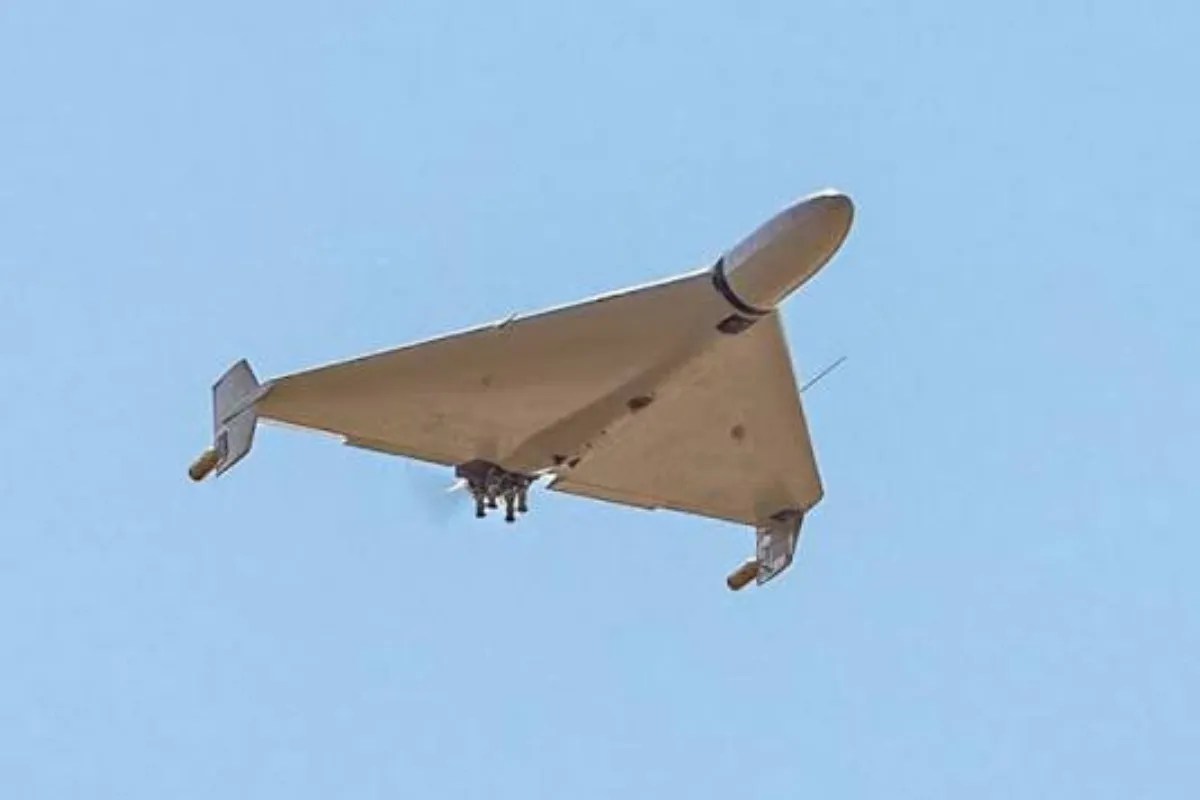
The threat is hovering right over our heads, and it isn't a sci-fi movie. FBI Director Christopher Wray dropped a massive truth bomb recently, warning that the danger of drone attacks on US soil has hit an unprecedented level. For years, we viewed drones as cool gadgets for aerial photography or toys for tech enthusiasts. That naive era is officially over. Terrorist groups and hostile actors are actively figuring out how to weaponize these cheap, readily available flying machines to bypass traditional security.
This isn't just about small quadcopters crashing into backyard fences. We're talking about modified commercial drones carrying explosives, surveillance gear, or chemical agents. The FBI's warning highlights a critical gap in homeland security. It forces us to ask a terrifying question. Is the American defense system actually ready to handle an swarm of low-altitude threats?
The short answer is no, not entirely. While the Pentagon spends billions on massive missile shields and stealth jets, the airspace just a few hundred feet above our cities remains shockingly vulnerable.
The Core Reason Behind the FBI Drone Panic
Security agencies are sweating because the barrier to entry for drone warfare has completely collapsed. You don't need a state-backed military budget to launch an aerial assault anymore. Anyone with a few hundred dollars and an internet connection can buy a high-performance drone capable of carrying a payload.
Terrorist organizations like ISIS pioneered the use of modified commercial drones in Iraq and Syria, using them for precise mortar drops and scouting. Now, that blueprint is spreading globally. The FBI isn't just worried about international terrorists either. Domestic extremists, cartel networks, and lone wolves present an identical risk.
Think about the soft targets. Stadiums packed with eighty thousand fans. Open-air political rallies. Critical infrastructure like power grids and water treatment plants. A traditional security perimeter with metal detectors and armed guards does absolutely nothing against a drone flying over the fence at forty miles per hour. The threat moves in three dimensions, but our civilian security mindset is still stuck in two.
The Massive Gaps in the American Defense System
We love to believe that the US military and homeland defense can stop anything. We have the Iron Dome technology, Patriot missiles, and advanced radar networks. But here is the hard truth. Those systems were built to track big, fast, hot things like cruise missiles and fighter jets. They're practically blind to a plastic drone flying low, slow, and quiet.
Radar Blind Spots
Standard military and civilian radars use clutter filters to ignore birds and ground anomalies. Unfortunately, a consumer drone looks exactly like a large bird on radar. If you tune the radar to detect every drone, the screen lights up with thousands of false alarms from actual birds, making it completely useless.
Legal and Bureaucratic Red Tape
This is perhaps the biggest hidden vulnerability. In the US, the Federal Aviation Administration (FAA) treats drones as aircraft. That means shooting down a drone, even a suspicious one, can technically violate federal laws against destroying aircraft. Furthermore, the Federal Communications Commission (FCC) regulates signal jamming. Local police departments usually don't have the legal authority to jam drone signals or use cyber-takeover tools because it might interfere with legitimate Wi-Fi or emergency communications. Only select federal agencies have the clear legal mandate to shoot down or disable a drone on US soil. If a drone appears over a local chemical plant, the local sheriff can't just blast it out of the sky without risking severe legal blowback.
The Swarm Nightmare
Current counter-drone tech focuses mostly on single targets. But warfare has evolved. The ongoing conflict in Ukraine demonstrates that cheap drones are most effective when deployed in waves. If ten or twenty synchronized drones target a facility simultaneously, current commercial jamming and netting systems get completely overwhelmed.
What Actually Works Against Low Altitude Threats
We aren't completely defenseless, but the solutions are complicated and expensive. Defeating a drone requires a multi-layered approach because no single technology works every time.
Radio frequency (RF) sensors scan the airwaves for the specific signals exchanged between a drone and its pilot. Once detected, jammers can flood those frequencies, forcing the drone to lose connection and either land or return to its launch point. This works great against standard retail models, but sophisticated actors use GPS-guided drones that don't rely on live radio signals at all. They fly autonomously on pre-programmed coordinates, rendering RF jammers useless.
For those autonomous threats, security teams rely on optical and thermal cameras backed by AI software to visually spot the aircraft. Once identified, the hardware options to take them down vary wildly. Some systems use high-powered lasers or high-power microwave (HPM) bursts to instantly fry the drone's internal electronics. Others deploy kinetic solutions, like firing specialized nets from automated launchers or even launching interceptor drones to physically smash into the threat.
Real Incidents That Prove the Danger
If you think this is hypothetical, you haven't been paying attention to the news over the last few years. Drones have already disrupted the highest levels of government and infrastructure.
- In 2018, a pair of industrial drones repeatedly targeted London's Gatwick Airport, grounding roughly one thousand flights and leaving over a hundred thousand passengers stranded over several days. The economic damage was massive, and the perpetrator was never caught.
- Assassination attempts using drones are already a reality. Venezuelan President Nicolas Maduro survived an attack in 2018 when two explosive-laden drones detonated near his outdoor military parade address.
- In the US, secret drone incursions happen constantly over sensitive sites. Unidentified drone swarms have been spotted repeatedly operating near nuclear power plants, military bases, and even Navy destroyers off the coast, leaving defense officials baffled and deeply concerned.
How to Prepare for the Evolving Airspace Risk
The FBI warning serves as a massive wake-up call for private enterprise and local governments, not just the military. Relying solely on federal intervention during an active aerial crisis is a losing strategy.
Security managers need to conduct immediate aerial vulnerability assessments of their facilities. Identify the blind spots from nearby rooftops or high ground where a bad actor could easily launch a line-of-sight drone attack.
Investing in passive detection systems is the next smart move. While local entities can't legally jam signals or shoot down drones yet, they can legally install acoustic and RF detection systems to get an early warning. Knowing a threat is approaching sixty seconds before it arrives gives security personnel precious time to evacuate a crowd or move a high-value asset indoors.
Lobbying for legislative change is equally vital. The legal framework governing domestic airspace defense needs an urgent overhaul to grant qualified local authorities the power to neutralize clear and present aerial threats without bureaucratic delays. The technology to cause harm is moving at lightning speed, and the laws meant to protect us need to catch up fast.