The prevailing narrative surrounding the Trump-Xi summit is a comforting sedative for the American ego. The mainstream press wants you to believe that the United States sits on an unassailable throne of silicon and software, while China merely plays a desperate game of catch-up. This is a delusion. It is a dangerous misunderstanding of how power is actually shifting in the 2020s.
Washington beats its chest about "leading in AI" because we have the flashiest consumer chatbots and the highest market caps in Silicon Valley. But while we celebrate the latest viral video generator, Beijing is perfecting the plumbing. They aren’t interested in making a smarter version of a digital assistant that tells jokes; they are interested in the industrialization of intelligence. Expanding on this theme, you can also read: Why AI for Wildfire Detection Needs a Reality Check.
The Compute Fallacy
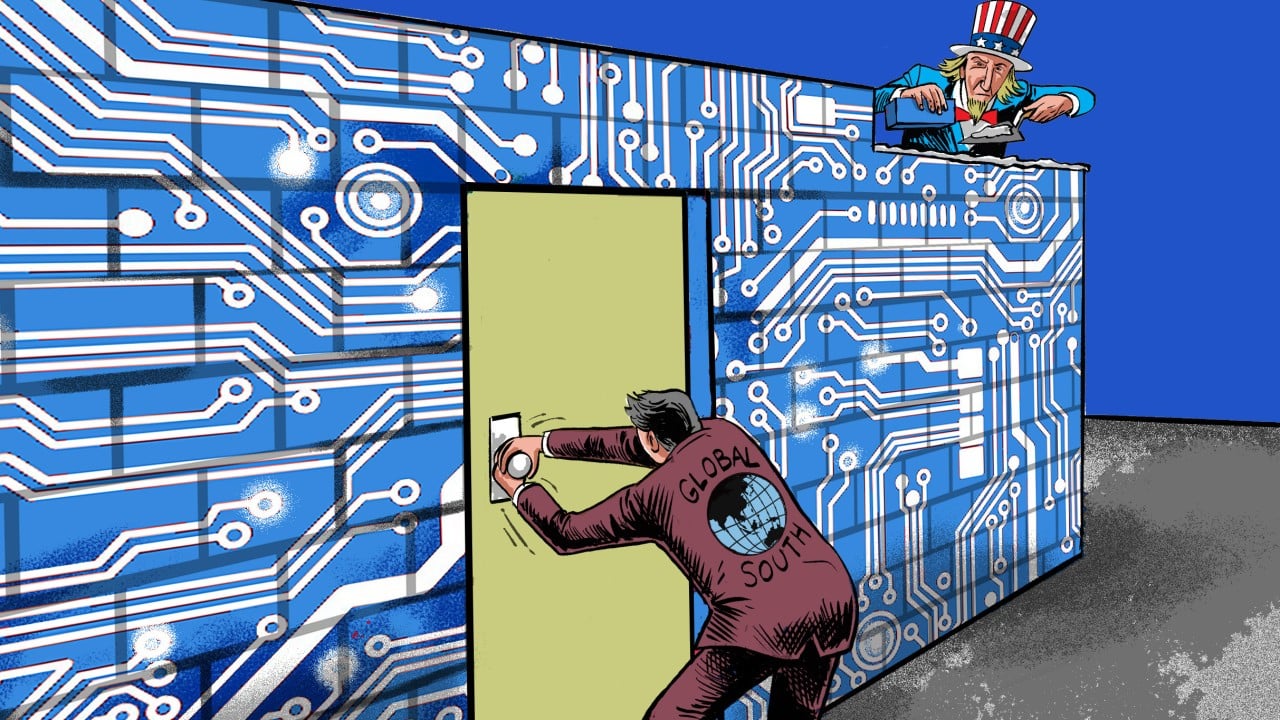
Politicians love to talk about GPU counts and export bans as if they are the only metrics that matter. The "lazy consensus" is that if we stop shipping H100s to China, their AI ambitions will hit a brick wall. This ignores the reality of hardware optimization.
I have seen companies blow millions on massive server farms only to realize their data pipelines were clogged with garbage. Raw compute is a commodity; architectural efficiency is the real edge. By forcing China into a corner with export restrictions, the U.S. has inadvertently triggered a Darwinian explosion in Chinese hardware innovation. They are learning to do more with less. They are optimizing kernels and memory management in ways American developers—spoiled by infinite cloud credits—rarely bother to do. Analysts at Wired have shared their thoughts on this trend.
China isn't just trying to copy NVIDIA. They are building an entire ecosystem that doesn't rely on the Western supply chain. If you think a trade ban stops a nation-state with a million engineers and a centralized mandate, you haven't been paying attention to history.
The LLM Is A Shiny Distraction
The media fixates on Large Language Models (LLMs) because they are legible to the general public. We see a computer "talking" and assume it means the machine is "thinking" better than the competition. Trump’s rhetoric often mirrors this surface-level fascination.
But LLMs are the tip of the spear, not the shaft. The real war is being fought in:
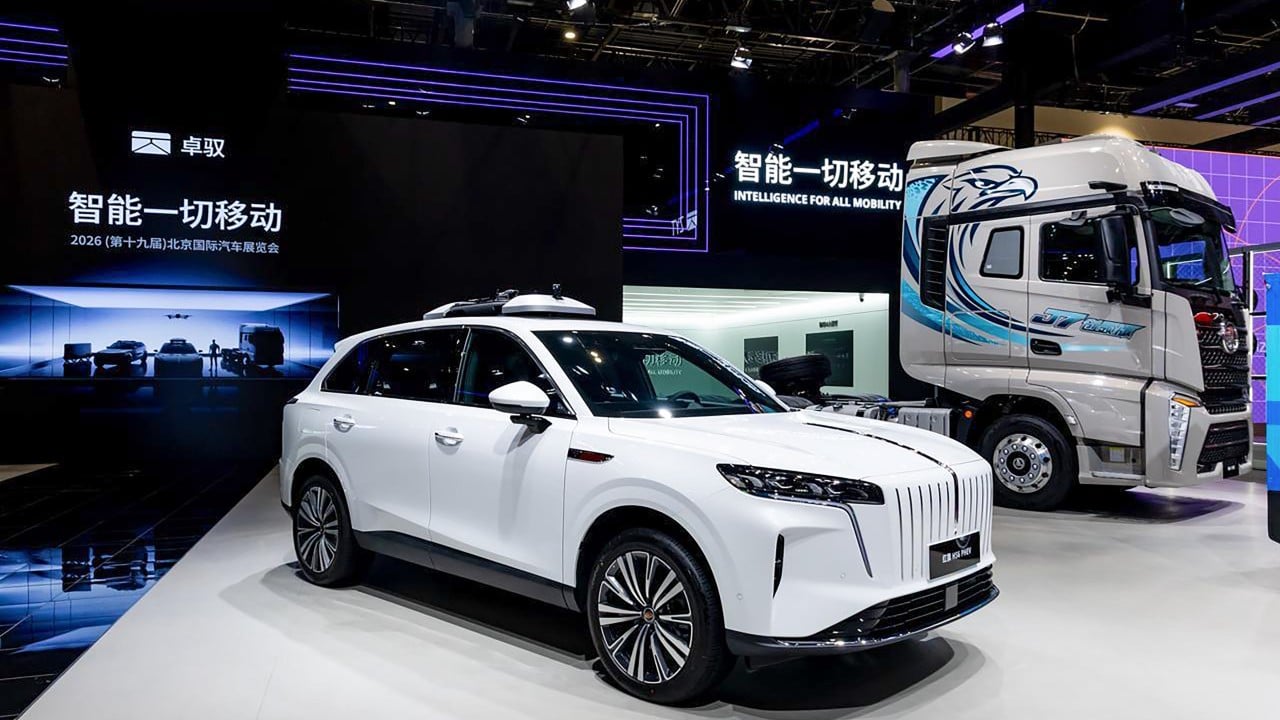
- Autonomous Manufacturing: Integrating AI into the physical assembly line where China already dominates.
- Structural Biology: Mapping proteins and accelerating drug discovery at a scale that makes our regulatory-heavy biotech sector look like it’s moving through molasses.
- Infrastructure Management: Using neural networks to optimize power grids and logistics for an entire continent.
The U.S. leads in "Chatter." China is aiming for "Control." While we debate the ethics of AI-generated art, Beijing is deploying AI to ensure their supply chains are 20% more efficient than ours. In a global conflict or an economic downturn, efficiency wins over aesthetics every single time.
Data Sovereignty vs. Privacy Theater
We need to address the elephant in the room: Data. The U.S. is paralyzed by a schizophrenic approach to data. We want the benefits of AI, but we are (rightfully) terrified of our own tech giants. This creates a fragmented, noisy data environment.
China has no such friction. They treat data as a national resource, much like oil or rare earth minerals. They have access to 1.4 billion people’s worth of medical records, financial transactions, and behavioral patterns, all standardized and accessible for training models.
Imagine a scenario where a Chinese medical AI has trained on 100 times the variety of cancer biopsies than any American system. Who wins that race? It won't be the one with the "freer" society; it will be the one with the most comprehensive dataset. We are bringing a knife to a gunfight and calling the knife "moral superiority."
The Talent Hemorrhage
The U.S. "lead" in AI is largely a lead in recruitment. We have spent decades vacuuming up the brightest minds from around the world. But that vacuum is losing its seal.
Restrictive visa policies and a rising tide of geopolitical tension are making the U.S. a less attractive destination for the very researchers we need. For the first time in thirty years, high-level AI researchers are choosing to stay in Beijing or move to neutral hubs like Singapore or Dubai.
If we lose the brain drain, we lose the war. You can build all the chip plants in Ohio you want, but without the minds to write the fundamental algorithms, those factories are just expensive heaters.
The Myth Of The "Meeting"
When Trump and Xi sit down to discuss AI, they aren't actually discussing technology. They are discussing borders. The idea that a single meeting can "set the rules of the road" for AI is a fantasy.
AI is not a nuclear weapon. It is not a physical asset you can count with a satellite. It is math. You cannot legislate math, and you cannot contain it with a handshake.
The U.S. strategy of "Lead through Regulation" is a contradiction in terms. You cannot regulate a technology you haven't fully mastered, and you cannot master it if you are constantly trying to put it in a cage. We are so focused on preventing "AI bias" and "hallucinations" that we are ceding the fundamental ground of capability.
Stop Asking If We Are Winning
The "People Also Ask" sections of the internet are filled with variations of: "Is the U.S. ahead of China in AI?"
This is the wrong question. It’s a vanity metric.
The real question is: "Is the U.S. economy becoming more productive because of AI at a faster rate than China's?"
Currently, the answer is a resounding no. We are using AI to optimize ad clicks and write emails. China is using it to automate their ports and stabilize their currency. We are winning the "cool" contest. They are winning the "utility" contest.
The Cost Of Our Hubris
I have sat in boardrooms where executives dismiss Chinese models as "derivative." This is the same arrogance that led the American auto industry to ignore Japanese imports in the 1970s.
Chinese models like Qwen and Yi are already topping open-source leaderboards. They are often more efficient and better at reasoning in non-English contexts. If we continue to believe that American ingenuity is a magical, untouchable force, we will wake up in five years to find that the global standard for AI isn't built in Mountain View, but in Zhongguancun.
Our "lead" is a legacy of the 20th century. AI is the 21st-century's Great Equalizer.
The Actionable Pivot
If the U.S. actually wants to maintain dominance, we have to stop treating AI like a PR tool for presidential summits.
- Stop the Hardware Obsession: Sanctions are a delay tactic, not a victory. We need to out-innovate on the algorithmic level so that hardware constraints become irrelevant.
- Open the Borders for Brains: Every PhD student in AI at an American university should have a Green Card stapled to their diploma.
- Industrialize AI: Move the focus from Silicon Valley "apps" to the Rust Belt "atoms." If AI doesn't make our physical world better, it's just a digital toy.
We are currently the world leaders in talking about AI. We are rapidly losing our status as the world leaders in doing AI. The summit wasn't a victory lap; it was a final warning.
Stop looking at the stock prices. Start looking at the patents, the power consumption, and the publication rates. The map is being redrawn while we stare at the old one.
Build something that works in the dirt, not just in the cloud. Or get used to living in a world where the most important decisions are made by an intelligence that doesn't speak your language.