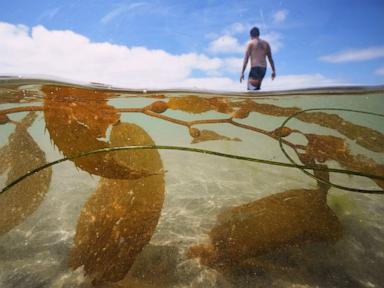
We love a good corporate fairy tale. Drop three square miles of floating lines six miles off the Ventura coast, grow giant kelp, save the avocado fields, capture all the carbon. Handshakes all around. The California Coastal Commission gave the green light. Headlines trumpet the dawn of a domestic seaweed revolution.
It is brilliant theater. It is also an expensive distraction from basic economic and biological reality.
I have watched companies burn millions of venture dollars chasing blue-sky ocean tech that looks incredible in a slide deck and completely collapses against open-ocean physics. Let us dismantle the lazy consensus.
The Logistics Mirage
The central myth of industrial open-ocean macroalgae cultivation is that scale cures everything. Proponents look at Asia's massive seaweed production and assume you can copy-paste that model into the rough, deep, high-energy waters of the Pacific.
You cannot.
Asian production happens primarily in sheltered shallow bays, near cheap labor, with centuries of localized empirical tuning. Pushing three square miles of federal waters six miles offshore into the open Pacific means dealing with punishing swells, corrosive marine environments, and biofouling that weighs down infrastructure overnight.
Imagine a scenario where a rogue winter storm hits an unstaffed grid of taut subsurface lines loaded with thousands of tons of biomass. The engineering tolerances required to keep that array intact without breaking loose or entangling local marine life are astronomical. When lines snap in a gale, that biomass does not gracefully recycle; it becomes a tangled hazard floating straight toward protected habitats.
The company behind this project, Ocean Rainforest, plans to scale up over a decade to harvest 6,000 tons. Six thousand tons sounds like a lot until you look at agricultural input math. California agriculture consumes millions of tons of soil amendments and fertilizers annually. A boutique offshore operation yielding a few thousand tons of processed biostimulant is a rounding error for Ventura County strawberries and avocados. It is a boutique luxury product priced like commodity infrastructure.
The Carbon Sequestration Shell Game
Then there is the climate narrative. Every press release loves to claim that growing kelp sucks carbon out of warming ocean waters and locks it away forever.
Nature does not work for free.
Macrocystis pyrifera grows fast because it metabolizes nutrients aggressively. But true carbon sequestration requires that biomass to sink below the deep-ocean carbon horizon—typically thousands of meters down—where it remains out of circulation for centuries. Harvesting that kelp, dragging it back to the port of Ventura, processing it into agricultural soil treatments, and spreading it on land means that carbon is rapidly oxidized and released right back into the atmosphere via microbial respiration.
You are not burying carbon. You are giving plants a fancy haircut and calling it geoengineering.
If you want real carbon storage in marine environments, protect existing, intact coastal ecosystems like natural kelp forests and salt marshes instead of building industrial manufacturing zones in the middle of pelagic habitats. Oceana's director of fishery innovation called this area a blue Serengeti for good reason. Turning a wild marine highway into an industrial crop field under the guise of green salvation is an inversion of logic.
The Capital Allocation Blunder
We are pouring federal grant money and regulatory energy into high-risk pelagic farming while terrestrial agricultural waste streams go unoptimized. We have massive quantities of nutrient-rich agricultural byproducts, municipal compost, and anaerobic digestate sitting right on land where tractors can reach them without a fleet of specialized harvest vessels and offshore permits.
Processing seaweed harvested six miles offshore requires energy-intensive drying, transport, and chemical extraction. By the time that kelp-derived fertilizer hits an avocado farm, its carbon footprint and financial cost per nutrient unit often eclipse the synthetic alternatives it is supposed to replace.
The market for seaweed in pet food, high-end foods, and specialized amendments is real, but it belongs in a disciplined, modular market niche. Turning it into a geopolitical crusade for energy independence or climate salvation is bad accounting.
Stop pretending that moving farming into the roughest parts of the ocean solves systemic land-use failures. It does not. It just moves the mess where fewer voters can see it.
Seeding an Ocean Rainforest for the 21st Century
This video details the operational mechanics and federal backing behind the very open-ocean kelp cultivation models driving California's new marine farming initiatives.
http://googleusercontent.com/youtube_content/1