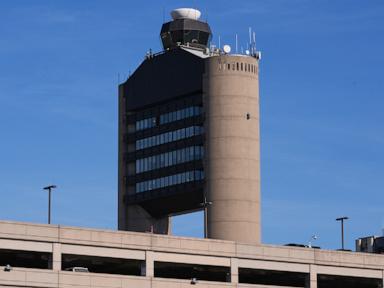
A separation distance of 300 feet between two commercial passenger jets moving at operational speeds represents an near-total depletion of the safety margins required by modern aviation. The weekend incident at Boston Logan International Airport involving Delta Air Lines flight 2351 and an American Airlines flight highlights a persistent vulnerability in modern aviation: geometry-induced risk at intersecting runways. When an arriving aircraft must execute an emergency go-around because a departing aircraft occupies the exact intersection of its landing path, the failure is not isolated to a single cockpit. It points to a breakdown in the predictive capacity of the air traffic management system.
To evaluate why these events continue to challenge infrastructure, the underlying structural risk vectors, human telemetry constraints, and technical mitigation bottlenecks must be broken down systematically.
The Geometry of Intersecting Runways and the Conflict Window
Boston Logan International Airport operates a complex layout where multiple active runways physically intersect. This layout creates shared conflict zones. When Runway A and Runway B cross, they share a critical square of concrete. Managing this space requires strict separation in time, given that separation in space is physically impossible at the point of intersection.
The mechanics of this specific near-miss involve two distinct phases of flight occurring simultaneously:
- The Arrival Profile: Delta flight 2351, an incoming flight from Dallas carrying 129 passengers and six crew members, was on final approach. An aircraft in this phase is stable, configured for landing, and descending at a fixed glideslope, leaving minimal room for sudden trajectory adjustments other than a climb.
- The Departure Profile: The American Airlines aircraft was executing its takeoff roll on an intersecting runway. During a takeoff roll, a flight crew is fully committed to accelerating past decision speeds ($V_1$), meaning their ability to abort or stop short of an intersection diminishes to zero within seconds.
The conflict window occurs when the time-to-intersection for both aircraft converges toward zero simultaneously. Flight data analyzed by safety engineers shows that the physical distance between the two hull structures closed to approximately 300 feet (90 meters). At typical commercial jet transition speeds—ranging between 130 to 160 knots—300 feet translates to a temporal margin of less than 1.5 seconds.
The Human Telemetry and Communication Bottleneck
When automated systems or strategic planning fail to prevent a runway incursion, the final layer of defense relies entirely on human telemetry: visual acquisition, voice communication via Very High Frequency (VHF) radio, and cognitive processing speed.
The Perception-Response Latency Loop
In a high-density terminal environment, the human brain operates under a structured sequence before an action is executed. This sequence can be broken down into four distinct phases:
- Detection: The pilot or air traffic controller physically sees the conflict on a radar display, out the window, or via an alert system.
- Evaluation: The operator recognizes that the current trajectories will lead to a collision.
- Decision: The operator determines the correct evasive maneuver (e.g., initiating a go-around vs. aborting takeoff).
- Execution: The physical manipulation of the controls or transmission of the radio command.
Under optimal conditions, this loop requires 2.0 to 3.0 seconds. When two professional airline crews and highly trained controllers encounter a rapid compression of space, the time required to complete this loop can exceed the time available before impact.
Radio Frequency Congestion
The second structural limitation is the simplex nature of aviation VHF radio communication. Only one party can transmit on a frequency at any given moment. If a controller attempts to broadcast a critical go-around instruction at the exact millisecond a pilot is acknowledging a different instruction, the transmissions "block" each other, resulting in auditory static. This creates an immediate communication bottleneck that can delay life-saving maneuvers by several critical seconds.
Technological Mitigation Gaps and Systemic Failure
Modern airports use technologies like Airport Surface Detection Equipment, Model X (ASDE-X) and Airport Surface Surveillance Capability (ASSC) to track ground movements and prevent collisions. These systems synthesize data from surface movement radar, transponders, and primary radar to predict conflicts and alert controllers.
However, these systems possess inherent structural limitations in predictive logic:
- Linear Trajectory Tracking: Surface surveillance systems excel at predicting conflicts when vehicles move along predictable, linear paths at steady speeds.
- The Turning Dynamic: When an aircraft is accelerating or decelerating non-linearly, or when an incoming aircraft is transitioning from a three-dimensional glide path to a two-dimensional runway environment, predictive software algorithms can experience latency.
- Alert Threshold Dilemmas: If software engineers set alert thresholds too wide, controllers suffer from alarm fatigue due to constant false positives during routine tight operations. If the thresholds are set too narrow, the system generates an alert only when a collision is already imminent, rendering the technological safety net ineffective.
Operational Reality of Go-Around Performance
A go-around is a standard, practiced safety procedure designed to transition an aircraft from an unstable approach or blocked runway back into a safe climbing configuration. However, executing a go-around at low altitude, under 300 feet, introduces severe aerodynamic and mechanical loads.
[Approach Configuration: Flaps Extended / Low Speed / Descending]
                           │
             (Initiate Go-Around Command)
                           │
                           ▼
[Turbofan Engine Spool-Up Latency: 4 to 6 Seconds to Max Thrust]
                           │
                           ▼
[Pitch Transition & Flap Retraction: Induced Drag Increases Temporarily]
                           │
                           ▼
[Positive Rate of Climb Established]
The primary risk during a low-altitude go-around is engine spool-up latency. High-bypass turbofan engines require anywhere from 4 to 6 seconds to transition from approach idle power to maximum takeoff thrust. During this window, the aircraft continues to sink due to inertia before establishing a positive rate of climb. If an intersecting aircraft crosses the runway path during this specific 5-second power transition, the arriving jet lacks the instantaneous performance capacity to immediately clear the zone.
Actionable Operational Recommendations
Addressing runway incursions requires structural and systematic changes rather than relying entirely on human vigilance.
Aviation authorities and airport management must implement strict operational constraints at high-density crossing-runway environments like Boston Logan:
- Deconfliction of Simultaneous Operations: Restrict the authorization of simultaneous land-and-hold operations (LAHSO) or intersecting arrivals and departures during peak traffic hours, prioritizing single-axis or parallel runway flows whenever environmental factors allow.
- Mandatory Digital Taxi Alerts: Accelerate the deployment of flight deck-based surface indication systems that pipe real-time traffic alerts directly to pilot displays, removing the dependency on verbal controller instructions.
- Dynamic Intersection Hold Lines: Implement variable, illuminated runway status lights (RWSL) embedded directly in the concrete that automatically turn red when a crossing runway is occupied, providing an instantaneous visual indicator directly to the departing flight crew.