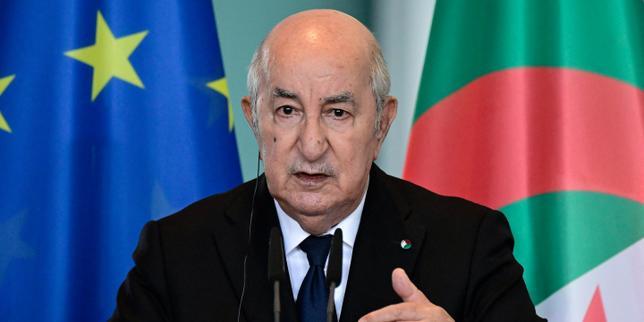
The diplomatic architecture linking North Africa and the Gulf has fractured, marked by Algiers officially severing state-to-state relations with the United Arab Emirates. Operating under a framework of calculated escalation, the administration of Algerian President Abdelmadjid Tebboune invoked a 48-hour expulsion order for the Emirati ambassador, citing persistent, unmitigated friction across regional and domestic vectors. This outcome is not an isolated diplomatic anomaly; rather, it represents the terminal point of structural incompatibility between two divergent statecraft models. Deconstructing this geopolitical rupture requires analyzing the underlying vectors: security doctrines, economic decoupling, and regional proxy alignment.
The Security Vector and Sovereignty Protection
At the core of the Algerian foreign policy doctrine lies an uncompromising adherence to non-interference, a principle forged during its historical trajectory and enshrined within its institutional memory. Algiers views its internal sovereignty and regional perimeter through a risk-mitigation lens that treats foreign intelligence operations and external financial influence as acute systemic threats.
The friction with Abu Dhabi intensified as Algerian state organs identified what they categorized as persistent, provocative actions targeting internal stability. From the perspective of Algerian strategic planners, Emirati diplomatic and intelligence footprints across North Africa and the Sahel intersected adversely with Algerian security interests. When a state perceives that a bilateral partner's regional footprint systematically undermines its primary national security objectives, the diplomatic cost of maintaining relations eventually eclipses the economic or political utility of the partnership.
Algiers utilized a threshold-based warning system before executing the break. By formally stating that all diplomatic channels had been exhausted, the Algerian foreign ministry signaled that state-to-state signaling mechanisms had failed to modify Abu Dhabi's calculus. Expelling the ambassador within a strict 48-hour window converts latent diplomatic coldness into an active, structural quarantine.
Economic Decoupling and Institutional Friction
Diplomatic rupture rarely occurs in an economic vacuum. Months prior to the formal severance, bilateral frictions manifested across trade and transit corridors. In April, Algiers systematically dismantled operational touchpoints by halting flights operated by Emirati carriers and canceling foundational air services agreements. Restricting airspace access serves as a physical manifestation of economic decoupling, raising transaction costs for corporate entities linked to the Gulf state.
Concurrently, the regulatory environment for Emirati capital operating inside Algeria underwent aggressive auditing. State review boards scrutinized corporate stakes held by Emirati entities, triggering threats from Abu Dhabi regarding potential international arbitration. When sovereign wealth and corporate investment strategies clash with state-directed national security protectionism, economic integration unravels. The state prioritizes political insulation over foreign direct investment inflows, accepting short-term market friction to eliminate long-term external vulnerability.
This dynamic mirrors the precedent set when Algeria severed ties with Morocco in August 2021. Algiers exhibits a low tolerance threshold for economic partnerships that it believes double as vectors for geopolitical competition. The transition from commercial friction to asset review and transportation bans creates a compounding feedback loop, ensuring that once political trust is lost, economic ties degrade rapidly.
Regional Proxy Alignment and Strategic Divergence
The structural divide between Algeria and the United Arab Emirates is fundamentally anchored in competing visions for regional order across North Africa and the Sahel. Abu Dhabi pursues an assertive, transactional foreign policy characterized by dynamic alliances, commercial expansion, and proactive counter-islamist interventions. Conversely, Algiers adheres to traditional Westphalian diplomacy, emphasizing state borders, non-alignment, and institutionalized mediation.
These contrasting doctrines collided across multiple regional theaters. In the Sahelian security complex, diverging alliances and military cooperation frameworks created direct friction. Furthermore, sensitivities surrounding territorial integrity and separatism amplify threat perceptions within Algiers. When external actors cultivate influence networks or diplomatic postures that align with geopolitical competitors along a nation's periphery, the affected state responds by hardening its perimeter.
Public rhetoric from the Algerian presidency reflected this widening chasm, characterizing the partnership's regional footprint in highly critical terms. By framing the friction as an incompatibility between sovereign stability and external disruption, Algiers legitimized the severance to domestic audiences, positioning the move as a necessary defensive consolidation.
Strategic Forecast
The immediate consequence of this diplomatic break is the total freezing of high-level state communication, leaving third-party intermediaries as the sole conduits for any future de-escalation. Economic ties will remain depressed as existing joint ventures face administrative stagnation or liquidation, and commercial aviation routes will stay severed pending a fundamental shift in leadership calculus in either capital.
Regional multilateral organizations will absorb secondary shockwaves, as Algeria and the UAE find themselves consistently operating on opposing sides of diplomatic blockages within Arab and African forums. For external observers, this rupture underscores a broader systemic reality: middle powers with robust resource bases are increasingly willing to absorb immediate economic penalties to enforce strict behavioral boundaries on hyper-active regional actors. The diplomatic architecture has been reset to zero, and rebuilding trust will require structural guarantees that neither state is currently positioned to offer.