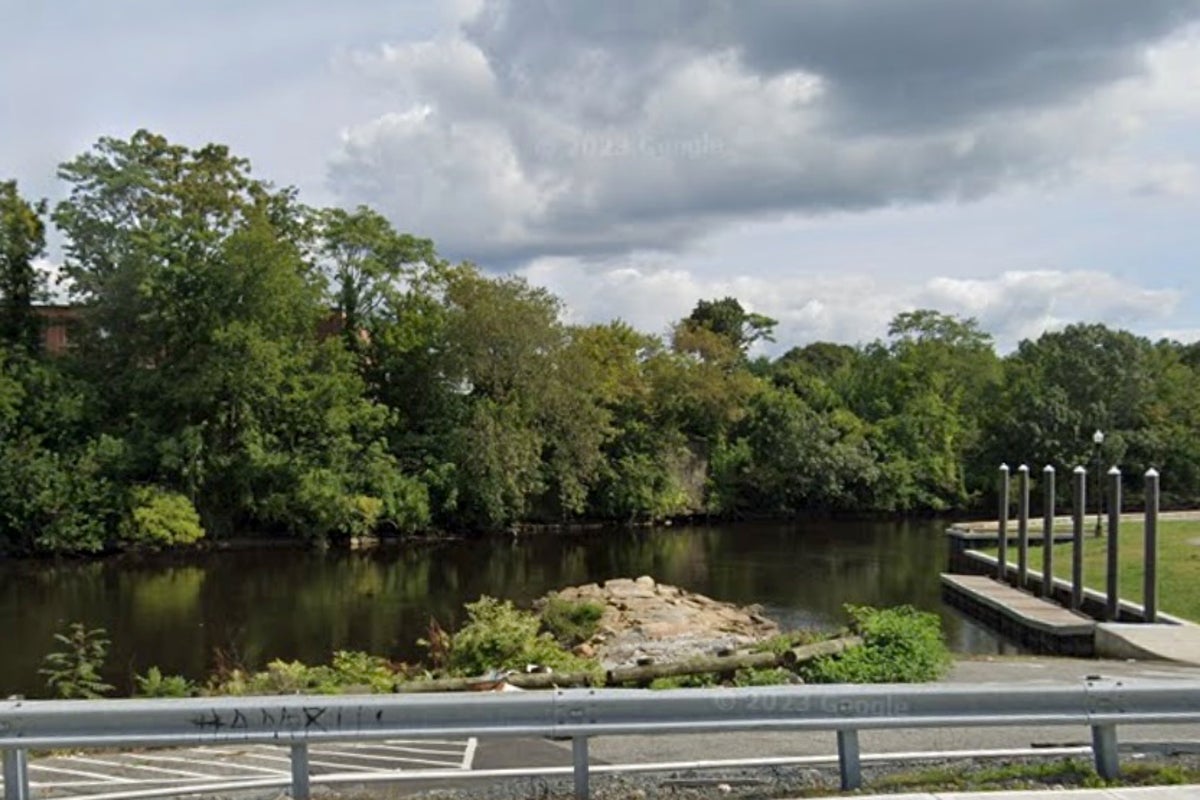
Vehicular accidents involving immersion in bodies of water exhibit a disproportionately high fatality rate compared to terrestrial impacts, primarily due to the rapid convergence of mechanical failure, environmental hazards, and compromised human psychology. When these incidents occur during non-professional driver training phases, the risk profile escalates exponentially. The transition from controlled terrestrial operation to an aquatic hazard introduces a sequence of catastrophic failure points that can be systematically mapped through human factors engineering, kinetic analysis, and structural barrier assessments.
Understanding these events requires moving beyond the superficial narrative of driver error to analyze the compounding variables that transform a minor velocity deviation into a multi-generational fatal event.
The Tri-Axis Risk Framework in Novice Vehicle Operation
The vulnerabilities of driver-training operations in proximity to aquatic hazards can be categorized into three distinct risk axes: kinetic control degradation, environmental interface failures, and the cognitive paralysis of the supervisor.
                  [Kinetic Control Degradation]
                    (Pedal Misapplication /
                     Unintended Acceleration)
                               |
                               v
[Environmental Interface] ---> (Fatal Event) <--- [Cognitive Paralysis]
(Lack of Physical Barriers/                        (Delayed Intervention/
 Hydrodynamic Trapping)                            Inverted Pedal Controls)
1. Kinetic Control Degradation and Pedal Misapplication
In novice drivers, the neuromuscular pathways governing panic responses are unrefined. When an unexpected trajectory occurs, the instinctual reaction is often a binary muscle contraction. Data from vehicular safety databases indicates that pedal misapplication—mistaking the accelerator for the brake—occurs at a significantly higher frequency among operators under instruction and elderly drivers.
When a vehicle faces a hazard, the novice driver frequently applies maximum pressure to the accelerator while believing they are braking. This creates a closed-loop acceleration cycle:
- The vehicle surges forward unexpectedly.
- The driver experiences elevated G-forces and panic, confirming their belief that the "brakes" are failing.
- The driver increases pressure on the incorrect pedal, maximizing engine torque up to the point of impact or environmental egress.
2. Environmental Interface Vulnerabilities
The physical boundaries separating vehicular pathways from deep water bodies represent a critical infrastructure dependency. In many municipalities, secondary and tertiary roads adjacent to rivers, canals, or docks lack energy-dissipating barriers, such as W-beam guardrails or reinforced concrete Jersey barriers.
The absence of these structures changes the outcome of a tracking error from a property-damage incident to a life-threatening immersion. Sloped embankments compound this risk by acting as gravity-assisted launch mechanisms, preventing the vehicle's tires from regaining traction and accelerating the vector of descent toward the water matrix.
3. Cognitive Paralysis and Dual-Control Latency
In a standard training configuration lacking dual-pedal modifications—a common scenario in private, non-commercial instruction between family members—the passenger acting as the instructor possesses zero direct mechanical override capability. The instructor’s intervention is limited to verbal commands or attempts to manipulate the steering wheel from an inverted physical orientation.
This architecture introduces fatal latency:
- Perception Latency: The instructor must recognize that the driver’s input is erroneous (0.5 to 1.0 seconds).
- Decision Latency: The instructor must determine whether to grab the wheel, shift the transmission to neutral, or engage the emergency brake (0.75 seconds).
- Physical Execution Latency: The physical act of reaching across the console or wrestling control of the steering mechanism from a panicked driver locked in rigid muscle contraction (1.0 to 2.5 seconds).
By the time physical intervention occurs, the vehicle has frequently traversed the clear-zone distance between the roadway and the water's edge.
Hydrodynamic Submersion Dynamics and Structural Trapping
Once a vehicle breaches the terrestrial-aquatic boundary, it enters a predictable mechanical and hydrostatic timeline that rapidly eliminates avenues of escape. The myth of immediate vehicle sinking obscures the actual phases of immersion, which dictate survival probability.
The Three Phases of Vehicular Immersion
| Phase | Duration | Physical Characteristics | Survival Action Barrier |
|---|---|---|---|
| Flotation Phase | 30 to 180 seconds | Vehicle floats on structural air pocket; electrical systems may function. | Primary escape window; doors cannot be opened due to hydrostatic pressure; egress must occur via side windows. |
| Sinking Phase | 1 to 5 minutes | Water enters engine bay and cabin; vehicle angles downward (typically engine-first); water pressure rises against glass. | Structural deformation may lock windows; water level inside reaches chest height, inducing extreme hypothermic or psychological shock. |
| Submerged Phase | Indefinite | Internal and external pressures equalize; vehicle settles on bed of water body. | Visibility drops to zero; orientation is lost; egress requires locating equalized doors under total darkness. |
The primary impediment to survival during the flotation phase is hydrostatic pressure. Air trapped inside the cabin creates a low-pressure void relative to the rapidly rising water outside. This differential exerts thousands of pounds of force against the exterior door panels, rendering human physical extraction impossible until the internal volume is completely filled with water—a point at which cognitive clarity is typically spent.
A secondary failure point involves automated systems. Modern vehicular architectures rely on electronic control units (ECUs) situated in lower chassis compartments. While automotive wiring harnesses feature water-resistant sealing, direct immersion initiates short circuits within minutes. If power windows are not actuated immediately within the first 30 seconds of entry, the windows lock permanently as the electrical bus fails, trapping occupants inside a sealing metal vault.
The Human Factor: Multi-Generational Cognitive Cascades
The presence of multi-generational occupants—specifically elderly instructors and toddlers—fundamentally alters the rescue and self-egress dynamic. Human factors engineering models safety through the lens of physical capability and cognitive load distribution.
The Dependency Vortex
In an emergency immersion scenario, a solo adult driver focuses entirely on self-preservation and egress mechanics (unbuckling, opening a window, exiting). The presence of dependents creates a dependency vortex that paralyzes action.
                  [Vehicle Immersion Occurs]
                              |
                              v
                [Dependent Priority Conflict]
               /                              \
              v                                v
    [Adult 1: Unbuckle Self]        [Adult 2: Locate Toddler]
              |                                |
              v                                v
     (Requires 3-5 Sec)             (Zero Visibility/Panic)
              \                                /
               v                              v
             [Failed Coordinated Egress Matrix]
An adult passenger tasked with extracting a two-year-old child from a rear-facing, five-point harness car seat must execute complex tactile maneuvers under zero visibility, freezing temperatures, and shifting gravitational orientations as the vehicle pitches forward. The physical force required to release a submerged seatbelt buckle can increase due to fabric swelling and structural distortion of the seat frame under water pressure.
The older instructor or driver often experiences rapid physical degradation under stress. Age-related declines in grip strength, joint mobility, and stress-induced cardiovascular spikes mean that elderly occupants face a diminished capacity to shatter automotive safety glass or navigate the confined, fluid-filled geometry of a sinking cabin. The cognitive load shifts from sequence-based survival execution to chaotic, uncoordinated rescue attempts, consuming the critical 60-second flotation window.
Systemic Failures in Private Driver Pedagogy
The reliance on informal, familial training networks represents a systemic flaw in civilian licensing structures. Commercial driving instruction utilizes modified vehicles equipped with secondary braking systems on the passenger side, alongside standardized hazard-avoidance curricula that forbid operational maneuvers near unbarricaded geographic hazards.
Private instruction operates without these structural safety nets. The choice of training location is often dictated by a false perception of safety: selecting empty parking lots or quiet rural roads running parallel to waterways because they lack heavy commercial traffic. This heuristic fails to account for the catastrophic nature of edge-case errors where the lack of traffic is offset by the presence of terminal environmental hazards.
The lack of formalized risk management protocol in private training means that:
- Vehicle Dynamics Pre-checks are Ignored: Tires, brake responsiveness, and emergency brake functionality are rarely verified before handing control to a novice.
- No Ingress/Egress Briefings Exist: Occupants do not establish emergency protocols for mechanical failures or off-road excursions.
- Critical Control Accessibility is Poor: Hand-operated mechanical parking brakes, which could act as an instructor override, are increasingly replaced by electronic dashboard switches that cannot be effectively modulated or reached in an emergency by a passenger.
Operational Mandates for Risk Elimination
Preventing multi-casualty training events requires a shift from retroactive emergency response to proactive system insulation.
Municipal engineering must prioritize the installation of continuous containment infrastructure along any roadway where the clear-zone distance to an aquatic hazard is less than 30 feet, irrespective of posted speed limits or historical traffic density. Novice drivers do not respect speed boundaries during pedal misapplication incidents; design specifications must account for maximum engine acceleration from a standstill.
Regulatory frameworks governing driver licensing should mandate that the initial phases of behind-the-wheel instruction occur exclusively in environments isolated from deep terrain drop-offs, high-voltage infrastructure, and water bodies. Until an operator demonstrates subconscious mastery of braking mechanics and trajectory correction through verified simulator or closed-course evaluation, exposure to terminal environments represents an unacceptable systemic risk.