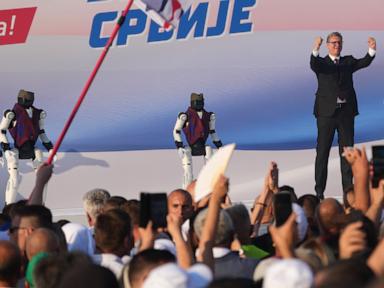
The announcement of a planned executive resignation within competitive authoritarian regimes is rarely an admission of defeat; it is an exercise in risk optimization. When Serbian President Aleksandar Vucic declared his intention to step down within weeks, forcing snap presidential and parliamentary elections, standard journalistic accounts characterized the move as a concession to 19 months of youth-led anti-government protests. A rigorous structural analysis reveals the opposite. The resignation represents a calculated reanchoring designed to bypass constitutional term limits, short-circuit opposition momentum, and consolidate legislative power under a new institutional architecture.
Understanding this maneuver requires separating immediate political noise from long-term systemic incentives. By analyzing the constitutional constraints, demographic friction points, and coalition dynamics currently shaping the Belgrade administration, we can map the exact strategic calculus driving this transition.
The Institutional Lifespan of a Terminal Presidency
To understand why an autocrat voluntarily surrenders the highest office in the state, one must calculate the diminishing marginal utility of a terminal term. Under Article 116 of the Serbian Constitution, a president is restricted to two terms. Vucic’s second and final mandate was legally bound to expire in mid-2027.
A lame-duck status in a highly centralized patronage system introduces structural volatility. As the hard deadline of 2027 approached, the ruling Serbian Progressive Party (SNS) faced an compounding depreciation of authority. Bureaucrats, regional party bosses, and security apparatuses naturally begin reassessing their loyalties when the central point of the patronage network faces compulsory retirement.
[Institutional Decay Function]
Time T_0 (Election) ------> Time T_mid (Peak Power) ------> Time T_end (Lame-Duck Vulnerability)
    |                               |                                |
    v                               v                                v
High Mandate                 Stable Patronage                Factional Fragmentation
By engineering an early exit, Vucic neutralizes this decay function. The constitutional mechanism dictates that upon a presidential resignation, early elections must be called within a strict 90-day window, during which the parliamentary speaker assumes the role of acting president. This compressed timeline yields three distinct structural advantages for the incumbent regime:
- Information Asymmetry: The ruling elite controls the exact timing of the collapse, forcing an fractured opposition to mobilize overnight without the necessary campaign infrastructure or financial liquidity.
- The Resetting of the Electoral Clock: Instead of defending a record through a prolonged period of economic and social friction leading up to 2027, the regime forces a high-stakes, zero-sum confrontation immediately, resetting the legislative mandate for another four years.
- Institutional Transference: While the presidency carries immense symbolic weight, real administrative power in Serbia resides in the prime minister's office and the control of budgetary allocations. Shifting from a term-limited presidency back to the position of prime minister—a role Vucic previously held—allows for the legal preservation of executive control without violating constitutional texts.
The Two Pillars of Hegemonic Risk Management
The immediate catalyst for this structural adjustment is a sustained period of civil unrest. Following the November 2024 concrete canopy collapse at the Novi Sad railway station, which resulted in 16 fatalities, public anger evolved from localized grief into a systematized, student-led protest movement. For over a year and a half, these demonstrations disrupted urban transit, targeted state infrastructure, and eroded the regime's carefully curated image of developmental competence.
A status quo response—attempting to ride out the demonstrations until 2027—carried an unacceptable risk profile. The regime’s survival strategy instead relies on two pillars of containment designed to neutralize this civic mobilization.
Pillar One: Asymmetric Polarization and Foreign Scapegoating
Faced with a highly articulate, decentralized student movement, the state cannot easily deploy raw physical suppression without triggering severe European Union diplomatic retaliation. The regime instead utilizes defensive polarization. By organizing mass counter-rallies under nationalistic banner dates like Vidovdan, the administration reframes a domestic governance failure—corruption and infrastructure mismanagement—into an existential defense of the state.
The rhetorical framework relies on an unprovable yet highly effective variable: the intervention of hostile foreign actors. By characterizing university students as manipulated vectors of external destabilization, the ruling party shifts the public debate away from the technical specifications of the Novi Sad railway station and into the familiar territory of national sovereignty. This effectively forces unaligned citizens to choose between flawed state stability or perceived foreign-engineered chaos.
Pillar Two: The Consolidation of "United Serbia"
The second pillar is structural aggregation. Simultaneously with the resignation announcement, Vucic introduced a broader political coalition named "United Serbia." This branding shift serves a dual strategic purpose.
First, it dilutes the specific vulnerabilities accumulated by the SNS over 14 years of uninterrupted rule. Localized corruption scandals can be blamed on specific party elements, while the new umbrella organization presents a sanitized, unified front to the electorate.
Second, the nomenclature mimics established external models of consolidated authority, specifically mirroring the organizational philosophy of the United Russia party. This structural alignment signals stability to conservative voters while providing a broader vehicle to absorb minor right-wing and nationalist factions that might otherwise peel off and dilute the ruling party's legislative majority.
The Geopolitical Balance of Power
A critical constraint on Serbia's domestic maneuvers is its dual-track foreign policy. The country remains a formal candidate for European Union accession, a status that requires adherence to specific legal and electoral benchmarks. Simultaneously, Belgrade maintains profound economic and energy dependencies on Moscow and Beijing.
The timing of the early elections is calibrated to exploit structural distractions within the international community. With the European Union preoccupied with internal enlargement fatigue and intense economic debates, its capacity to enforce rigorous electoral oversight in the Western Balkans is heavily diminished.
Furthermore, the regime's economic model relies heavily on rapid, capital-intensive infrastructure projects financed through non-Western loans, frequently involving Chinese state-owned enterprises. The Novi Sad railway station project was a flagship example of this arrangement. By forcing an immediate election, the administration seeks a rapid electoral renewal that validates this developmental model before deeper structural audits or European anti-corruption investigations can gain a legal foothold.
The calculated gamble is that Western capitals will ultimately prioritize regional stability over democratic perfection. Belgrade positions itself as the only domestic force capable of preventing a volatile geopolitical vacuum in the Balkans, effectively forcing the EU to accept the managed transition.
[Geopolitical Equilibrium Matrix]
West Expectation: Electoral Benchmarks & Sanctions Alignment
               ^
               |   (Managed Balance)
Belgrade Policy+-----------------------> East Reality: Chinese Capital & Russian Energy
               |
               v
Domestic Output: Stability Maximization / Opposition Fragmentation
The Structural Limits of the Resignation Strategy
While the tactical execution of an early resignation offers clear advantages, it is bound by definite structural limitations that prevent it from being an absolute guarantee of regime continuity.
The first limitation is the problem of succession within the party itself. Because the entire political architecture of the SNS has been personalized around a single figure, identifying a viable presidential candidate who can command the same level of tribal loyalty from the party base—while remaining entirely submissive to Vucic’s backroom authority—presents an acute operational risk. If the chosen successor fails to win the presidency decisively in the first round, the myth of regime invincibility is broken.
The second bottleneck is the economic cost of patronage. To win early nationwide elections, the state apparatus must deploy significant fiscal resources to secure the loyalty of public sector workers, pensioners, and rural constituencies. This requires immediate cash injections, targeted subsidies, and intensive state media campaigns. In an environment of persistent global inflation and rising debt-servicing costs, the fiscal space required to fund these large-scale patronage operations is narrower than during previous snap election cycles.
Finally, there is the unpredictable variable of civic endurance. The student movement has demonstrated a level of institutional resilience that outlasts standard political cycles. By providing the opposition with the exact snap general elections they demanded, the regime closes the valve on one specific grievance, but it simultaneously grants those decentralized networks a concrete timeline around which to consolidate.
The final strategic play is already in motion. The administration will use the coming weeks to maximize state expenditure on social transfers, saturate the media environment with polarizing sovereignty narratives, and formally transition Vucic from the constrained role of head of state to the unconstrained role of campaign leader for the "United Serbia" coalition. The objective is not to exit power, but to change the legal vehicle through which that power is exercised, ensuring that by the time the 90-day constitutional window closes, the state architecture remains completely unchanged.