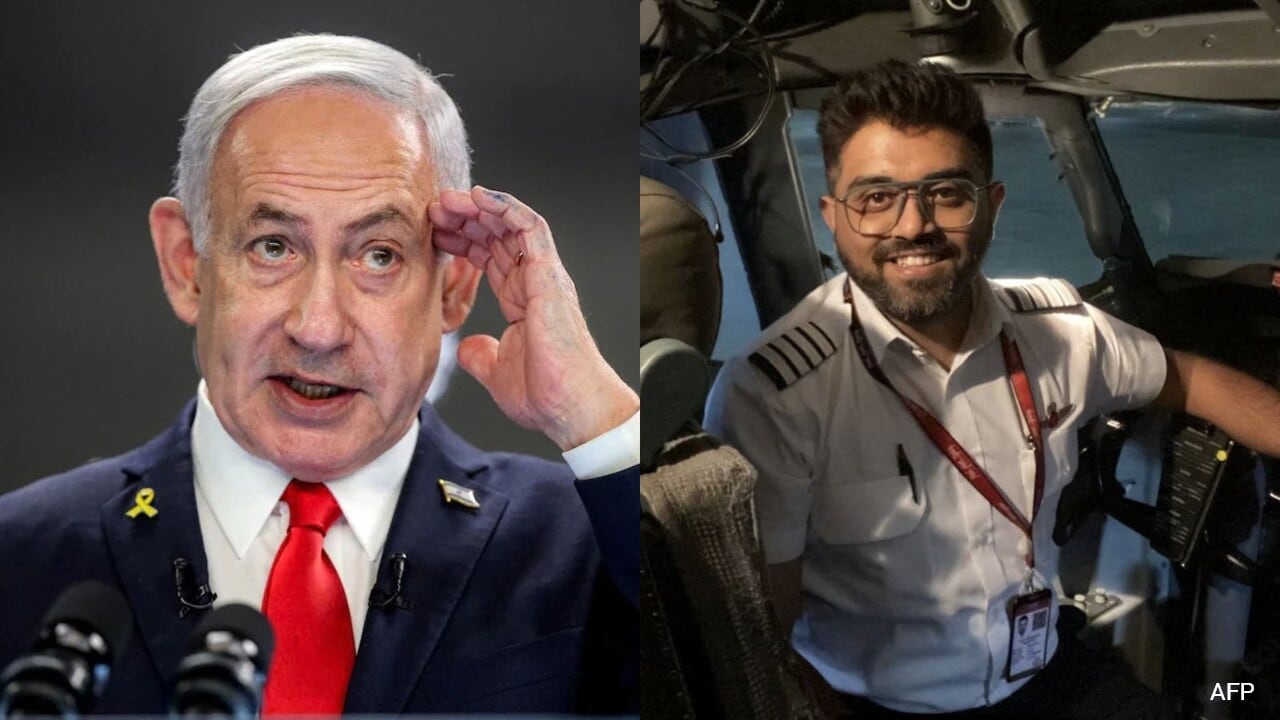
Commercial aviation security models rely on a deterministic assumption of cockpit binary integrity: two authorized operators inside a hardened shell represent an immutable line of defense. The mid-air cockpit assault on Flydubai Flight 1073, executed by first officer Hamam al-Hammami against captain Smit Machchhar, exposes a systemic failure mode in multi-national crew vetting and interior threat mitigation. Deconstructing the mechanics of this event requires analyzing three primary systemic breakdowns: structural regulatory loopholes in cross-border airline hiring, psychological vectoring through ideological radicalization, and the physics-of-failure response curves inside a compromised flight deck.
Regulatory Arbitrage and Screening Gaps
Modern aviation conglomerates and regional carriers frequently leverage labor markets across geopolitical boundaries, creating complex vetting pipelines. The operational framework governing commercial flight decks assumes that state-level civil aviation authorities apply uniform background clearance protocols. However, structural friction emerges when airlines employ flight crew from non-aligned or diplomatically estranged jurisdictions where intelligence-sharing mechanisms are fragmented or entirely absent.
The security architecture failed at the point of background verification. When personnel transitions occur across multiple national carriers—such as past employment configurations spanning multiple regional airlines—signals of behavioral volatility or ideological shift are frequently lost in jurisdictional silos. The absence of synchronized international counter-extremism databases for commercial pilots creates an exploitable operational loophole. Operators prioritize operational continuity and crewing metrics over deep-dive behavioral audits, treating pilot certification as an enduring asset rather than a perishable credential requiring continuous security clearance monitoring.
The Cognitive Vector of Radicalization
Ideological radicalization within operational safety-critical environments operates on distinct psychological gradients. The transformation from a functioning professional to an active kinetic threat involves three discrete phases: grievance identification, digital insularity, and operational conversion.
In instances involving aviation operatives adopting extremist paradigms, social media and encrypted digital echo chambers replace institutional socialization. Digital forensic investigations revealing extremist iconographies on personal channels indicate a prolonged incubation period insulated from internal corporate oversight. Commercial aviation environments provide an unusual vector for self-termination combined with mass-casualty generation. The individual's internal cost-benefit calculation shifts when a suicidal ideation merges with an ideological narrative promising martyrdom. The explicit vocalizations captured during physical restraint—demanding immediate termination of life rather than survival—underscore a psychological state where mission failure equals personal obliteration.
Flight Deck Dynamics and Kinetic Interruption
When the physical barrier of the cockpit door is breached from within, standard security hierarchies invert. The flight deck ceases to be a controlled command center and devolves into a confined combat environment governed by physical leverage and response latency.
The tactical sequence onboard Flight 1073 highlights the critical latency between insider threat activation and automated counter-measures. The physical incapacitation of the primary commander forces an immediate reliance on physical intervention by non-flight deck personnel or secondary crew.
- Initial Vector Disruption: The kinetic assault occurs with minimal warning, exploiting the pilot's divided attention during critical phase operations.
- Flight Path Degradation: Control inputs designed to destabilize the aircraft generate extreme gravitational forces, complicating internal cabin mobility and physical defense.
- Restraint Constraints: Cabin crew and passengers must improvise containment using available cabin assets—such as headphone cords and cable ties—due to the absence of integrated tactical restraint gear pre-positioned inside flight decks.
- Recovery Threshold: The structural survival of the hull relies entirely on manual reversion of flight controls and the physical capacity of surviving crew members to stabilize altitude before ground proximity triggers catastrophic impact.
Systemic Remediation Pathways
Mitigating future anomalies of this class requires a structural redesign of cockpit access and crew monitoring protocols. Relying on passive trust models is mathematically unviable given the asymmetry of the threat.
First, regulatory bodies must mandate cross-border continuous vetting protocols that synchronize intelligence agencies with commercial airline HR pipelines, bypassing regional diplomatic deadlocks. Second, behavioral anomaly detection algorithms must be integrated into flight data monitoring systems to flag erratic, non-standard pilot inputs indicative of intentional destabilization. Finally, the physical architecture of the flight deck requires fail-secure overrides that prevent a single operator from locking out co-pilots or neutralizing automated flight envelope protections during localized kinetic conflicts.
The operational reality dictates that safety cannot rest on the assumption of crew homogeneity. Every cockpit must be treated as a zero-trust network where physical and digital overrides prevent single-point catastrophic failure.