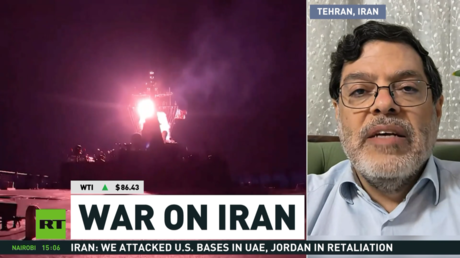
Geopolitical leverage derived from geographic monopoly follows a strict law of diminishing returns. When a single state controls a vital maritime corridor, its utility as an economic weapon depends entirely on the friction it imposes against global commerce without destroying the economic viability of the user. Iran’s historical posture regarding the Strait of Hormuz violates this foundational economic boundary. By turning a natural chokepoint into an active zone of military attrition, Tehran has triggered an unintended structural response from regional rivals and consumer nations. The operational mechanics of this chokehold are failing not because the geography has changed, but because the cost function of bypassing it has become lower than the cost of submission.
The Three Pillars of Geopolitical Monopoly
To understand why the strategic value of the waterway is degrading, one must deconstruct the components that originally granted Iran asymmetric power over global energy markets.
First, volume concentration creates the baseline of leverage. Approximately one-fifth of global liquid petroleum consumption and significant liquefied natural gas volumes transit this narrow corridor. For decades, this concentration meant that any disruption translated instantly into a systemic price shock across international markets, shifting the burden of adjustment onto importing economies.
Second, the absence of instantaneous substitute infrastructure historically locked consumer nations into dependence. Building alternate overland transit pipelines requires multi-year capital allocation, engineering feats across sovereign borders, and massive security overhead. Because these physical alternatives did not exist at scale during previous conflicts, the maritime passage remained non-negotiable.
Third, the asymmetry of pain defined the bargaining dynamic. While a closed channel inflicted immediate fiscal damage on global GDP, Tehran assumed its domestic economy could absorb the localized contraction longer than Western consumer states could endure inflationary spikes. This calculation underpinned decades of deterrence theory.
The Structural Decay of the Chokepoint
The operational reality of the passage has shifted due to countermeasures deployed by Gulf Cooperation Council states and external maritime forces. Rather than accepting indefinite coercion, affected nations have altered the risk architecture of maritime transit.
The implementation of escorted southern shipping lanes, utilizing territorial waters near Oman and protected corridors managed by allied naval assets, has established a functional work-around for commercial tankers. While total daily transfer volumes remain below pre-conflict baselines, the establishment of these secure paths proves that the monopoly is porous. When a chokepoint accommodates even a fraction of required throughput via alternative routing, the psychological terror of total blockade evaporates.
Simultaneously, infrastructure adaptation is permanently altering the equation. Regional producers are accelerating the utilization and expansion of bypass pipelines designed to transport crude directly to open-ocean terminals outside the Gulf. Every mile of pipe laid and every terminal brought online permanently depreciates the asset value of the waterway. Strategic chokeholds lose their coercive power the moment targeted states invest capital to route around them. A threat rendered bypassable is a weapon neutralized.
The Domestic Friction Paradox
The internal cost structure within Iran exposes the limits of maintaining a permanent state of maritime confrontation. Relying on military friction inside the corridor accelerates domestic economic isolation. As currency devaluation compounds and inflation rates soar, the state budget absorbs the penalty of foregone export revenues that cannot be entirely compensated by secondary grey-market channels.
This creates an internal policy contradiction. The security apparatus views the closure of the passage as an existential shield, while domestic economic administrators recognize that prolonged restriction starves the central treasury of foreign exchange reserves. When the instrument used to extract external concessions simultaneously erodes internal financial stability, the state engages in self-harm disguised as deterrence.
The Strategic Shift for Energy Markets
The long-term pricing model for crude is decoupling from the physical vulnerability of the passage. Markets increasingly price in structural mitigation rather than short-term panic. As logistics operators adapt to protected routing and alternative supply corridors mature, the premium attached to the waterway compresses.
Capital allocation by energy importers confirms this structural adjustment. Investments in alternative energy matrices, combined with diversified supply procurement from non-Middle Eastern basins, structurally lower the sensitivity of industrial economies to regional maritime disruptions.
Strategic Play
Do not treat maritime blockades as permanent assets when analyzing sovereign leverage; treat them as decaying assets that compel immediate technological and infrastructural substitution by adversaries. For strategic planners and economic analysts, vulnerability assessments must measure the exact capital expenditure required for a target market to route around a geographic chokepoint, rather than the raw volume passing through it. When the cost of bypass falls below the cost of compliance, the leverage is already gone.
US–Iran Ceasefire Talks in Islamabad LIVE: Strait Of Hormuz Crisis Takes Center Stage | N18G
This broadcast provides visual and on-the-ground context regarding the high-stakes diplomatic maneuvers and security dynamics unfolding around the Strait of Hormuz crisis.
http://googleusercontent.com/youtube_content/1