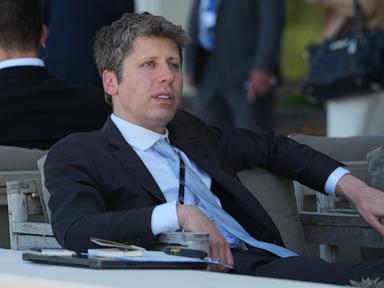
Corporate alignment functions dictate that a firm will abandon a near-complete $40 million asset if its preservation threatens a $50 billion strategic equity position. This is the financial calculus driving Amazon MGM Studios to drop Artificial, a Luca Guadagnino film tracking the 2023 boardroom coup and subsequent reinstatement of OpenAI CEO Sam Altman. While independent distributor Neon has acquired the worldwide rights to execute a late-2026 theatrical run aimed at awards season, the transaction exposes an asymmetrical valuation problem between Big Tech conglomerates and specialized cultural distributors.
To evaluate this asset transfer, one must analyze the operational friction between corporate governance, commercial partnerships, and intellectual property. The abrupt divestment demonstrates that when media holdings intersect with enterprise infrastructure investments, content distribution decisions transfer from traditional studio executives to corporate compliance officers protecting cloud computing and artificial intelligence market shares.
The Valuation Dilemma and Capital Prioritization
The transaction dynamics indicate that Amazon's decision was not triggered by internal project metrics. Artificial had already cleared primary production hurdles, achieved positive scores in early test screenings, and accumulated approximately $40 million in negative costs. Under standard studio economics, abandoning a project at this lifecycle stage yields a direct asset write-down.
The decision-making metric can be modeled as a optimization problem:
$$\text{Net Strategic Value} = V_{\text{film}} - P_{\text{conflict}} \times V_{\text{partnership}}$$
Where $V_{\text{film}}$ is the projected theatrical and streaming return of the film, $P_{\text{conflict}}$ is the probability that a critical narrative compromises the enterprise relationship, and $V_{\text{partnership}}$ is the present value of the multi-year venture with OpenAI. Because Amazon formalized an expansive, $50 billion multi-year cloud-and-compute infrastructure partnership with OpenAI in early 2026, the potential downside of a critical biographical depiction ($P_{\text{conflict}} \times V_{\text{partnership}}$) vastly exceeded any upside from the film's absolute performance.
Reports from industry screenings confirm that the narrative featured highly critical, unsympathetic characterizations of Sam Altman and Elon Musk. For Amazon, distributing a film that directly scrutinizes the corporate governance and leadership stability of its primary artificial intelligence partner introduces severe execution risks into its enterprise sales pipeline and cloud infrastructure agreements.
Distribution Models and Risk Insulation
The transfer of Artificial to Neon reveals a structural segregation between two distinct business models: the Ecosystem Maximizer and the Monitored Content Specialist.
The Ecosystem Maximizer (Amazon)
For corporate entities like Amazon, media acts as a churn-reduction mechanism for broader consumer ecosystems (Prime memberships) and a relationship vehicle for enterprise B2B strategies. Intellectual property is treated as a component of an omni-channel ecosystem. If an individual asset creates corporate friction or regulatory vulnerability, the asset becomes a liability, irrespective of its artistic or stand-alone commercial value.
The Monitored Content Specialist (Neon)
Specialty distributors operate on pure-play content economics. Neon’s business architecture is optimized to monetize prestige cinema through theatrical windows, foreign sales licensing, and awards-driven downstream consumption. Because Neon has no structural exposure to sovereign data hosting, cloud computing infrastructure, or enterprise software agreements, its operational risk profile is immune to the political sensitivities of Silicon Valley tech executives.
Neon's historical performance demonstrates this specialization. The studio secured consecutive commercial and critical successes with specialized titles like Parasite and Anora, capturing seven consecutive Palme d'Or awards at Cannes. By acquiring Artificial, Neon absorbs a highly publicized asset at an implied discount, leveraging Amazon’s sunk capital to fuel its own Q4 theatrical and Academy Award campaign.
The Structural Chill on Sovereign Intellectual Property
The friction surrounding Artificial illustrates a broader systemic trend within the entertainment industry: the concentration of media distribution infrastructure inside trillion-dollar technology conglomerates creates an operational bottleneck for independent reporting and creative works.
When studios like Netflix, A24, and Focus Features initially declined to acquire Artificial during its brief turnaround period, it signaled an industry-wide recognition of tech-sector hegemony. Studios that rely on enterprise cloud infrastructure (AWS, Microsoft Azure, Google Cloud) or pursue independent licensing deals with major artificial intelligence models face systemic disincentives when evaluating material that critiques tech-sector elites.
This corporate defense mechanism operates via three vectors:
- Compute Dependency: Modern post-production, visual effects pipelines, and streaming distribution rely fundamentally on the very cloud infrastructure providers currently investing tens of billions into foundational AI models.
- Data Licensing Treaties: Entertainment studios are actively negotiating complex copyright and data licensing frameworks to sell historical archives to tech companies for LLM training data. Offending a major AI partner threatens these high-margin licensing pipelines.
- Executive Board Interlocking: The intersection between tech sector boards and media holding directorates ensures that long-term strategic alignments consistently override short-term theatrical revenue opportunities.
Strategic Outlook for Independent Distribution
The resolution of the Artificial distribution crisis provides a tactical blueprint for independent specialty labels. While major studios consolidate and self-censor to protect enterprise B2B alliances, specialized distributors can exploit the resulting market inefficiencies.
The strategic play for independent operators requires positioning as safe-harbor vehicles for sensitive, high-profile intellectual property. By remaining structurally disconnected from the tech ecosystem, specialized distributors preserve the unique market capacity to monetize friction-inducing narratives. The immediate tactical requirement for Neon is to accelerate the post-production wrap-up and position the uncompromised, critical cut of Artificial as a pure-play journalistic narrative—directly converting Amazon's corporate compliance vulnerability into a high-margin theatrical event.