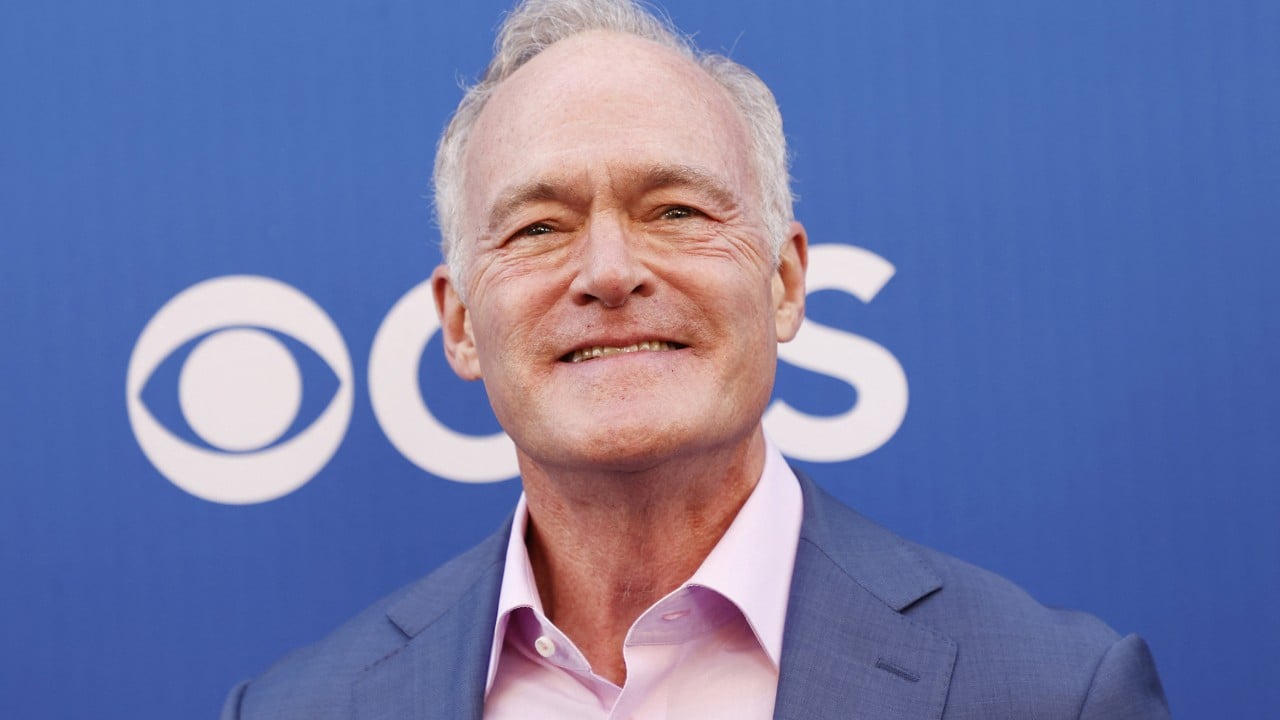
The termination of veteran correspondent Scott Pelley by CBS News management marks the final breakdown of the legacy broadcast model. This structural shift highlights a deeper reality: the classic wall between news production and corporate ownership has been replaced by an aggressive efficiency mandate. While public analysis frames Pelley’s firing as a localized personnel clash over corporate civility, an operational evaluation reveals it as the inevitable outcome of a deliberate asset liquidation and cultural restructuring strategy deployed by parent entity Paramount Skydance.
To analyze this disruption, one must look past the emotional newsroom rhetoric and map the underlying economic and operational mechanics driving the transformation of 60 Minutes.
The Dual-Engine Value Model of Heritage Media
Legacy news operations historically operated on a dual-engine value model. This system balanced measurable financial returns against intangible brand equity, creating an institutional equilibrium.
+--------------------------------------------------------------+
|                THE DUAL-ENGINE VALUE MODEL                   |
+--------------------------------------------------------------+
|                                                              |
|   [Engine 1: Financial Performance]                          |
|   • High-margin advertising inventory                        |
|   • Mass-market ratings dominance                            |
|                                                              |
|              ▲ Balanced Against / Sustained By               |
|                                                              |
|   [Engine 2: Institutional Brand Equity]                     |
|   • High-cost investigative journalism                       |
|   • Editorial autonomy & political insulation               |
|                                                              |
+--------------------------------------------------------------+
1. Financial Performance
60 Minutes maintained an unusual status as a high-margin profit center within a legacy network ecosystem. By bundling mass-market ratings dominance with premium advertising inventory, the program generated predictable cash flows that subsidized less profitable hard-news infrastructure.
2. Institutional Brand Equity
This engine relied on expensive, long-cycle investigative reporting. The economic return on this capital allocation was not measured in daily pageviews or immediate click-through rates. Instead, it was captured through political access, legal insulation, and a reputation for authority that protected the broader network from audience attrition.
The friction that led to Pelley's exit stems from a profound change in how ownership values these two engines. Under the direction of Paramount chief executive David Ellison and newly installed Editor-in-Chief Bari Weiss, CBS News has shifted toward an explicit monetization framework. In this new model, long-cycle brand equity is treated as an inefficient cost center, while immediate distribution velocity and political access are prioritized.
The Strategic Restructuring Playbook
The removal of Pelley, which immediately followed the terminations of correspondents Sharyn Alfonsi and Cecilia Vega, alongside executive editor Draggan Mihailovich, demonstrates a classic private equity-style operational playbook. This strategy unfolds across three distinct stages.
+--------------------------------------------------------------------------+
|                 THE THREE-STAGE RESTRUCTURING PLAYBOOK                   |
+--------------------------------------------------------------------------+
|                                                                          |
|  [Stage 1: Structural Margin Compression]                                |
|  • Eliminate high-cost, long-tenure talent contracts                     |
|  • Compress on-air headcount from seven correspondents down to three     |
|                                                                          |
|                                    │                                     |
|                                    ▼                                     |
|                                                                          |
|  [Stage 2: Operational De-skilling]                                      |
|  • Shift from complex investigative journalism to lower-cost formats    |
|  • Transition from independent investigation to access-driven commentary  |
|                                                                          |
|                                    │                                     |
|                                    ▼                                     |
|                                                                          |
|  [Stage 3: Integration into a Multi-Platform Distribution Ecosystem]     |
|  • Maximize asset utilization across corporate holding properties        |
|  • Consolidate legacy broadcasting with digital opinion platforms        |
|                                                                          |
+--------------------------------------------------------------------------+
Stage 1: Structural Margin Compression
The first step targets legacy cost structures by removing high-earning, long-tenure talent. Legacy contracts feature extensive overhead, including dedicated production teams, protracted legal review periods, and prolonged investigative timelines. By cutting the on-air correspondent headcount from seven down to three within a single broadcast cycle, management achieves immediate, structural margin compression.
Stage 2: Operational De-skilling
The second phase replaces specialized, high-cost investigative workflows with lower-cost content production methods. The appointment of Nick Bilton—a documentarian and technology writer with no traditional television news production background—as executive producer signals a move away from standard broadcast packages.
The operational goal is to pivot from independent, evidence-gathering journalism toward access-driven commentary and opinion formats. These alternative formats require significantly shorter production cycles and carry lower legal defense liabilities.
Stage 3: Ecosystem Integration
The final phase focuses on maximizing asset utilization across corporate holding properties. Following Paramount Skydance’s $150 million acquisition of Weiss’s digital media property, The Free Press, the parent company established a direct mechanism to funnel content across its media portfolio.
With regulatory approval pending for a merger with Warner Bros. Discovery, the overarching corporate goal is to consolidate legacy broadcasting infrastructure (CBS News) with cable properties (CNN) and digital opinion engines into a single, centralized distribution ecosystem.
The Cost Function of Editorial Interference
The underlying tension between the newsroom and executive leadership came to light during an editorial dispute over Sharyn Alfonsi’s reporting on Venezuelan migrants detained at El Salvador’s CECOT prison. Weiss’s intervention to delay the segment in pursuit of an on-camera interview with a Trump administration official provides a clear look at the new operational trade-offs.
This intervention illustrates a shift from an accountability reporting model to an access-driven framework. In a traditional accountability model, the news organization calculates its return based on narrative exclusivity and factual accuracy. If a government entity declines to participate, the segment runs with a disclosure of that refusal, preserving the network's independent posture.
+--------------------------------------------------------------------------+
|                  EDITORIAL FRAMEWORK TRANSITION                          |
+--------------------------------------------------------------------------+
|                                                                          |
|  [Accountability Model]                                                  |
|  Value = Narrative Exclusivity × Factual Accuracy                        |
|  * Action: Publish independent findings regardless of official refusal.   |
|                                                                          |
|                                    │                                     |
|                                    ▼                                     |
|                                                                          |
|  [Access-Driven Framework]                                               |
|  Value = Institutional Access × Relationship Capital                     |
|  * Action: Delay/modify reporting to preserve executive relationships.    |
|                                                                          |
+--------------------------------------------------------------------------+
Conversely, the access-driven framework treats relationship capital as an essential asset. Delaying or modifying an investigation to accommodate political figures grants those figures an effective veto over broadcast timelines.
While this approach reduces friction with regulatory and political entities—a key priority for a media conglomerate navigating complex mergers—it degrades the core product. The long-term cost of this strategy is the erosion of audience trust, which acts as the primary defense against brand commoditization.
Organizational Insurgency and the Breakdown of Authority
Pelley’s open challenge to Bilton during an all-hands staff meeting reveals a classic failure in change management. When institutional leaders attempt a rapid cultural shift without securing buy-in from key stakeholders, the risk of an organizational insurgency escalates.
Pelley’s critique targeted both the qualifications of the new executive leadership and the broader strategy being implemented by Weiss. By stating that management was intentionally dismantling the program's foundation, Pelley leveraged his internal social capital to rally staff resistance. The reported standing ovation from newsroom employees proved that the editorial staff remained misaligned with corporate leadership's operational objectives.
This level of public defiance left management with only one viable option within a standard corporate governance framework: immediate termination for cause. Retaining a high-profile detractor after a public challenge to authority would have undermined the new executive producer's leadership from day one.
Bilton’s termination letter framed Pelley's actions as a "performative display of hostility" and a failure to collaborate. This language serves to establish a clear boundary, signaling that institutional tenure no longer grants immunity from corporate hierarchy or insubordination policies.
The Strategic Outlook for Institutional Journalism
The rapid reduction of the 60 Minutes correspondent pool creates a critical talent bottleneck. With Anderson Cooper, Scott Pelley, Sharyn Alfonsi, and Cecilia Vega out of the rotation, the program relies on a minimal core consisting of Bill Whitaker, Lesley Stahl, and Scott Thuman. This lean staffing model introduces severe operational vulnerabilities:
- Capacity Bottlenecks: The production of high-impact, multi-source investigative pieces scales linearly with experienced correspondent hours. A sudden reduction in talent capacity forces an immediate choice: reduce the volume of original investigative pieces or lower the complexity of the packages produced.
- Key-Person Dependency Risk: The franchise is now highly dependent on its remaining veteran anchors. If contract renewals lapse or additional departures occur, the 60 Minutes brand faces structural dilution, transforming from a premier journalistic asset into an empty distribution shell.
- Accelerated Audience Attrition: If audiences perceive that the program has shifted toward commoditized access journalism, the premium ad rates supported by its historic reputation will face downward pressure.
The immediate management strategy will likely focus on filling these vacancies with internal transfers from The Free Press or digital-first producers. These new hires will be optimized for rapid production cycles and cross-platform compatibility rather than deep, multi-month investigative packages.
This transformation solves a short-term corporate challenge by lowering production costs and aligning the newsroom with broader conglomerate goals. However, it permanently changes the economic value proposition of prestige media. The franchise may preserve its familiar visual presentation, but the underlying operational mechanism that sustained its cultural and commercial authority for six decades has been dismantled.
The video report below outlines the immediate industry and market reactions to the structural changes occurring within the CBS News ecosystem.
Industry Analysis of the CBS News Executive Overhaul