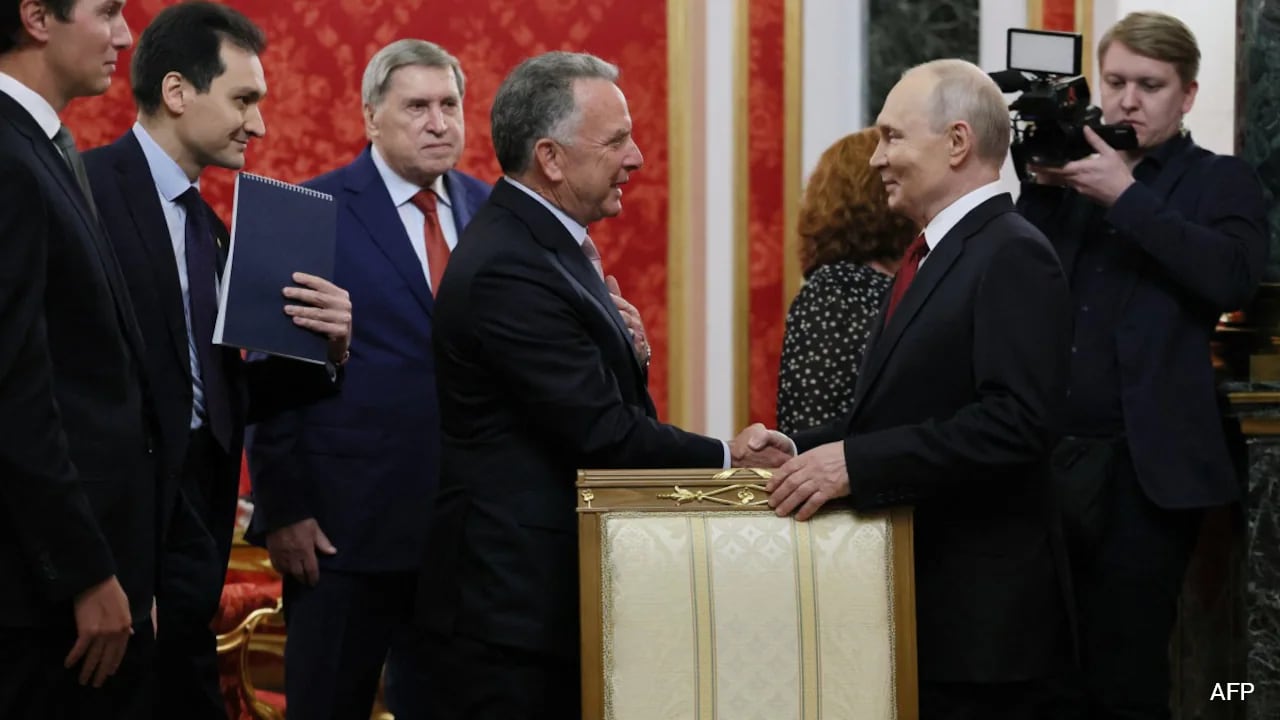
Diplomatic interventions in prolonged military engagements operate under strict economic and structural constraints, rarely shifting based on goodwill alone. When high-level intermediaries enter a theater marked by severe information asymmetry and zero-sum territorial objectives, the analytical priority is to evaluate the underlying incentives rather than the surface rhetoric. Recent high-level discussions in Moscow between Russian leadership and American special envoys reveal the precise friction points that continue to block settlement pathways in Eastern Europe. Deconstructing these diplomatic moves requires analyzing the underlying bargaining space, the military cost functions of both belligerents, and the structural limitations imposed by concurrent geopolitical commitments.
The Asymmetry of Territorial Objectives
The fundamental barrier to any negotiated settlement is the irreconcilable divergence in core baseline demands. Moscow maintains an unshakeable position requiring the complete cession of four designated territorial oblasts and the permanent foreclosure of alliance expansion for Kyiv. This stance functions as a fixed boundary condition from the perspective of Russian strategic planning.
Conversely, the defending state operates under an existential constraint where territorial integrity and sovereign defensive alignments cannot be legally or politically abandoned without terminal institutional collapse.
This creates a zero-sum bargaining matrix:
- Maximalist Russian Requirements: Full administrative control over eastern and southern territories, alongside structural neutralization of foreign military integration.
- Defensive Ukrainian Constraints: Preservation of sovereign statehood, denial of permanent annexation, and maintenance of independent alliance-building capabilities.
- Intermediary Arbitrage: The introduction of external "ideas" by mediators attempting to bridge a chasm where no overlapping zone of possible agreement currently exists.
When intermediaries present structural proposals without altering the underlying military balance or providing enforceable security guarantees, the negotiation remains a signaling exercise rather than a peace process. Both sides utilize the diplomatic channel to manage international perception, minimize blame for escalation, and test adversary resolve.
The Cost Function of Attrition
The timing of high-level diplomatic missions is invariably dictated by the marginal utility of violence. As direct military costs mount—characterized by heavy equipment attrition, logistical strain, and sustained infrastructure targeting—both sides calculate whether continued kinetic expenditure yields diminishing returns.
The recent intensification of long-chain aerial strikes, including jet-powered munitions targeting capital infrastructure and deep-rear logistical hubs, illustrates an escalation dominance strategy. Each belligerent seeks to raise the internal friction of the adversary to force a revision of their baseline negotiating posture.
- Economic Degradation: Sustained targeting of industrial assets, fuel refineries, and supply nodes forces the defender to absorb severe structural repair costs while straining the aggressor's fiscal reserves through prolonged sanctions evasion loops.
- Demographic Strain: The continuous displacement of populations and the contraction of productive labor forces impose long-term macroeconomic liabilities that outlast short-term territorial gains.
- Resource Misallocation: Competing global crises—such as concurrent security commitments in the Middle East—divert diplomatic bandwidth and material supply chains, reducing the capacity of external sponsors to sustain indefinite escalation without domestic friction.
The temporary 72-hour capital de-escalation windows established during diplomatic visits demonstrate that operational pauses are entirely tactical. They serve mechanical safety functions for visiting delegations rather than acting as confidence-building measures toward a permanent cessation of hostilities. The underlying cost function remains skewed toward persistence, as neither side perceives that the alternative—an unfavorable compromise—is superior to the projected outcome of continued combat.
Intermediary Constraints and Strategic Divergence
External mediation efforts face severe structural limitations when the sponsoring power is encumbered by multi-theater commitments. Washington's diplomatic momentum has faced recurring drag from competing regional conflicts over the preceding half-year, diluting the coercive leverage required to compel compromise from entrenched sovereign actors.
Diplomats operating without binding enforcement mechanisms or credible deterrence guarantees find their proposed frameworks treated as exploratory drafts rather than actionable roadmaps. For an agreement to move from conceptual brainstorming to implementation, the intermediary must alter the calculus of pain and reward for the primary actors. This requires either prohibitive penalties for non-compliance or irresistible economic and security inducements for adherence—neither of which are fully realizable within current political parameters.
Execute follow-up diplomatic tracks by establishing hard verification mechanisms for localized ceasefires before attempting macro-territorial resolutions, ensuring that any subsequent dialogue indexes directly against verifiable shifts in frontline military parity rather than temporary political theater.



