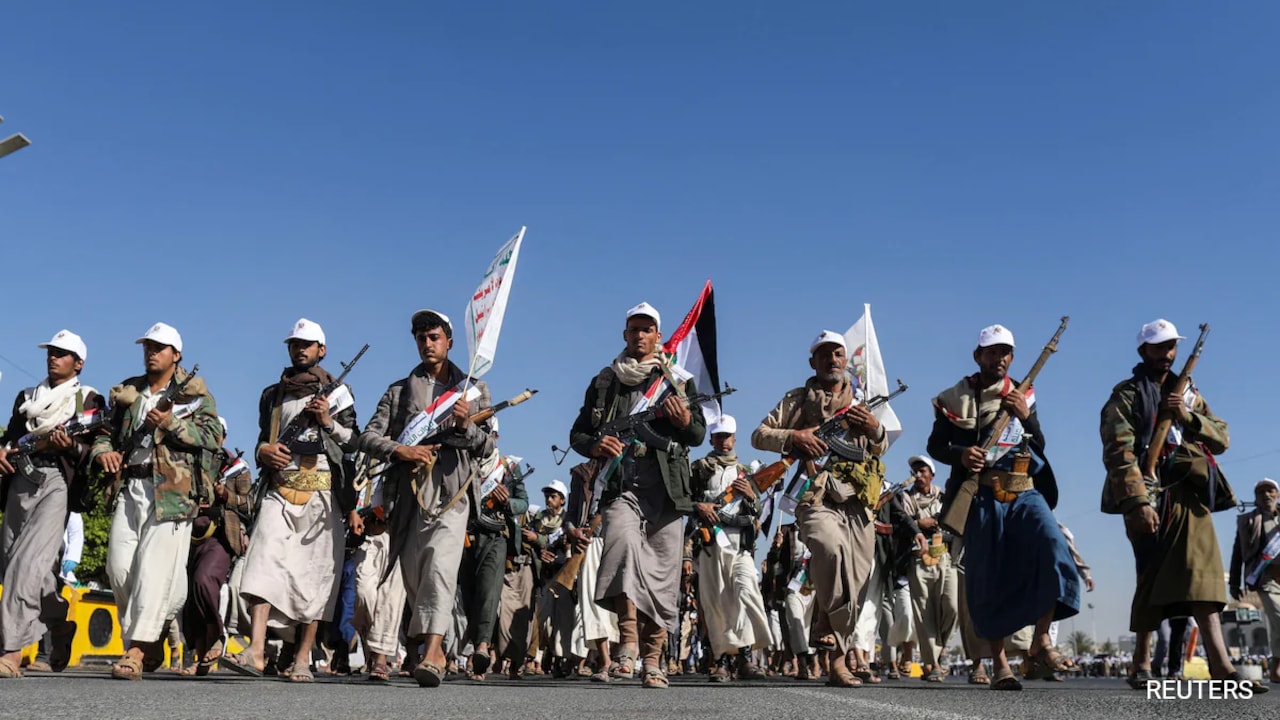
The security architecture of the southern Arabian Peninsula relies on a fragile equilibrium of deterrence, economic coercion, and localized truces. When this architecture fractures, analysts often default to narratives of sudden panic or emotional miscalculation. A rigorous examination of the renewed friction between the Ansar Allah movement, commonly known as the Houthis, and the Kingdom of Saudi Arabia reveals a systematic recalculation of risk and reward rather than an erratic deviation from peace.
Understanding this friction requires stripping away diplomatic rhetoric and examining the underlying variables. The actors involved operate under distinct cost functions, resource constraints, and political survival imperatives. By mapping these dynamics, the structural drivers of renewed confrontation emerge with stark clarity.
The Dual Incentive Structure of Continued Belligerence
To decode why offensive posturing has returned to the forefront, one must evaluate the utility of conflict versus compliance for the Houthi leadership. Prolonged engagement yields specific political yields that domestic stability or localized governance cannot match.
The Mobilization Dividend
Governing a fractured territory incurs massive administrative and fiscal burdens. Direct governance forces a regime to absorb public discontent over inflation, public sector salary arrears, and crumbling infrastructure. External confrontation alters this equation immediately.
- Consolidation of Internal Authority: External threats allow the administration to frame domestic dissent as treason, unifying a fragmented population against a designated antagonist.
- Resource Prioritization: A war economy justifies the diversion of state resources away from civil administration and toward security apparatuses and military production.
- Ideological Reproduction: Sustained conflict maintains high ideological mobilization among core fighters, preventing ideological demobilization that typically follows prolonged ceasefires.
The opportunity cost of peace for an entrenched militant governance structure is high. Peace demands economic transparency, fiscal accountability, and the distribution of power. Conflict preserves totalizing control under the guise of existential defense.
Economic Leverage and Revenue Extraction
The quiet phase of the conflict delivered relative stability, but it also threatened to institutionalize a permanent stalemate that favored Saudi security interests without satisfying Houthi economic demands. Riyadh sought a durable containment strategy that prioritized border security and economic insulation.
The Houthis, conversely, require significant capital inflows to sustain their administrative machinery. Their strategic calculations incorporate the weaponization of economic chokepoints. By threatening maritime routes, critical energy infrastructure, and regional trade corridors, they elevate their status from a localized insurgent force to a primary stakeholder in regional security architectures.
The Saudi Strategic Dilemma and Cost Minimization
From the perspective of Riyadh, the primary objective is risk containment and the protection of Vision 2030 mega-projects. The kingdom cannot afford protracted regional instability that deters foreign direct investment or threatens critical petroleum supply chains.
[Saudi Strategic Imperatives]
├── Economic Diversification (Vision 2030) -> Requires Zero Border Friction
├── National Security -> Requires Neutralization of Transnational Projectile Threats
└── Diplomatic Prestige -> Requires Exit Strategy from Yemeni Quagmire
This vulnerability creates a structural asymmetry. Saudi Arabia has a high cost of disruption, while the opposing actor operates with a lower threshold for systemic shock. Riyadh's strategy relies on economic inducements, diplomatic backchannels, and a defensive posture designed to absorb tactical strikes without triggering a full-scale military re-engagement.
Yet, this defensive crouch invites calculated pressure. When the opposing side calculates that Riyadh's aversion to war outweighs the cost of low-level escalation, incremental boundary-pushing becomes a rational tactical choice.
The Regional Spillover and Multi-Actor Calculus
Local frictions do not occur in a vacuum. The escalation calculus is intrinsically tied to regional networks of influence and material supply. The alignment of non-state actors across the region creates a synchronized network of pressure points.
When regional pressure mounts elsewhere, secondary fronts activate to test adversaries on multiple vectors simultaneously. This structural linkage means that local truces are rarely isolated agreements; they are floating variables dependent on the broader regional balance of power.
- Supply Chain Resilience: The continuous adaptation of asymmetric tactics, including low-cost unmanned aerial systems and ballistic missiles, alters the defensive calculations of regional air defense networks.
- Information Operations: The battle for narrative dominance shapes international pressure on Riyadh, forcing diplomatic caution even when military deterrence fails.
The Mechanics of Friction and Miscalculation
As both sides probe the limits of the current arrangement, the margin for error narrows. Deterrence breaks down not through grand strategic shifts, but through incremental tactical overreach. A single misdirected projectile hitting a high-value asset can instantly bypass diplomatic off-ramps and force a kinetic retaliation that neither side initially desired.
The structural drivers identified—domestic political survival, economic extraction imperatives, and asymmetric vulnerability—ensure that calm remains conditional. Sustainable stability requires altering the fundamental cost function of the actors involved, replacing temporary truces with binding economic integration that makes conflict more expensive than cooperation. Until that structural shift occurs, the region will cycle through periods of tense quiet punctuated by calculated escalation.
Strategic Execution
Execute the defensive reinforcement of critical infrastructure while simultaneously utilizing backchannel economic incentives to raise the opportunity cost of localized aggression, ensuring that any kinetic provocation triggers an immediate, disproportionate diplomatic and defensive realignment rather than protracted military entanglement.