The catastrophic wildfire that swept through Spain’s Almería province on Thursday, July 9, 2026, claims a disproportionate share of its victims from foreign expat communities. Of the 13 confirmed fatalities, 12 were foreign nationals—including seven British citizens, three Belgian nationals, one French national, and one American. This stark asymmetry in casualty demographics exposes a systemic vulnerability in Mediterranean expatriate settlements. The tragedy is not merely a consequence of meteorological extremes; it is the predictable outcome of specific structural, geographical, and behavioral vulnerabilities.
Understanding why foreign residents bear the brunt of these disasters requires dissecting the mechanics of wildland-urban interface hazards, rural infrastructure bottlenecks, and communication failures.
The Geography of Risk: The Wildland-Urban Interface
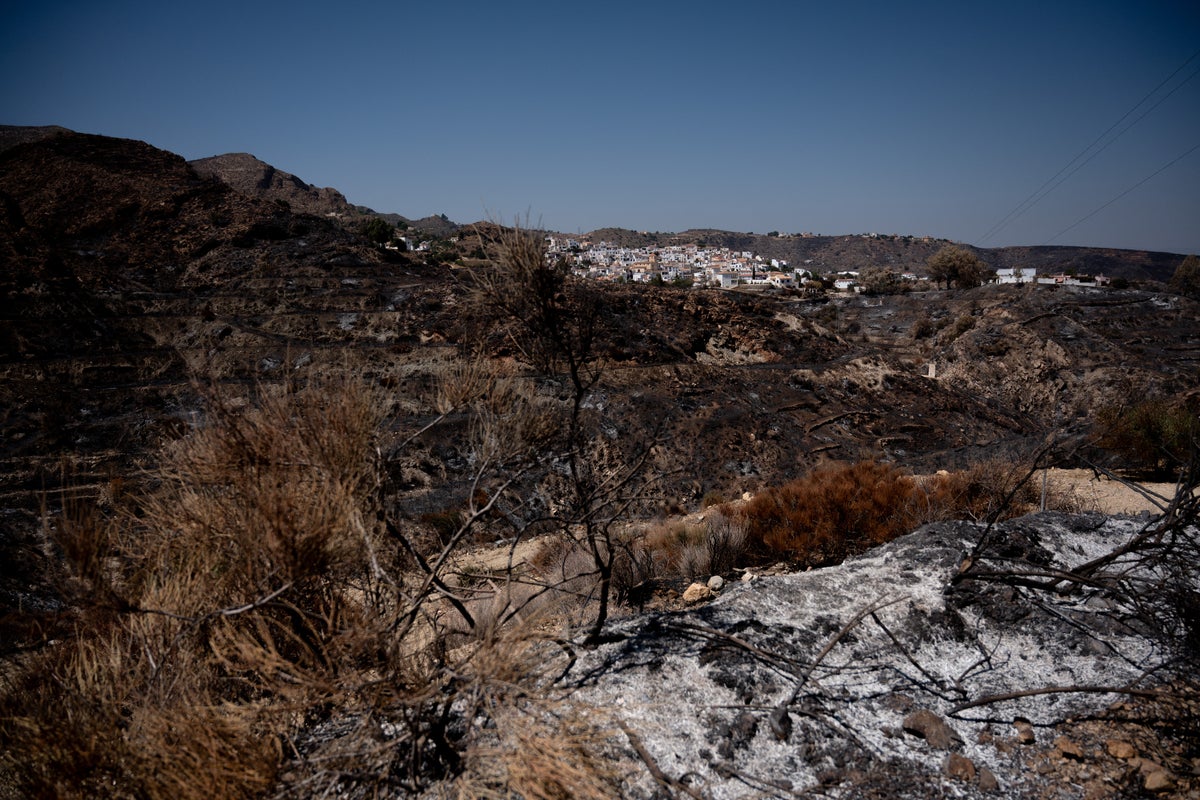
The disaster centered on the mountain village of Bédar and the surrounding Los Gallardos area in Almería. This region typifies the Wildland-Urban Interface (WUI)—areas where human developments meet or intermingle with undeveloped wildland vegetation.
Expatriate populations heavily favor these locations for their scenic isolation, Mediterranean climate, and cheaper land values. However, these factors generate a high-risk micro-environment governed by three distinct structural hazards:
- Fuel Load Accumulation: Decades of agricultural abandonment in rural Spain have allowed highly flammable scrubland and pine forests to reclaim old terraces. This dense vegetation links wildlands directly to residential perimeters.
- Topographic Acceleration: Communities like Bédar are situated on steep hillsides. Fire moves upslope rapidly because rising heat preheats the vegetation uphill, doubling its rate of spread for every 10-degree increase in slope.
- Highly Vulnerable Demographics: Retired expatriates make up a significant portion of these rural populations. For example, one of the identified British victims was a 93-year-old woman. Advanced age introduces severe mobility limitations, slower reaction times, and diminished physiological resilience to smoke inhalation and heat stress.
The Evacuation Bottleneck: Why Escape Roads Become Death Traps
A critical finding from the Almería disaster is that multiple victims died inside or immediately adjacent to their vehicles. Four British victims were recovered from a single burnt-out, right-hand-drive vehicle. Another victim perished when flames engulfed his car during the evacuation of Los Gallardos.
This pattern highlights a fatal flaw in rural evacuation strategies: the vehicle transit bottleneck.
[Late Evacuation Decision] ──> [Single-Track Dirt Roads] ──> [Thermal Radiation Exposure] ──> [Engine/Tire Ignition]
The Physics of Vehicle Combustion in Wildfires
Vehicles do not offer safe refuge in a high-intensity wildfire. When a fire front hits a road, the thermal radiation can exceed $100\text{ kW/m}^2$, easily shattering tempered glass and igniting interior plastics. Furthermore, standard internal combustion engines require oxygen to function. In the convective column of a forest fire, oxygen levels drop precipitously while carbon monoxide levels spike. This starves engines of oxygen, causing cars to stall and trapping occupants inside a metal oven.
Infrastructure Deficiencies
Expat villas are frequently accessed via narrow, unpaved, or single-track dead-end roads. When 1,500 residents attempt to evacuate simultaneously, these routes clog instantly. A single stalled vehicle, fallen power line, or dense smoke plume can completely block escape. This forces residents to abandon vehicles or wait inside them as the fire front overtakes the road.
Information Asymmetry and the Language Barrier
In a fast-moving wildfire, the window between ignition and threat to life can be less than 30 minutes. This fire, ignited by a fallen electrical cable and propelled by dry winds, quickly consumed 7,000 hectares. In these scenarios, survival depends on real-time, highly localized information.
Foreign nationals face a distinct communication deficit that delays defensive actions:
- Siloed Emergency Alerts: Official emergency broadcasts, Civil Protection alerts, and localized police instructions are primarily issued in Spanish. Expatriates who are not fluent in Spanish or integrated into local municipal networks (such as the padrón or local WhatsApp safety groups) face significant information delays.
- Misinterpretation of Fire Behavior: Many northern European expats lack firsthand experience with Mediterranean fire dynamics. They frequently underestimate how quickly a fire can spot (where embers fly ahead of the main front to start new fires) or scale steep terrain, leading to delayed evacuation decisions.
- The "Shelter-in-Place" vs. Evacuate Dilemma: Without clear, authoritative instructions in their native language, residents are left to make critical choices on their own. This often leads to dangerous ad-hoc survival attempts, such as seeking shelter in abandoned vehicles—a strategy where survival is a matter of sheer luck rather than systematic safety.
Systemic Preparedness Deficits
The devastating losses in Almería point to broader structural issues in Spanish rural fire management and expat integration. The European Forest Fire Information System noted that Spain lost over 393,000 hectares to fires in 2025. Despite this clear and rising threat, risk-mitigation policies remain poorly implemented at the household level.
- Defensible Space Failure: Under Spanish law, properties in high-risk forest zones must maintain a 30-meter firebreak cleared of dry brush and high-density vegetation. In practice, local enforcement is weak, and many rural properties remain surrounded by highly flammable pine trees and ornamental cypress hedges.
- The Utility Grid Vulnerability: The Almería fire was triggered by an electrical cable falling onto a road. Aging, poorly cleared power distribution lines running through high-wind, high-heat corridors represent a persistent systemic failure in fire prevention.
- Lack of Targeted Drills: Municipalities with high foreign populations rarely conduct bilingual emergency evacuation drills or distribute multilingual maps detailing designated safe zones (such as cleared municipal plazas or sports complexes).
Strategic Playbook for Expatriate Rural Safety
To prevent similar losses in increasingly frequent high-heat seasons, municipal authorities and community leaders must transition from a reactive posture to a structured risk-mitigation framework.
Establish Bilingual Emergency Broadcast Networks
Municipalities must mandate that all Civil Protection alerts and evacuation orders are instantly translated and distributed through multi-channel networks (SMS, local radio, and dedicated messaging apps) in the primary languages of the resident population.
Mandate Annual Defensible Space Audits
Local governments must strictly enforce fuel-reduction zones around private properties. If a property owner fails to clear a 30-meter buffer zone by May 1 of each year, the municipality should execute the clearing and levy the cost directly onto the owner's property tax.
Create Clear Community Escapes and Safe Zones
Every WUI community needs clearly marked, cleared survival zones (large paved areas devoid of vegetation, such as football pitches) that residents can reach on foot if escape roads are blocked. Homeowners must be trained to recognize when road evacuation is no longer viable, prioritizing local sheltering in prepared, low-fuel areas over fleeing in vehicles.