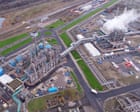
Regulatory friction in manufacturing sectors rarely stems from sudden catastrophic events. Instead, systemic legal exposure usually accumulates through chronic operational drift, monitoring gaps, and a structural misalignment between internal compliance metrics and statutory environmental thresholds. When a regional UK plastic manufacturing facility faces imminent legal action over toxic emissions, the underlying mechanism is an institutional failure of process control rather than an isolated accident.
To deconstruct this exposure, one must evaluate the operational vectors driving particulate and chemical discharge, the economic incentives that delay structural remediation, and the precise statutory mechanisms environmental protection agencies deploy when enforcement triggers are met.
The Operating Mechanics of Emission Drift
Plastic manufacturing—particularly processes involving extrusion, thermoforming, compounding, and chemical recycling—generates complex volatile organic compounds, polycyclic aromatic hydrocarbons, and fine particulate matter. Facilities operate under strict environmental permits that dictate ceiling limits for mass emission rates per hour, stack velocity, and continuous monitoring requirements.
Operational drift occurs when thermal management systems degrade or feedstock composition varies without corresponding adjustments to scrubbing parameters. A facility processing post-consumer recycled polymers often encounters unpredictable contaminant loads, including plasticizers, flame retardants, and residual adhesives. When these inputs enter high-temperature extrusion lines, thermal degradation products bypass standard filtration units designed for virgin polymer streams.
The first structural vulnerability lies in the lag time between emission generation and detection. Facilities relying on periodic stack testing rather than continuous emission monitoring systems operate in an informational vacuum. By the time quarterly or semi-annual manual sampling captures an exceedance, the facility has likely maintained a state of non-compliance for weeks or months. This expands the statutory liability window from an operational blip into a sustained regulatory breach.
The Cost Function of Environmental Compliance
The financial calculus governing environmental controls in mid-market manufacturing creates a dangerous optimization trap. Plant operators balance three competing variables: capital expenditure for advanced abatement technology, operational expenditure for consumables and maintenance, and the probabilistic cost of regulatory penalties.
Advanced thermal oxidizers, carbon adsorption beds, and electrostatic precipitators require significant upfront capital allocation and continuous energy consumption to operate at peak destruction and removal efficiency. When operating margins compress due to rising energy costs or raw material volatility, environmental management systems are frequently subjected to deferred maintenance schedules.
Total Environmental Cost = Capital Outlay + Operational Overhead + Expected Legal Liability
Expected Legal Liability = Probability of Detection x Severity of Fine and Remediation Cost
If regulatory enforcement is perceived as passive—characterized by infrequent inspections or low historical penalty baselines—the expected legal liability term trends toward zero in executive cost projections. This incentivizes a reactive posture. Management delays investments in containment upgrades until an external trigger, such as a localized public health complaint or a surprise environmental agency audit, forces intervention. At that point, the cost function shifts violently from preventative maintenance to emergency remediation, legal defense, and potential civil litigation from affected communities.
Statutory Enforcement Pathways
In the United Kingdom, environmental compliance for industrial installations is governed primarily by the Environment Agency under the Environmental Permitting Regulations. When emissions exceed permitted limits, enforcement escalates through a structured hierarchy of legal instruments.
Notice of Enforcement and Compliance Notices
The initial response to chronic or acute emission spikes involves serving formal information notices or enforcement notices. These legally compel the operator to submit detailed root-cause analyses, modify operational parameters, or install supplementary monitoring equipment within a strict timeframe. Failure to comply with these notices constitutes a distinct criminal offense independent of the original emission violation.
Suspension and Revocation
If emissions present an imminent risk of serious environmental pollution or human health hazards, the regulator possesses statutory authority to suspend the environmental permit entirely. For a high-throughput manufacturing plant, a permit suspension halts revenue generation immediately. The fixed overhead costs continue to accrue while the production line remains dormant, creating a severe liquidity crisis.
Criminal Prosecution and Civil Sanctions
Under modern regulatory frameworks, enforcement authorities utilize civil sanctions alongside traditional criminal prosecution. Variable monetary penalties, enforcement undertakings, and cost-recovery orders can scale based on the financial turnover of the corporate entity and the degree of culpability. Culpability is assessed across four tiers: deliberate intent, recklessness, negligence, or low/no fault.
In cases where neighborhood odor complaints, particulate deposition on residential properties, or toxic air pollutant spikes are documented over an extended period, regulators categorize the failure under negligence or recklessness. This exposes directors and senior plant managers to personal scrutiny under health and safety legislation, piercing the corporate veil where gross operational negligence is established.
The Third-Party Litigation Vector
Regulatory fines represent only one dimension of industrial liability. The secondary vector involves civil claims brought by proximate landowners, residential associations, or commercial tenants under the torts of private nuisance, public nuisance, rule in Rylands versus Fletcher, and negligence.
To establish liability in private nuisance, a claimant must demonstrate an unlawful interference with the enjoyment of their land. In the context of industrial emissions, this requires correlating particulate fallout, chemical odors, or perceived health impacts directly with the defendant facility's operations. Plaintiffs utilize meteorological data, wind-rose modeling, and independent air quality sampling to construct a causal chain between the plant's stack emissions and the localized environmental degradation.
The strategic challenge for manufacturing defendants in civil litigation is the burden of apportionment. If multiple industrial actors operate within the same designated trade park or industrial zone, isolating the specific chemical fingerprint of a single plastic manufacturer's emissions becomes a complex forensic accounting and atmospheric dispersion task. However, once an environmental agency issues a formal enforcement action or prosecution notice, that public record serves as powerful corroborating evidence for private litigants seeking summary judgments or injunctive relief.
Mitigating Systemic Environmental Risk
Mitigating long-term operational and legal exposure requires a departure from compliance checkbox mentalities. Engineering controls must be integrated with real-time data architecture to eliminate the visibility gap between emissions generation and regulatory oversight.
First, continuous parameter monitoring must replace periodic spot-checking for critical control variables. Tracking secondary combustion temperatures, scrubber pressure drops, and inlet gas velocities in real-time allows plant operators to identify drift before emissions breach statutory thresholds.
Second, raw material governance must be tightened. Establishing strict incoming quality control protocols for recycled polymer streams prevents high-contaminant batches from entering lines unequipped to handle complex chemical volatility.
Finally, corporate governance structures must elevate environmental engineering to the executive level. When capital allocation committees treat environmental compliance as a discretionary overhead rather than an essential license to operate, the organization invites catastrophic legal exposure.
Deploy capital toward dynamic emission mitigation systems and continuous real-time diagnostic architecture before regulatory intervention forces a cessation of operations.