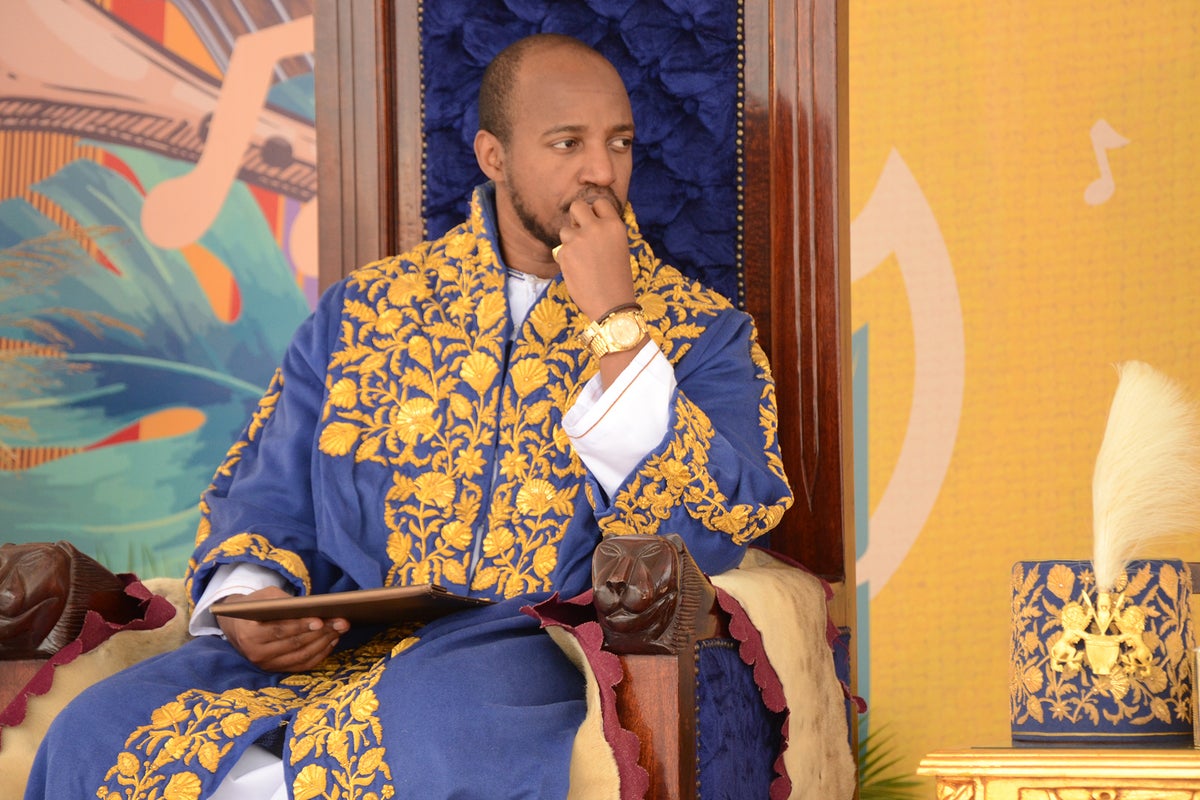
The death of King Oyo Nyimba Kabamba Iguru Rukidi IV at age 34 forces an immediate analytical separation between emotional public grief and the mechanical realities of institutional continuity within constitutional frameworks. Ascending the throne of Uganda's Tooro Kingdom at three years old in 1995, his three-decade reign provides a longitudinal dataset on the intersection of ancient hereditary systems and modern centralized state governance. When traditional authorities announced his death following critical medical treatment abroad, the immediate public shock exposed vulnerabilities in information distribution channels between royal administrations and the populations they represent. Understanding this event requires stripping away media sentimentality to examine three core structural variables: the mechanics of regency and early accession, the operational boundary between cultural sovereignty and state power, and the transition economics of royal succession.
The Mechanics of Regency and Early Accession
An infant or toddler monarch introduces a distinct governance hazard: the separation of nominal authority from executive capability. When King Oyo inherited the crown following the death of King Patrick David Matthew Kaboyo Olimi III, the absolute deficit in cognitive and administrative capacity necessitated a proxy governance model.
The three structural pillars that managed this deficit included:
- A designated regency council composed of immediate family, specifically Queen Best Kemigisa
- Traditional palace advisors and clan elders holding historical institutional memory
- External alignment with the central government apparatus under Ugandan President Yoweri Museveni
This multi-tiered proxy structure created a unique administrative bottleneck. While Western media focused heavily on the Guinness World Record status of his youth, the operational reality required navigating a fifteen-year interregnum before his formal adult coronation in 2010. During this period, the risk profile of the monarchy spiked. Authority was decentralized among handlers, increasing the potential for factional friction. Systems lacking a mature executive rely entirely on the structural integrity of the regency council. If the council fractures, the crown loses its stabilizing utility long before the heir reaches the age of majority.
The Dual-State Paradox of Cultural Sovereignty
Traditional monarchies embedded inside modern republican states operate within a tightly constrained power matrix. In Uganda, ancient kingdoms such as Tooro retain significant cultural legitimacy among millions of citizens while holding zero formal legislative or executive power under the national constitution.
This creates a specific institutional cost function:
- High cultural expenditure on ceremonies, heritage preservation, and social advocacy (such as HIV/AIDS awareness and youth empowerment)
- Zero fiscal taxation authority or statutory policy implementation power
- Total economic reliance on private endowments, land management trusts, and state goodwill
The strategic utility of a traditional ruler in this environment depends on acting as a diplomatic conduit rather than a policy driver. King Oyo functioned as a soft-power asset for his people, negotiating between localized tribal interests and the central government in Kampala. When a monarch spends decades as a public figure without possessing legislative tools, their personal brand becomes the primary equity of the institution. Consequently, an unexpected medical crisis or sudden mortality event destabilizes the organization because the brand equity cannot be easily delegated during periods of opacity.
The Succession Protocol and Information Architecture
The sequence of events surrounding the official confirmation of death highlights a recurring vulnerability in crisis communication management. Palace communications initially dismissed unverified social media reports while simultaneously confirming a critical health status, only to confirm the mortality event hours later.
This lag introduces market friction and public panic. In modern governance frameworks, information vacuums are rapidly filled by speculation, degrading institutional trust. The Tooro Kingdom mitigated this secondary risk by immediately confirming the existence of a designated heir—stating that a young prince remains to secure the continuity of the crown—while withholding immediate personal identification in accordance with traditional protocol.
Evaluating this transition strategy reveals two competing pressures:
- The traditional requirement for ritualized, deliberate disclosure managed by council elders
- The modern demand for immediate, transparent data feeds from digital populations
When these two imperatives clash, institutional friction surges. Traditional systems prioritize ceremonial precision over velocity, whereas modern observers interpret delay as obfuscation. The survival of hereditary sub-national entities relies heavily on harmonizing these communication speeds without compromising ancestral statutes.
Execute the succession protocol by formally unveiling the designated heir through established palace registries while concurrently insulating the royal administrative council from external political pressures during the mourning window.