The fatal breakdown of a state protective apparatus is rarely caused by a single human error; instead, it is the predictable output of systemic inefficiencies, procedural latency, and fragmented data architectures. The disappearance and subsequent death of 11-year-old Lyhanna in the Gers region of southwestern France exposes structural vulnerabilities within the French judicial pipeline. While media coverage focuses heavily on public outrage, an operational audit of the timeline reveals that the state possessed sufficient actionable data to mitigate risk long before the suspect intersected with the victim.
The failure to preempt this outcome is a case study in systemic friction. By deconstructing the operational sequence of the French judiciary, we can isolate the specific bottlenecks, jurisdictional handoffs, and evidentiary thresholds that allowed a high-risk individual to remain at liberty despite nearly a decade of compounding red flags.
The Compounding Risk Profile: A Chronology of Inertia
To understand how the system failed, one must analyze the suspect's history not as isolated incidents, but as a compounding risk function. The state had multiple opportunities to intervene, yet each touchpoint was neutralized by procedural delays or siloed data.
Phase 1: The Dropped Baseline (2017–2018)
In December 2017, the mother of a 17-year-old girl filed a complaint detailing an inappropriate relationship between her daughter and the 41-year-old suspect. By 2018, the case was formally dismissed after the minor asserted consent. From a strictly legal standpoint, the case was closed; from a risk-modeling standpoint, it established a behavioral baseline that went unmonitored.
Phase 2: Jurisdiction-Induced Latency (2022–2024)
In January 2022, a second, more severe complaint emerged, accusing the suspect of raping a child under the age of 15 at his home in 2020. The case was transferred to the local prosecutor's office. This transfer introduced immediate administrative friction. The investigation, which included medical evaluations and interviews, dragged on for two years. In 2024, the local prosecutor dismissed the case due to a "lack of evidence."
The two-year timeline to reach a dismissal highlights a severe optimization problem within local investigative units. When a case takes 24 months to resolve without reaching a definitive legal conclusion, it consumes resources while leaving the underlying security risk unmitigated.
Phase 3: The Inter-Jurisdictional Bottleneck (2025–2026)
On August 22, 2025, the mother of a child born in 2014 filed a complaint alleging that the suspect had repeatedly raped her daughter between September 2024 and May 2025. This complaint was filed in the city of Toulouse. Because the alleged crimes occurred at the suspect's residence in the Gers region, the case had to be transferred across jurisdictional boundaries.
- August 2025: Complaint filed in Toulouse.
- January 2026: Case officially transferred and processed by the local Gers prosecutor, who finally ordered a police investigation.
- May 29, 2026: Lyhanna vanishes from the town of Fleurance before police ever question the suspect.
A five-month delay occurred just to transfer a file between neighboring administrative regions, followed by a four-month structural delay where local police failed to execute an interrogation order.
The Mechanism of Failure: Three Structural Bottlenecks
The tragic outcome in the Gers region was driven by three distinct systemic vulnerabilities that characterize the modern French judicial and law enforcement infrastructure.
[Physical Mail / Paper Files] ---> Introduces Inter-Jurisdictional Latency
[Linear Investigative Protocol] -> Places Interrogation at the Terminal Step
[Siloed Case History] -----------> Prevents Compounding Risk Modeling
1. Inter-Jurisdictional Latency and Analog Data Workflows
The five-month gap between the filing of the August 2025 complaint and the January 2026 local police mandate points directly to a technological deficit. As noted by the Ministry of Justice, critical casework between French jurisdictions is frequently transmitted via physical paper files rather than secure, instantaneous electronic systems. This analog dependency introduces massive logistical drag. When case files must be physically packed, mailed, sorted, and re-logged into a separate regional database, the system loses precious days—and in this case, months—of actionable lead time.
2. Rigid Linear Linchpins in Investigative Protocol
Local prosecutors defended the fact that the suspect had not yet been questioned by citing standard French criminal procedure: interrogation is traditionally executed as the final step of a preliminary inquiry, occurring only after all external data, medical forensics, and witness statements are collected.
While a linear protocol ensures a highly prepared interrogation, it creates a fatal vulnerability when applied to high-risk, predatory behavior. By prioritizing procedural symmetry over immediate risk mitigation, the system treats a fast-moving threat with slow-moving mechanics. The protocol lacks an optimization loop that accelerates the timeline when an individual accumulates multiple, independent accusations of a similar nature.
3. The Lack of a Holistic Risk-Weighting Matrix
In the French judicial system, prosecutors evaluate complaints largely on an isolated, case-by-case basis. If Case A is dismissed, its evidentiary value drops to zero in the eyes of the law. However, an advanced behavioral risk model dictates that three unproven or dismissed complaints of child sexual abuse carry a vastly different risk weight than a single unproven complaint. Because the system lacks a centralized mechanism to flag compounding risk profiles across different jurisdictions, the suspect was treated as a low-priority, standard target rather than an active, high-probability predator.
The Operational Breakdown of the Search and Apprehension
Once Lyhanna was reported missing on May 29, 2026, after entering the suspect's vehicle near her school in Fleurance, the operational response shifted from preventative justice to tactical search. Even here, the suspect's deceptive tactics exposed the limitations of traditional police work when unassisted by rapid intelligence synthesis.
Upon detention, the suspect leveraged a classic misdirection strategy. When confronted with security camera footage showing the victim in his vehicle, he admitted to giving her a lift but claimed he dropped her off safely at a municipal swimming pool. This statement forced law enforcement to expend critical operational hours deploying divers to search a nearby reservoir and mobilizing 170 police personnel, alongside volunteers on horseback, to comb the surrounding countryside.
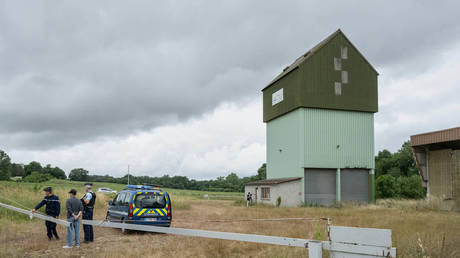
The breakthrough did not come from geographic tracking, but from a localized intelligence tip-off. Investigators were informed that the suspect had previously been employed at a farm in Puycasquier. On June 4, six days after the initial disappearance, police searched the location and discovered the victim's body hidden inside a disused grain silo.
The fact that the body was found at an unmonitored former workplace emphasizes a critical lesson in tactical search operations: when dealing with a deceptive suspect, an immediate asset-and-history audit (mapping everywhere the suspect has lived, worked, or held property) is a higher-yield strategy than chasing the physical alibis provided during initial interrogation.
The Structural Realities of Judicial Reform
In the wake of this failure, French government officials, including President Emmanuel Macron and Justice Minister Gerald Darmanin, acknowledged that the state failed to protect its citizens. However, identifying a "malfunction" is fundamentally different from fixing it. True optimization requires addressing the concrete limitations of the proposed reforms.
Activists are demanding a comprehensive, overarching law against sexual violence, but legislative expansion is a poor substitute for operational efficiency. The primary bottleneck is not an absence of law; it is an absence of throughput. To prevent similar systemic failures, the state must implement targeted infrastructural upgrades:
- Mandatory Digitization of Casework: The immediate elimination of paper transfers between jurisdictions to reduce inter-jurisdictional latency from months to hours.
- Dynamic Risk Triggering: An algorithmic alerting system within national police databases that automatically elevates the priority of an investigation when an individual accumulates multiple complaints across different regions, overriding standard linear investigative timelines.
- Bifurcated Investigative Tracks: Creating a fast-track protocol for crimes involving minors, where suspect interviews are conducted early in the cycle to establish restrictive bail conditions or judicial surveillance, rather than saving the interrogation for the final step.
The French state faces a clear operational choice. It can continue to rely on a fragmented, linear, paper-based judicial architecture that prioritizes administrative tradition over real-time risk mitigation, or it can modernize its workflows to match the speed of the threats it is legally mandated to intercept. Until these systemic friction points are engineered out of the pipeline, the structural latency of the judiciary will continue to be measured in human lives.