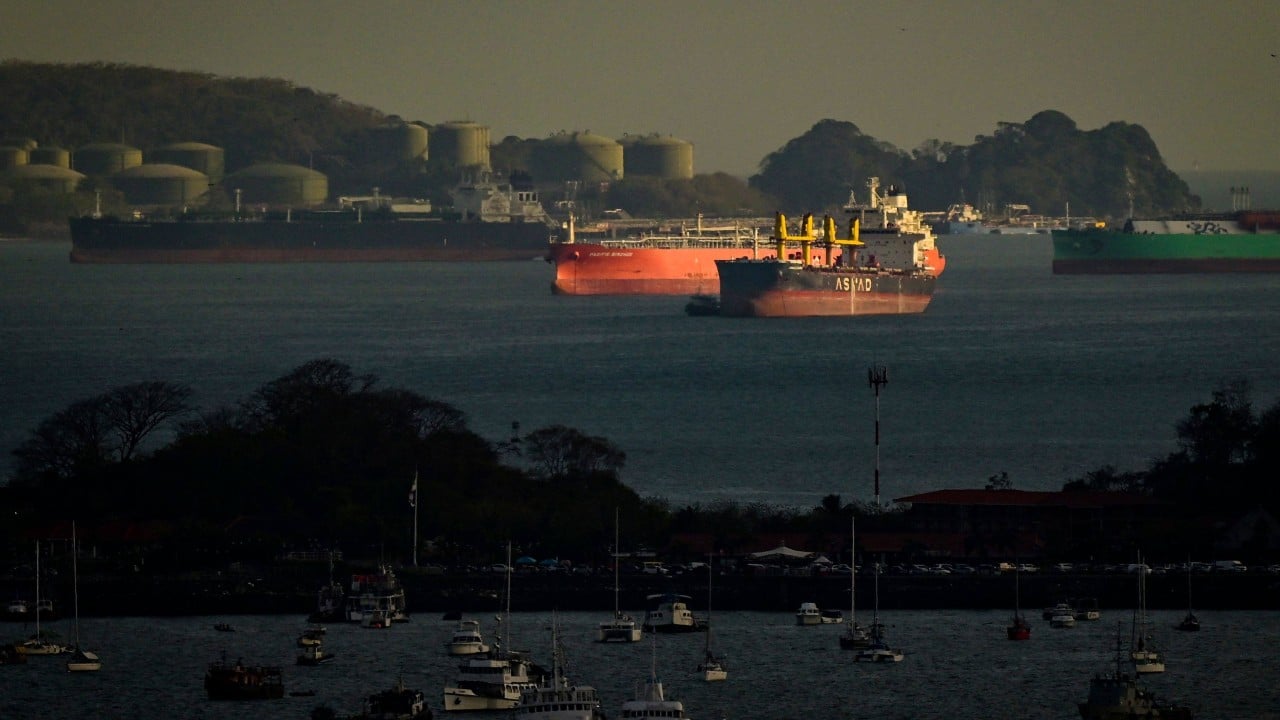
Marine logistics corridors operate on strict volumetric thresholds where fluid dynamics and meteorological cycles dictate global trade velocity. When precipitation in the Gatun Lake watershed drops 34 percent below historical baselines, the physical constraints of a gravity-fed lock system force an immediate contraction in throughput capacity. The decision by the Panama Canal Authority to throttle daily transits down to 32 vessels by mid-September is not merely a localized weather reaction; it is a textbook stress test of global supply chain elasticity. Deconstructing this crisis requires evaluating the hydraulic cost function, cargo allocation mechanics, and alternative routing economics that govern modern maritime transport.
The Hydraulic Cost Function of Lock Operations
The structural vulnerability of the canal stems from its reliance on freshwater gravity feeds rather than a sea-level excavation. Elevating a vessel through the lock system requires discharging approximately 52 million gallons of freshwater per transit from Gatun and Alajuela lakes directly into the ocean.
When regional precipitation falters under the influence of an intensified El Nino phase, the water inflow equation turns negative. The system operates on a strict mass balance:
$$Storage_{t} = Storage_{t-1} + Inflow - Outflow - Evaporation$$
When $Inflow$ falls significantly below historical means while $Outflow$ remains structurally tied to transit demand, lake levels decline. To prevent draft restrictions from grounding deep-hull carriers entirely, the canal authority must artificially suppress the volume variable by restricting both daily transit counts and maximum vessel draft limits down to 47.5 feet.
This creates a dual-penalty economic mechanism for cargo owners:
- Draft Penalties: Ships must shed cargo weight to comply with shallower water depths, reducing the payload efficiency per voyage.
- Frequency Penalties: Slot reductions cap the absolute volume of goods capable of traversing the Atlantic-Pacific divide each day.
The Resource Allocation Matrix and Auction Dynamics
When asset availability drops below aggregate market demand, allocation efficiency dictates market behavior. The canal authority manages scarce transit slots through a structured auction framework and segmented booking categories.
To prevent systemic market exclusion of smaller operators and vital commodities, the system divides daily slots into specialized categories based on ship class and cargo type. Neopanamax locks, which handle ultra-large container ships and energy carriers, face severe slot rationing. Priority passage requires entering a dynamic auction market where spot prices for transit slots have experienced extreme inflationary spikes, reaching averages exceeding one million dollars during peak congestion periods.
This auction dynamic disproportionately impacts low-margin bulk commodities compared to high-value containerized goods. Container liners can easily amortize a million-dollar transit premium across thousands of twenty-foot equivalent units, translating to nominal per-unit retail price increases. Conversely, bulk agricultural exporters—such as South American grain, table grapes, and chilled produce suppliers—operate on razor-thin margins that cannot absorb sudden spot auction spikes without destroying product competitiveness. Consequently, these agricultural sectors are forced off the route, precipitating structural shifts in global sourcing geography.
Macroeconomic Cascades and Network Re-Routing
Logistical systems under duress trigger cascading adjustments across parallel networks. The contraction of Panama Canal throughput capacity coincides with geopolitical friction points elsewhere in global maritime corridors, notably capacity constraints and security premiums affecting alternative Eurasian passages.
When throughput falls, shipping conglomerates face a stark optimization choice governed by the transit time versus fuel cost trade-off:
- The Cape Route Alternative: Diverting vessels from Asia-to-US East Coast routes away from Panama and around the southern tip of South America (Cape Horn) or Africa adds thousands of nautical miles and weeks of transit time.
- The Intermodal Bridge: Offloading containerized freight at West Coast ports such as Los Angeles or Long Beach and utilizing double-stack rail networks to transport goods inland.
Each alternative introduces distinct cost functions. The intermodal rail option incurs heavy terminal handling charges and chassis availability bottlenecks, while the southern maritime detour inflates bunker fuel consumption and ties up global fleet capacity. Because maritime shipping operates as a closed-loop asset pool, removing weekly ship capacity through the canal absorbs global vessel supply, driving up freight rate indices across unaffected trade lanes.
Strategic Fleet Adjustments
Mitigating structural exposure to watershed volatility requires a fundamental shift in asset deployment and scheduling discipline. Shippers can no longer rely on spot-market optionality during meteorological anomalies. The operational blueprint moving forward demands multi-tier forecasting models that integrate real-time lake elevation telemetry directly into enterprise resource planning software. Logistics directors must secure long-term slot allocations months in advance while redesigning inventory buffer stocks to absorb multi-week transit variances caused by recurring climatic disruptions.