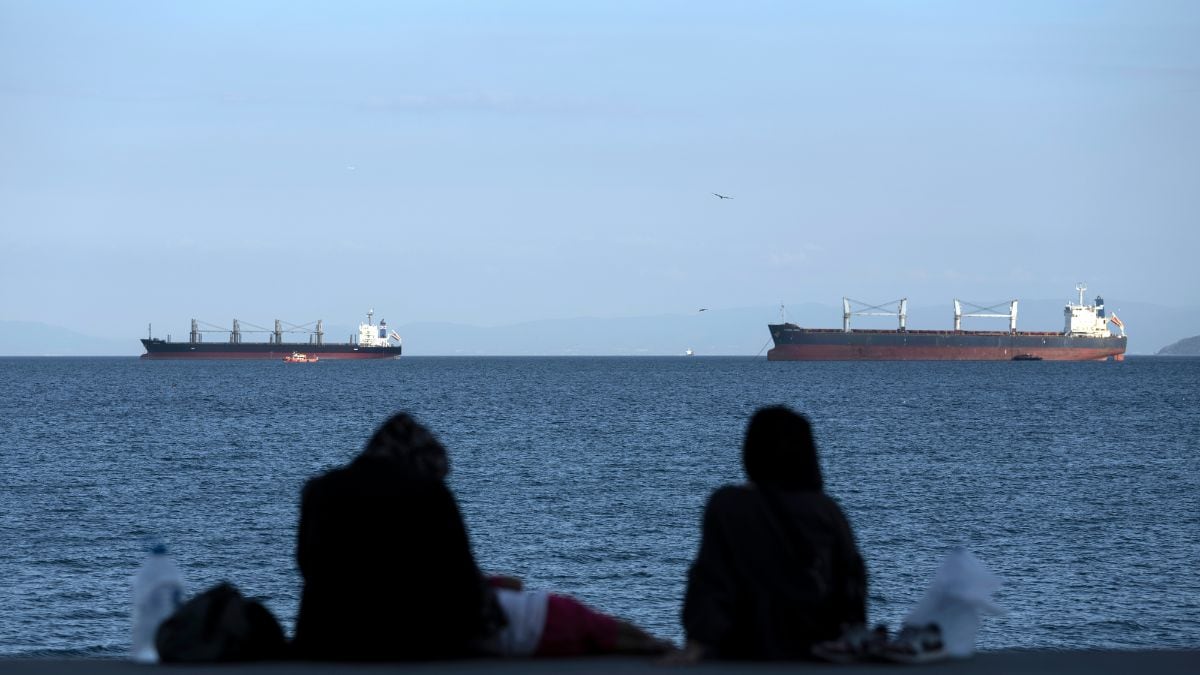
Maritime choke points operate under brutal economic incentives where vessel velocity directly dictates operational margin. When the Turkish-flagged bulk carrier Tuğberk İmamoğlu collided with the chemical tanker Alsu in the Sea of Marmara, the resulting catastrophe—featuring the rapid sinking of the cargo vessel within eleven minutes and ten missing crew members—exposed the terrifying fragility of high-density shipping lanes. Evaluating this disaster requires moving past the superficial parameters of weather and bad luck to examine the structural mechanics of vessel kinetic energy, bridge resource management failures, and the hydrodynamic vulnerability of aging bulk carriers laden with high-density deadweight.
The Kinematics of Structural Failure
The physical parameters of the collision dictate the severity of the aftermath. The Tuğberk İmamoğlu was a 90-meter bulk carrier constructed in 1990, transporting approximately 4,200 tonnes of rolled sheet metal and rebar. Steel coils and rebar represent a high-density, low-center-of-gravity cargo configuration that dramatically reduces a vessel's internal buoyancy volume. When a bulk carrier of this structural vintage encounters an impact from a 91-meter chemical tanker moving along a intersecting vector, the concentrated kinetic energy easily breaches the side-shell plating.
The eleven-minute timeline from impact to complete submergence points directly to catastrophic progressive flooding. Unlike double-hulled modern tankers designed to maintain stability after compartmental breaches, older general cargo designs often lack redundant transverse watertight subdivision in cargo holds. Once the hull envelope failed below the waterline, the dense steel cargo exacerbated free-surface effect and downward gravitational vectoring. Water rushed into the holds, destroying residual buoyancy and pulling the vessel down vertically into the 900-meter deep basin of the Marmara Sea before the crew could deploy survival craft or transmit coordinated distress telemetry.
The Cognitive Bottleneck of the Turkish Straits Corridor
The Sea of Marmara functions less like an open body of water and more like an aquatic freeway connecting the Black Sea and the Mediterranean via the Bosphorus and Dardanelles straits. Thousands of commercial carriers transit these narrow corridors annually, creating a continuous operational bottleneck. Navigating this corridor demands hyper-vigilant watchkeeping, yet standard bridge watch protocols frequently break down under the cognitive load of persistent sensory saturation.
In high-density traffic zones, watch officers suffer from attention fatigue, sorting through dozens of radar targets, Automatic Identification System vectors, and visual cues. The pre-collision telemetry indicates a breakdown in tactical communication, with conflicting claims regarding right-of-way assertions between the two vessels. When a bulk carrier attempts to warn an oncoming vessel of an impending lane intrusion, the success of that intervention relies entirely on the receiver's active monitoring state. If the chemical tanker's bridge team was experiencing situational blindness or data overload, verbal warnings over marine VHF channels transform into background noise.
Systemic Vulnerabilities in Coastal Monitoring and Response
The aftermath of the Marmara Sea sinking highlights critical operational deficiencies in emergency response timing and immediate surface containment. While transport authorities noted that the first rescue vessel reached the site within an hour of the distress call, an eleven-minute sinking window guarantees that surface rescue assets arrive strictly in a recovery posture rather than a life-saving capacity. Survival in 900-meter deep waters during pre-dawn hours requires immediate personal locator beacon activation and rapid thermal protection, neither of which can be guaranteed when a ship plunges vertically without warning.
Furthermore, the reliance on mobile phone tracking and unanswered automated calls reveals a profound technological gap in automated distress initiation for older commercial tonnage. Modern global maritime distress and safety systems mandate EPIRBs designed to deploy automatically upon hydrostatic pressure activation. The discovery of empty life buoys and an unpopulated lifeboat suggests that while physical abandon-ship gear may have drifted free during the rapid descent, the crew was trapped below decks by the sheer velocity of the ingress or incapacitated by the sudden list of the vessel.
Operational Redundancy and Risk Mitigation Protocols
To prevent subsequent disasters in high-density corridors, maritime operators must shift from reactive post-incident investigations to proactive structural enforcement. Fleet managers can no longer treat vintage tonnage with legacy safety exemptions.
Mandatory implementation of real-time bridge audio and data recorders on all commercial vessels over a certain deadweight tonnage must be prioritized to isolate human error factors immediately. Additionally, Vessel Traffic Services within the Marmara corridor require automated collision-avoidance intervention protocols, where shore-based operators override civilian navigation teams when intersecting vectors cross critical safety thresholds.
Maritime authorities must enforce stricter speed restrictions and mandatory dual-watch standards for all commercial vessels transiting regional choke points, neutralizing the human margin for error before kinetic forces take over.