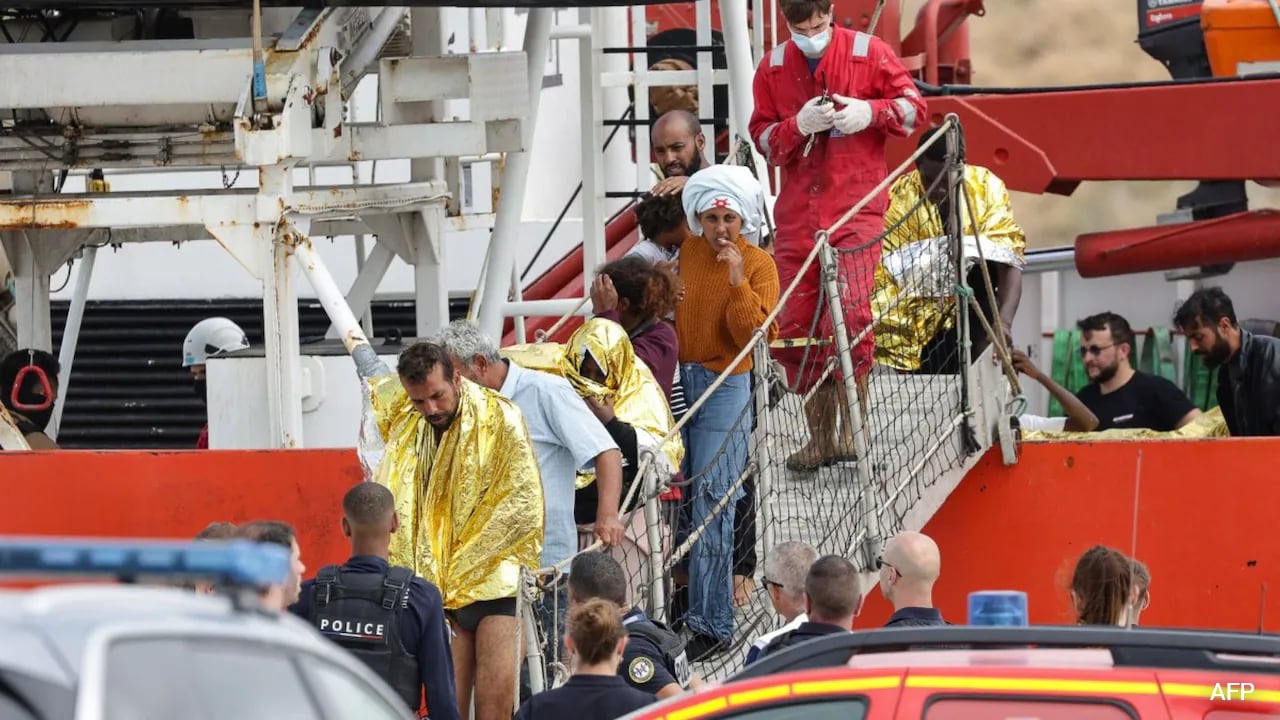
Maritime choke points reveal systemic structural friction when operational enforcement meets human desperation. The August 2026 maritime rescue event in the English Channel, wherein 173 individuals were evacuated from an engine-compromised, overloaded vessel before structural failure occurred, serves as an empirical stress-test of modern border control architecture. Rather than evaluating this occurrence through an emotional or purely political lens, analyzing the mechanics of the event exposes the operational bottlenecks, logistical shifts of human smuggling cartels, and the systemic feedback loops governing cross-border migration interdiction between France and the United Kingdom.
The Structural Mechanics of Smuggling Scalability
Modern human smuggling operations in northern France have transitioned from decentralized, low-volume transport vectors to industrial-scale logistics. In 2021, the average capacity of a small craft utilized for Channel crossings hovered near 26 passengers. By mid-2026, operational data compiled by maritime prefectures indicates that average vessel capacity has expanded to approximately 65 occupants, with peak vectors—such as the incident involving the 173-passenger vessel—pushing structural limits to absolute failure points.
This transformation is driven by an economic optimization loop enforced by transnational trafficking syndicates:
- Fixed-cost amortization: Smugglers maximize revenue per transit run by packing structurally unsound inflatable hulls or rubber dinghies beyond their buoyancy thresholds.
- Interdiction risk mitigation: Minimizing the total number of launched hulls reduces the probability of visual or radar detection by asset patrols along the French littoral.
- Equipment degradation: The marginal cost of lower-grade marine engines and subpar composite materials is absorbed entirely by the consumer, while cartels capture high margins upfront.
When an engine experiences thermal overload or mechanical failure under immense weight distribution stress, the vessel transitions instantaneously from a dynamic transit asset to an unmanageable marine hazard. The thermal event on the recent vessel catalyzed rapid structural collapse, forcing a convergence of French maritime patrol units, British Border Force assets, and the Royal National Lifeboat Institution under high-stress conditions.
The Tactical Dilemma of Refused Intervention
A critical operational friction point identified during the incident was the initial refusal of assistance by occupants prior to the catastrophic engine fire. Five individuals were extracted during an early emergency response phase, but the remaining passengers declined subsequent intervention by French patrol vessels.
This behavioral pattern is governed by a strict risk-reward calculation made by individuals aboard the craft:
- Jurisdictional capture: Return to a continental port triggers deportation frameworks, financial loss of the transit fee, and resets the migration timeline.
- Enforcement avoidance: Law enforcement boarding maneuvers on severely overcrowded inflatable craft risk destabilization and capsizing, transforming tactical interception into an immediate drowning hazard.
- Terminal momentum: The psychological threshold crossed after departure creates a strong bias against abandoning the transit objective until physical or mechanical failure makes continuation mathematically impossible.
Consequently, maritime authorities face a operational paradox. Forcing an uncoordinated boarding action on an over-allocated platform risks generating mass casualties through hull puncture or panic-induced weight shifts. Interdiction agencies are thus constrained to monitor from a standoff distance until a critical failure event forces a mandatory, high-risk rescue protocol.
The Economic and Political Feedback Loop
The macroeconomic allocation of capital into border enforcement has failed to decouple interdiction volume from structural adaptation by smuggling networks. The bilateral framework—exemplified by multi-million-pound funding packages dedicated to enhanced beach surveillance, aerial drone deployment, and specialized riot police units along the French coastline—alters the spatial distribution of launches rather than suppressing the underlying supply curve.
Increased security density near primary ports forces syndicates to shift launch points toward more remote tidal zones. This geographic displacement lengthens exposure times in open waters, increases transit distances, and elevates exposure to unpredictable weather systems and heavy commercial shipping lanes. The resulting operational environment guarantees higher frequencies of structural distress calls, transforming coast guard agencies into de facto extension services for the smuggling supply chain.
Political discourse surrounding these incidents oscillates predictably between demands for heightened naval deterrence and accusations of enforcement negligence. However, policy interventions that rely solely on surface deterrence mechanisms misdiagnose the variable. The elastic demand for transit routes combined with high-margin illicit supply networks ensures that tactical crackdowns on specific beaches result in immediate network routing adaptations rather than operational cessation.
Strategic Operational Outlook
Mitigating structural failures in high-density maritime transit corridors requires a fundamental shift from reactive rescue operations to upstream network disruption. Interdiction strategies that focus exclusively on the water-to-shore interface will continue to yield diminishing returns as long as the underlying economic incentives for transnational cartels remain intact.
Law enforcement agencies must prioritize financial intelligence units to trace and dismantle the underlying capital flows, procurement channels for substandard marine engines, and bulk distribution points for inflatable hulls. Simultaneously, the deployment of biometric tracking and asset forfeiture protocols against logistics facilitators provides the only viable friction capable of degrading cartel operational capacity. Without addressing the foundational supply chain economics, maritime authorities will remain locked in a perpetual cycle of emergency response to preventable structural disasters.