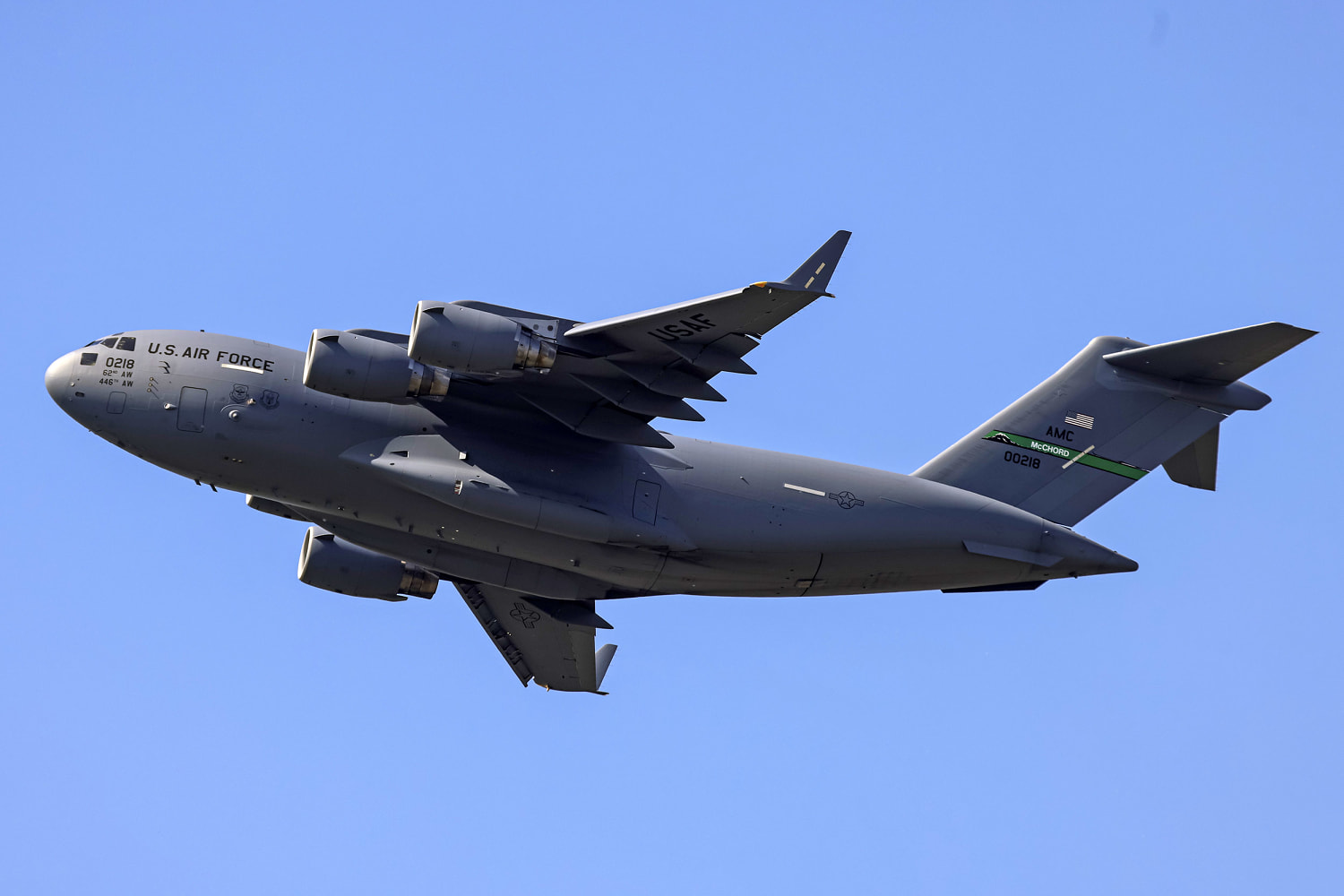
The arrival of a United States Air Force Boeing C-17A Globemaster III at Moscow's Vnukovo Airport breaks a strict operational taboo, forcing a re-evaluation of current great power backchannels. While open-source intelligence platforms tracked airframe 07-7181 from Joint Base Andrews through Riga to Russian airspace, the institutional response from both Washington and Moscow has relied on strategic ambiguity. Rather than treating this event as an isolated anomaly, analysts must deconstruct the logistical signature, the diplomatic timing, and the structural constraints governing high-level transport flights into restricted airspace.
The Logistical Vector and Airframe Utility
Publicly available telemetry data indicates that flight RCH4555 did not materialize out of thin air; it followed a multi-stage transatlantic route originating from New Jersey, moving through Charleston and Joint Base Andrews, before staging in Latvia. The choice of a C-17 Globemaster III dictates specific operational parameters. Unlike executive transport variants such as the C-32 or C-40, which are typically assigned to high-ranking diplomatic delegations, the C-17 is a heavy strategic airlifter. Also making news lately: The Boiling Ocean Crisis Nobody is Talking About.
Deploying a heavy transport frame into a hostile or heavily restricted capital signals distinct functional requirements:
- Volumetric Capacity: The cargo hold accommodates oversized secure communications infrastructure, armored ground transport vehicles, or bulky cryptographic hardware.
- Autonomous Support: Such flights frequently carry advance security teams, technical maintenance units, and dedicated ground-support equipment to ensure the aircraft can operate independently in non-aligned or adversarial territory.
- Signaling Value: Operating a labeled military transport asset rather than a civilian charter imposes a deliberate military footprint on what might otherwise be a covert diplomatic exchange.
The transit through Riga acts as a localized staging node, transitioning the aircraft from NATO airspace into Russian air traffic control jurisdiction. This mechanics-first approach strips away the sensationalism of media commentary, exposing a cold logistical footprint designed to support physical meetings that cannot be conducted via secure digital channels. Further information on this are covered by The Guardian.
The Diplomatic Friction Matrix
The timing of this flight intersects with a period of noticeable stagnation in bilateral negotiations concerning the war in Ukraine. Standard diplomatic channels via third-party intermediaries have hit structural limits, compounded by shifting theater priorities in Washington.
To evaluate why a physical transport asset was deployed, we must examine the cost-benefit matrix of direct engagement versus remote negotiation:
- The Cryptographic Limit: Highly sensitive terms regarding territorial concessions or enforcement mechanisms often require physical document transfer or face-to-face clearance to bypass electronic surveillance vectors.
- The Signaling Asymmetry: By allowing a U.S. military aircraft to land at Vnukovo, both governments accept a temporary rupture in standard airspace bans, signaling to secondary actors—such as European allies and regional adversaries—that a bilateral channel remains viable outside multilateral frameworks.
- Plausible Deniability: The initial denials or silence from institutional spokespersons reflect the utility of ambiguity, allowing both administrations to test policy adjustments without immediate domestic or coalition political fallout.
When formal negotiations stall, the friction of distance and digital insecurity forces great powers to revert to physical emissaries. The C-17 functions not as a passenger liner for luxury diplomacy, but as a secure mobile node capable of moving the necessary human and technical capital required to restart deadlocked talks.
Monitor the operational status of subsequent return flights from Moscow to European staging bases, combined with shifts in secondary diplomatic communiques regarding Eastern European security frameworks.