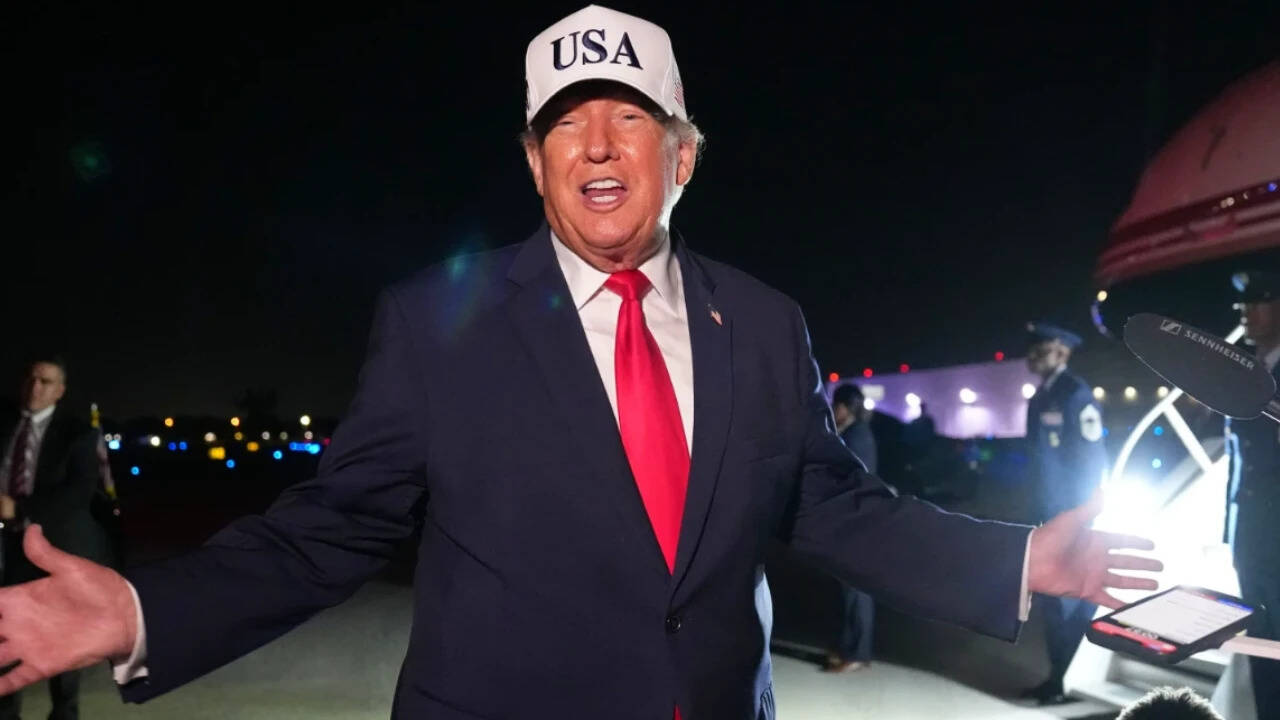
Foreign influence campaigns do not manufacture street violence from scratch in mature democracies; they parasitize existing domestic grievances and amplify them through asymmetric reach channels. Internal European Union assessments and French foreign ministry reporting examined in November 2026 show that street unrest in France—sparked in late September and escalating through mid-October 2026 over cost-of-living pressures, public service strain, and education policy—became a high-velocity target for information manipulation across Russian-linked networks, MAGA-aligned accounts, and Israeli officials, media outlets, and influencers. Standard news summaries treat these actors as a single undifferentiated wave of outrage. That framing obscures a sharp structural divide between covert synthetic fabrication and overt high-reach framing, as well as the gap between instigating civil disorder and opportunistically redirecting its political meaning.
The blueprint of this analysis breaks down the underlying mechanics into four parts: deconstructing the opportunistic exploitation model, separating known findings from hypotheses, mapping cause-and-effect pathways across distinct actor tiers, and establishing operational defenses along with their limits. Don't miss our previous coverage on this related article.
Opportunistic Exploitation Versus Instigation
A frequent error in commentary on foreign influence is conflating opportunistic amplification with direct instigation. When demonstrations over rising living costs and strained public services turn into clashes with police, physical friction already exists on the ground. External actors act as force multipliers on interpretation rather than primary causes of the crowd.
French President Emmanuel Macron stated on October 21, 2026, that authorities saw no visible foreign interference behind the protests themselves, while pointing to foreign manipulation of information. EU assessments reported by Reuters align with that distinction, characterizing the activity as opportunistic exploitation rather than evidence that Moscow or other external actors sparked or escalated the unrest. If you want more about the history here, Associated Press provides an in-depth breakdown.
Treating every viral post during a riot as proof of covert orchestration weakens analytical credibility. Analysts separate three stages of an unrest cycle:
- Structural friction: Real economic or institutional pressure—such as household inflation, school funding disputes, or municipal service strain—creates a baseline of public frustration.
- Kinetic trigger events: Demonstrations, strikes, or police confrontations supply raw visual material and emotional salience.
- Narrative capture: Domestic and foreign actors compete to assign a causal villain—such as immigration policy, ruling elites, or foreign aid commitments—before official explanations stabilize public perception.
Known Facts Versus Working Hypotheses
Rigorous strategy requires separating verified intelligence disclosures and metric snapshots from broader political inferences. Conflating the two turns provisional observations into settled law.
Verified Findings and Reported Metrics
- Presence of multi-actor amplification: Internal EU and French assessments reported in early November 2026 documented campaigns linked to Russian networks, MAGA-aligned figures and outlets, and Israeli officials, media, and influencers targeting the French unrest.
- Asymmetry in top-post reach: According to the French foreign ministry assessment covering October 16 to 18, 2026, the ten most-viewed X posts from pro-Russian spheres drew roughly 2.8 million views. Over the same window, the ten top-viewed posts from MAGA-linked officials, media outlets, and influencers exceeded 49 million views, and the ten top-viewed posts from Israeli officials, government accounts, media outlets, and influencers exceeded 35 million views.
- Tactics attributed to Operation Overload: EU reporting and prior research by the Institute for Strategic Dialogue and France's Viginum link the network known as Operation Overload—active since September 2023—to impersonating Western news outlets and institutions, forging headlines, manipulating images, cloning voices with AI, and pivoting across crises to undermine support for Ukraine.
- Official denials and verification limits: Reuters noted it could not independently verify all assertions in the French and EU reports. Moscow has previously rejected disinformation allegations as fabrications, while the Israeli Prime Minister's Office and Foreign Ministry did not respond to requests for comment on the reporting.
Educated Hypotheses Requiring Ongoing Testing
- Long-term electoral realignment: Political scientists, including RAND senior researcher Elina Treyger, warn that sustained narrative competition can feed anti-immigrant backlash and push European voters toward political extremes over time. Whether short-term spikes of tens of millions of views translate into durable vote shifts remains an analytical hypothesis rather than a proven causal law.
- Cross-actor alignment without formal coordination: Parallel anti-immigration or anti-incumbent messaging across Russian, MAGA, and Israeli spheres does not by itself prove central command or joint planning. Overlapping ideological incentives and algorithmic recommendation loops can produce convergent outputs independently.
The Three Pillars of Narrative Capture
Rather than viewing every account as part of a single monolith, strategy teams get higher diagnostic precision by separating the ecosystem into three functional pillars: Synthetic Impersonation, High-Reach Ideological Framing, and Sovereignty Signaling.
Pillar One: Synthetic Impersonation and Wedge Injection
Covert networks such as Operation Overload rely on volume, disguise, and rapid thematic pivoting. Instead of relying solely on obvious partisan accounts, impersonation campaigns mimic trusted media formats, fabricated news clips, or cloned voices to inject specific wedges—such as claiming migrants assaulted protesters, asserting terrorist attacks are inevitable, or arguing that European leaders prioritize Ukraine over domestic stability.
The operational bottleneck for synthetic networks is distribution scale rather than asset production. Generating forged headlines or manipulated clips is inexpensive; breaking out of niche echo chambers into mass public awareness is harder when audiences discount overtly foreign or anonymous handles. That constraint helps explain why top-tier pro-Russian posts registered a fraction of the view count posted by prominent political and media accounts during the October 16–18 window.
Pillar Two: High-Reach Ideological Framing
Accounts tied to the MAGA movement and Israeli political or media spheres operate with a structural advantage that covert bot farms lack: public identity and existing audience gravity. When prominent influencers, media outlets, or public figures frame domestic French unrest through an immigration or cultural-security lens, their posts inherit established follower graphs and cross-platform syndication.
This creates a cause-and-effect chain that standard fact-checks often miss. Even when underlying riot videos depict real street clashes over economic or educational grievances, selective framing attaches a pre-packaged interpretation—turning complex domestic discontent into a simplified referendum on immigration and border control. High view counts do not automatically mean every viewer adopts the claim, yet they compress the window in which local context can compete for attention.
Pillar Three: State Rhetoric and Geopolitical Friction
Public statements by national leaders and security officials add another layer to information contests. During the unrest, reporting noted sharp rhetoric from Israeli Prime Minister Benjamin Netanyahu criticizing French leadership over warnings regarding extremism, alongside high-level intelligence contact between French officials and Shin Bet. Meanwhile, French officials emphasized that Moscow targets France due to its backing for Ukraine's security.
When official rhetoric intersects with social media amplification, two effects reinforce each other. First, partisan commentators cite official remarks to validate aggressive framing of the host government. Second, domestic opposition and foreign actors alike use perceived state vulnerability to argue that governing institutions have lost control of public order and demographic integration.
Why Standard Metrics Misread Influence Operations
Decision-makers frequently misallocate resources because they measure the wrong variable. Tracking raw bot volume or counting fake posts treats influence as a pure engineering problem. In practice, two metrics distort judgment:
- Raw post count versus audience concentration: A network can publish high volumes of fabricated content yet achieve modest top-end reach on a given platform window, whereas a handful of high-profile accounts can generate tens of millions of views. Measuring output volume without measuring reach concentration overstates covert reach while underestimating overt narrative capture.
- False attribution versus narrative adoption: Proving a clip is synthetic or foreign-linked is necessary for attribution, but debunking the technical provenance of a video does not automatically extinguish the underlying political grievance—such as frustration over housing costs, school strain, or immigration enforcement—that made audiences receptive in the first place.
Tactical Playbook for Analysts and Crisis Communicators
Teams monitoring or responding to domestic unrest under external information pressure need a disciplined sequence rather than reactive whistle-blowing.
- Segment actors by visibility and intent: Separate covert impersonation networks from overt political, media, and state commentators. Apply forensic media and impersonation checks to synthetic assets, while tracking framing shifts and reach velocity separately for public accounts.
- Audit the grievance-to-narrative bridge: Map which local pain points—cost of living, education cuts, policing, or immigration—are being stitched onto street footage. Address verified local facts directly rather than arguing abstractly about foreign motives.
- Time official context to lead the frame: Release verified incident context, casualty or arrest figures, and administrative facts early. Delays leave an information vacuum that high-reach external accounts fill with dramatic interpretations.
- Separate foreign manipulation from domestic policy debates: Conflating legitimate domestic debates over immigration or public spending with foreign propaganda alienates citizens who hold genuine policy concerns. Precision in attribution preserves public trust.
Operational Limitations and Trade-Offs
Every countermeasure carries friction. Aggressive takedowns or broad labels of foreign manipulation risk backfiring if citizens perceive authorities as suppressing inconvenient domestic criticism. Conversely, over-indexing on attribution can distract leaders from tangible governance problems—such as inflation, municipal strain, or policing tensions—that fuel street mobilization in the first place. Platform transparency limits, cross-border jurisdiction, and shifting algorithmic distribution also constrain how quickly external networks can be mapped or countered.
Strategic Action
Communications and national security teams should build a dual-track unrest response protocol before the next major domestic protest cycle begins: pair rapid forensic verification of impersonated media with pre-authorized, plain-language briefings from local and national officials that establish verified facts within hours of kinetic flashpoints, while treating viral external framing as an early-warning indicator of which domestic grievances are most vulnerable to political capture.
Watch France riots exploited by Russian, MAGA, and Israeli influence networks for a concise visual overview of the EU assessments on how external accounts amplified narratives around the French unrest.