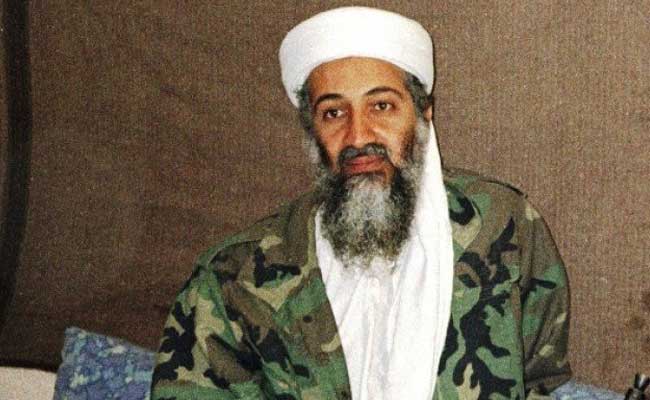
Complex organizational networks frequently experience friction between top-down strategic appointments and bottom-up tactical execution. When Osama bin Laden personally hand-picked Khalid al-Mihdhar for the 2001 aviation operations, he bypassed standard operational vetting filters. Months later, tactical field commander Mohamed Atta attempted to execute a personnel veto, arguing that al-Mihdhar's behavioral profile and administrative baggage created unacceptable systemic vulnerability. The resulting standoff between central leadership preservation and tactical risk mitigation exposes the underlying mechanics of hierarchical command structures under extreme operational constraints.
Understanding this dynamic requires deconstructing the competing objectives within covert networks. Central authority prioritizes ideological alignment, signaling value, and personal loyalty. Tactical commanders prioritize execution velocity, error minimization, and local asset optimization. When these variables conflict, organizational architecture dictates the outcome. Central leadership overrode Atta's veto, reallocating al-Mihdhar from a pilot track to a support role. This structural compromise highlights how distributed systems handle internal dissent and why single points of failure persist even when field operators identify structural risks. Learn more on a related topic: this related article.
The Cost Function of Centralized Appointments
Centralized appointment models introduce specific agency problems. When an executive or founder directly selects an operative based on symbolic or political criteria, local operators inherit liabilities they cannot easily measure or mitigate.
- The Signaling Value Variable: High-status sponsors inject personnel into projects to secure alignment, bypassing meritocratic or capability-based filters.
- The Information Asymmetry Gap: Central authorities often possess incomplete data regarding local operational friction, such as regional surveillance exposure or individual competence deficits.
- The Sunk Cost Resistance: Once an executive publicly endorses an asset, admitting error incurs a high political penalty within the hierarchy, shifting incentives toward accommodation rather than termination.
In the case of al-Mihdhar, his early selection by the central command carried heavy symbolic weight. He was an experienced fighter with prior operational exposure in foreign theaters. However, when deployed into the domestic environment of the United States, his behavioral output deviated from operational requirements. His inability to progress through standard flight training benchmarks and his accumulating administrative trail created friction that Atta recognized as a threat to operational security. Additional journalism by Associated Press highlights similar views on the subject.
The Tactical Veto Mechanics
Atta operated as a classic localized project manager. His mandate was the successful execution of a high-complexity, low-margin objective. From his perspective, every participant represented a variable that could compromise the mathematical probability of success. When Atta traveled to confront the administrative reality of the cell, he attempted to execute a binary filter: retain or expel.
The mechanics of a tactical veto rely on three operational thresholds:
- Competence Deficit: The asset fails to acquire the baseline technical skills required for their assigned vector. Al-Mihdhar and Nawaf al-Hazmi struggled significantly with English-language acquisition and fixed-wing aircraft navigation during preliminary training phases in San Diego.
- Exposure Velocity: The asset accumulates external attention, increasing the probability of interception by regulatory or law enforcement entities. Al-Mihdhar's international travel patterns had already triggered intelligence collection flags before his entry into North America.
- Behavioral Friction: The asset exhibits interpersonal volatility or non-compliance with localized cell discipline.
Atta's assessment correctly identified that al-Mihdhar breached the second and third thresholds. Yet, the centralized hierarchy rejected the veto because removing a hand-picked affiliate undermined the foundational authority of the organization's founder. Instead of termination, the network adapted through role re-engineering.
The Structural Pivot: Role Re-Engineering Versus Attrition
When an organization cannot drop a compromised asset due to political or hierarchical constraints, it must alter the asset's functional utility. This introduces a structural pivot.
Al-Mihdhar was transitioned from a primary vector—navigating an aircraft into a designated target—to a secondary support vector, commonly designated as muscle. This mitigation strategy reduced his required technical competency threshold. He no longer needed to master complex flight controls; he only needed to participate in physical coercion during the terminal phase of the operation.
This adjustment illustrates a fundamental principle of risk distribution in high-stakes project management. By lowering the operational requirements for a compromised participant, the system attempts to insulate itself against skill-based failure. However, this adjustment does not eliminate exposure velocity. While it solved the immediate training bottleneck, it retained the historical surveillance baggage associated with the individual. The intelligence footprint generated by international transit and known associations remained intact, serving as a permanent vulnerability in the broader operational architecture.
Network Vulnerability and Signal Leakage
The persistence of compromised assets within a high-consequence network demonstrates how organizational resilience can paradoxically increase systemic fragility. Traditional risk management frameworks dictate that when a node exhibits high signal leakage—such as active intelligence monitoring or repeated behavioral anomalies—the node should be isolated or pruned.
In covert operations, ideological rigidity often supersedes statistical risk management. The decision to retain al-Mihdhar created a permanent conduit for intelligence visibility. External oversight bodies and investigative agencies had mapped portions of his transit vector well before the terminal execution phase. The friction between Atta's tactical evaluation and bin Laden's strategic insistence reveals an organization operating under bounded rationality, where executive hubris constrains the efficacy of localized risk assessment.
Analyze organizational structures by mapping the velocity of top-down directives against the friction of bottom-up execution. When hierarchy overrides empirical field data, institutional blind spots widen in direct proportion to the executive's insulation from operational reality. Implement mandatory circuit-breakers that allow tactical leads to execute absolute personnel vetoes whenever an asset's cumulative exposure index breaches predetermined safety thresholds.