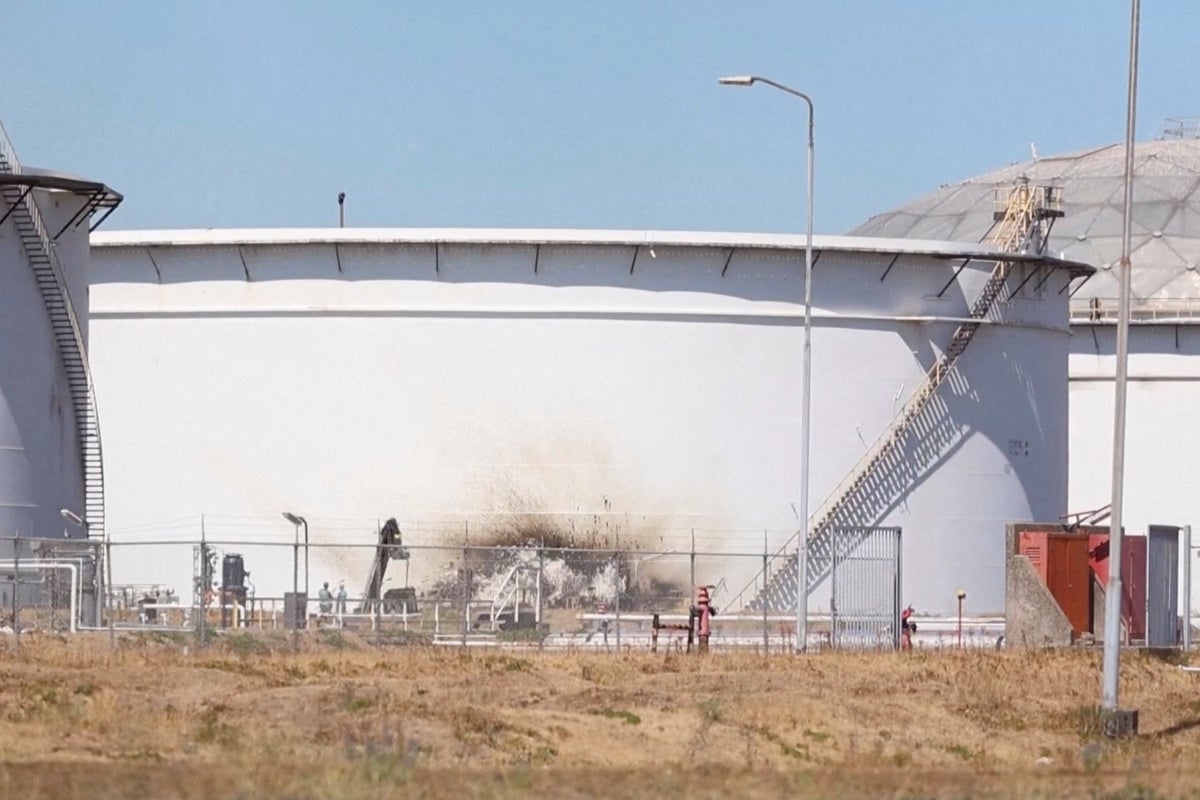
Critical infrastructure complexes operate under tight physical and economic tolerances where single-point operational failures rapidly cascade into regional supply volatility. The fatal explosion at the Gunvor Energy refinery and fuel terminal within the port of Rotterdam—Europe's largest maritime industrial hub—demonstrates the fragile margins governing high-consequence energy nodes. Standard news reporting treats such events as isolated tragedies or sudden anomalies. A rigorous operational analysis reveals that industrial accidents in multi-tenant energy clusters follow predictable structural vulnerabilities involving maintenance vectors, simultaneous compounding grid failures, and localized asset concentration.
The Mechanics of Maintenance Vulnerability
The incident at the Rotterdam facility occurred during active maintenance work on a section of industrial pipes. In heavy hydrocarbon processing environments, the interface between scheduled asset upkeep and active system pressure represents the highest statistical probability window for containment failure.
To understand why maintenance operations frequently precede critical loss of containment, consider the operational variables involved:
- Energy Isolation Breakdown: The process of locking out and tagging out (LOTO) complex pipe networks introduces human error vectors when residual product, trapped pressure pockets, or thermal expansion are miscalculated.
- Material Fatigue and Thermal Stress: Aging infrastructure subjected to cyclic loading accumulates micro-fractures. Introducing mechanical intervention or thermal tools (such as welding or cutting) near live units alters local metallurgical integrity.
- Contractor Integration Friction: Maintenance tasks are frequently outsourced to specialized third-party technicians who may possess variable familiarity with the specific proprietary idiosyncrasies of older refinery units.
When these variables align under operational time pressures, the margin for error collapses. The transition from a contained fluid transport system to an atmospheric release occurs instantaneously if isolation valves or purge protocols fail.
Correlated Anomalies versus Independent Events
A significant analytical challenge during the initial hours of the Rotterdam incident was untangling the simultaneous occurrence of a major port-wide power failure. Emergency services reported a separate transformer fire that caused a localized blackout, forcing adjacent operators like ExxonMobil to manage temporary refinery outages.
While local authorities and operators quickly ruled out a direct causal link between the electrical blackout and the Gunvor explosion, the temporal overlap highlights systemic vulnerability:
- Grid Dependency: Modernized refineries rely heavily on continuous automated control systems, electronic safety instrumented systems (SIS), and electric pumping stations. An unannounced grid fluctuation tests the redundancy of internal backup generators and uninterruptible power supplies.
- Operational Disruption Cascades: When a power failure forces simultaneous emergency shutdowns across multiple independent plants within the same square kilometer, flare stacks surge, automated safety valves cycle, and control room cognitive load spikes.
- Confounding Emergency Response: First responders are forced to multi-track resources across distinct physical locations—such as managing a structural fire at an electrical transformer while simultaneously establishing a secure crime and forensic scene at a blast site.
This convergence stretches municipal and industrial emergency response capacity, increasing the duration of secondary operational halts even when direct physical damage is isolated.
The Cost Function of Energy Hub Concentration
The strategic placement of refining, storage, and liquefied natural gas (LNG) import infrastructure inside a single geographic footprint creates an asymmetric economic exposure profile. Rotterdam serves as the primary liquidity and physical delivery point for northwestern European energy markets.
The cost function governing this level of asset density is defined by two competing economic forces:
- Agglomeration Economies: Co-locating refineries, chemical plants, and import terminals reduces feedstock transport costs, optimizes pipeline sharing, and provides immediate access to deep-water maritime logistics.
- Systemic Tail Risk: The concentration of critical path assets means that an operational disruption at a single mid-sized terminal can trigger psychological volatility in regional commodity pricing, even if physical throughput capacity remains largely uncompromised.
During the incident, natural gas flows at the nearby Gate LNG terminal experienced brief fluctuations before stabilizing. This market twitch illustrates how algorithmic trading and supply anxiety react to headline-driven uncertainty surrounding core European energy arteries. The vulnerability is not merely physical; it is structural and informational.
Operational Remediation and Asset Hardening
Mitigating the recurrence of catastrophic failures in high-density industrial ports requires moving past routine compliance frameworks toward continuous stress-testing of operational interfaces. Facility operators must decouple routine maintenance intervals from peak throughput cycles, enforcing strict safety buffers that insulate hot-work zones from live process streams. Furthermore, electrical grid architecture within major industrial clusters demands localized microgrid isolation capabilities to ensure that localized transformer failures do not introduce voltage anomalies into sensitive refinery control loops. Deploying advanced acoustic monitoring and fiber-optic strain gauges along legacy piping networks provides real-time structural integrity diagnostics, replacing reactive post-incident investigations with predictive containment management.