History rarely arrives with the crash of breaking glass. More often, it wears sensible shoes, sits down quietly behind a wooden desk, and begins to draft a manifesto on clean, white paper.
Consider the biology professor. In a different life, before the maps of the Balkans were torn apart by artillery and grief, Biljana Plavsic spent her days surrounded by microscope slides and cellular structures. She understood how organisms divide, how cellular walls protect an internal order, and how a foreign body is identified, targeted, and violently rejected by an immune system. It is a chillingly neat metaphor, though metaphors are dangerous things when applied to human flesh. She took the cold logic of the laboratory and applied it to her neighbors. She looked at people she had shared coffee with, streets she had walked down, and language she had spoken her entire life, and she decided they were a contagion. Meanwhile, you can find related stories here: Inside the Flydubai Cockpit Crisis That Exposed Aviation Blind Spots.
When the Yugoslavia of the twentieth century began its agonizing, bloody unravelling, the world watched through television screens with a dazed, paralyzed detachment. We saw the smoke rising over Sarajevo. We heard the distant concussions of mortars. But abstract statistics—thousands displaced, hundreds of mass graves, lines drawn in blood across mountain ranges—fail to capture the granular horror of how an ordinary society turns its own heart black.
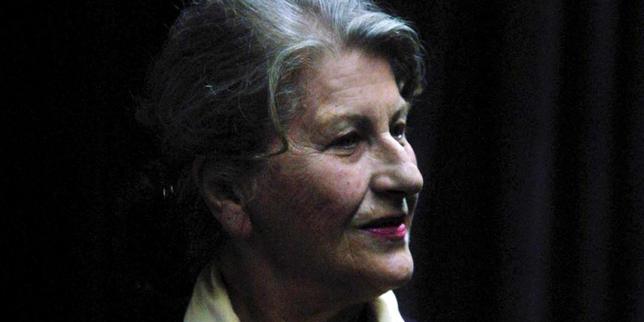
Plavsic did not hide in the shadows of the paramilitary camps. She stood in plain sight. She was the pristine academic turned nationalist firebrand, sporting her signature silver hair and an aura of uncompromising, frigid certainty. To many who followed her, that exterior was deeply seductive. In times of radical instability, people crave absolute answers. They crave the comforting lie that their suffering is entirely the fault of someone else across the valley. She gave them that narrative with the clean articulation of a university lecturer. She called it self-defense. She called it historical necessity. To understand the complete picture, check out the excellent article by NBC News.
History calls it something else entirely.
To understand how a university lecturer becomes a architect of human misery, you have to look past the courtroom transcripts of The Hague and into the psychology of grievance. Grievance is an infinite well. Once you convince a population that they are the eternal victims of a plot, there is no atrocity they cannot justify to themselves as preemptive justice. Plavsic operated as the ideological legitimizer. While others pulled the triggers and planted the mines, she provided the intellectual clearance. She provided the permission slip for cruelty.
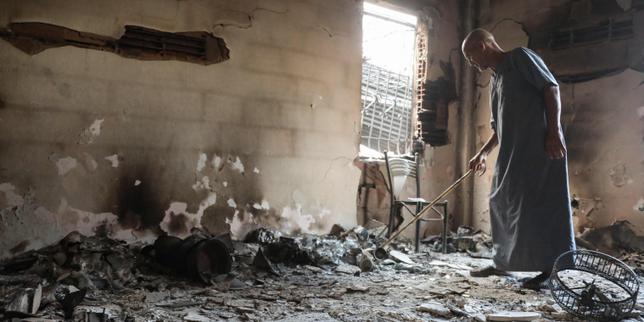
By the time the war ground to its exhausted, traumatized halt, the landscape was permanently altered. Entire communities had vanished into ash and displacement. The cities that once prided themselves on multi-ethnic coexistence were carved up into mono-ethnic enclaves defined by suspicion and barbed wire.
And then came the reckoning, slow and bureaucratic.
The International Criminal Tribunal for the former Yugoslavia did something remarkable, even if it felt entirely insufficient to the survivors. It put ideology on trial. When Plavsic faced the tribunal, the performance of unyielding defiance eventually cracked under the weight of her own conscience or the cold realization of her mortality. She entered a guilty plea for crimes against humanity. She expressed remorse—or what passed for it in a courtroom designed to measure the immeasurable. She served her sentence behind prison walls, a woman who had once commanded the loyalty of armed men now reduced to the quiet monotony of a cell.
Her death closes a chapter on one of the darkest ideological experiments of modern European history. But the danger of her legacy does not lie solely in the past tense.
The mechanisms she used are timeless. Whenever a society feels economically squeezed, culturally threatened, or politically disoriented, the old playbook of division is dusted off. The language changes, but the underlying mechanics remain identical. You find a scapegoat. You weaponize fear. You dress up ancient hatreds in the language of modern grievance. You convince the populace that the only way to survive is to consume the other.
We look back at the 1990s and wonder how good people allowed themselves to be swept into the storm. We imagine we would have stood firm. Yet the terrifying truth of human nature is that the path from neighbor to executioner is paved with small, incremental compromises of the soul, each one justified by a clever speech or an academic title.
The silence that follows a life like hers is heavy. It does not offer closure. It only leaves behind the quiet reminder of how fragile civilization is, and how easily a clever mind can convince a nation to tear itself apart from the inside out.