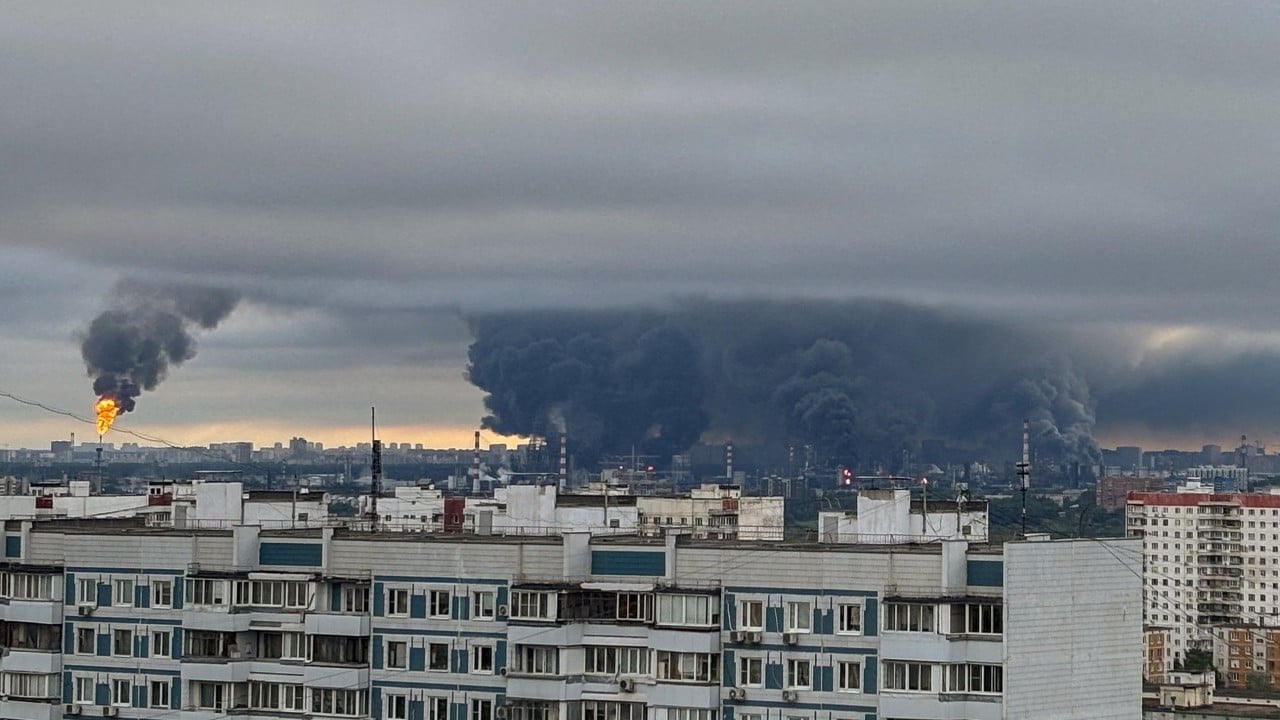
A nation’s status as an energy superpower rests not on its raw resource extraction, but on its capacity to convert upstream crude into downstream finished products. When deep-strike asymmetric warfare disrupts this conversion mechanism, the target state undergoes a rapid structural inversion. This is the precise operational crisis facing the Russian Federation. A sustained campaign of long-range aerial interdiction has systematically degraded domestic primary oil refining capacity, forcing the Kremlin to execute a historic shift: transitioning from one of the world's dominant fuel exporters into a seaborne importer of refined petroleum products.
Understanding this crisis requires looking past simple headlines about drone strikes. The vulnerability of Russia’s energy sector is governed by two fixed structural realities: geographic centralization and rigid domestic price controls. By evaluating the operational damage, logistical bottlenecks, and macroeconomic distortions currently rippling through the Russian economy, we can map out the exact mechanics of this refining crisis.
The Operational Degradation Function
The primary vulnerability of the Russian refining complex is its geographical concentration within European Russia, placing the vast majority of high-value downstream infrastructure within a 1,200-kilometer radius of the Ukrainian border. This asymmetric campaign does not target broad industrial areas; it systematically focuses on critical, long-lead-time components that cannot be easily bypassed or replaced.
Specifically, these strikes target primary distillation towers (such as the AVT-6 units) and integrated processing complexes (such as the Euro+ unit at the Moscow Refinery). In the architecture of a modern refinery, the primary distillation tower is the single point of failure. While storage tanks and pipelines can be patched or bypassed within days, a sophisticated distillation column requires specialized metallurgical fabrication, custom engineering, and Western-origin components that are tightly restricted under current international sanctions.
The cumulative operational impact of this strategy is clearly visible in the underlying industrial data:
- Capacity Destruction: Between January and May, targeted strikes hit 15 major Russian refineries, knocking out approximately 40% of the country's primary refining capacity.
- Output Collapse: By mid-June, weekly domestic gasoline production plummeted by 25% compared to the June average of the previous year, dropping to roughly 90,000 metric tons (765,000 barrels) per day.
- Export Attrition: Unplanned maintenance and infrastructure failures caused seaborne oil product exports to drop by 15% in the first half of June compared to the previous month.
This creates a severe structural imbalance. Russia continues to extract immense volumes of upstream crude oil, but it has lost the domestic industrial machinery required to crack that crude into transportable, consumer-ready motor fuels. Consequently, crude oil exports are being maximized out of operational necessity—not strategic choice—simply because unprocessed crude is the only energy asset Russia can still physically move out of its territory.
Logistical Arbitrage and Boundary Limits
To prevent an outright collapse of its domestic transport sector at the start of the high-demand summer driving season, the Russian government implemented an emergency ban on gasoline and jet fuel exports through late July, alongside an aviation kerosene restriction extending into November. However, halting exports only plugs a portion of the supply gap. The resulting domestic deficit has forced the Kremlin to seek international supply chains, revealing the hard limits of its regional alliances.
+-----------------------------------------------------------------+
|                   RUSSIA'S REFINED FUEL BUFFER                  |
+-----------------------------------------------------------------+
|                                                                 |
|  [Domestic Production]  --> Down 25% (June Baseline)            |
|                                                                 |
|  [Mitigation Layer 1]   --> Export Bans (Gasoline, Jet Fuel)     |
|  [Mitigation Layer 2]   --> Regional Rail (Belarus Supply Maxed) |
|  [Mitigation Layer 3]   --> Emergency Seaborne Imports (Asia)   |
|                                                                 |
+-----------------------------------------------------------------+
The first regional mitigation option was Belarus. While Minsk did ramp up its gasoline exports to Russia by 13 times and its diesel deliveries by three times during the first five months of the year, this supply line has already hit its absolute boundary limit. Neither Belarus nor secondary regional neighbors like Kazakhstan possess the spare refining capacity or logistics infrastructure to absorb a deeper systemic deficit. Kazakhstan, in fact, remains structurally dependent on Russian high-octane fuel blends for its own internal market, meaning it is a net consumer rather than a savior.
This supply ceiling forced a significant escalation: the authorization of emergency seaborne gasoline imports from Asia through Russia's western Baltic ports. This reverse-flow logistical maneuver reveals several deep operational vulnerabilities.
First, importing refined fuel by sea into ports built exclusively for high-volume exports requires rapid, inefficient re-engineering of offloading infrastructure. Second, the primary rail lines required to move this imported fuel from western maritime hubs to major consumption centers like Moscow run through highly vulnerable border regions, creating a highly exposed, target-rich logistics corridor.
The Subsidization Dilemma and Macroeconomic Distortion
The refining crisis is not merely a logistical bottleneck; it is an inflationary trigger that threatens the Kremlin's internal economic stability. Under normal market conditions, a 25% drop in domestic gasoline production would cause immediate, sharp price increases at the pump, naturally reducing consumer demand. However, the Russian state operates a rigid regulatory framework known as the damper mechanism.
The damper mechanism is a dual-payment fiscal subsidy designed to isolate domestic consumers from global market volatility. When international fuel prices are higher than Russia's fixed domestic target, the government directly pays oil companies the difference, keeping retail prices artificially low. This mechanism creates a massive fiscal trap when domestic production collapses:
+-----------------------------------------------------------------+
|                THE STATE SUBSIDY TRAFFIC COLLISION              |
+-----------------------------------------------------------------+
|                                                                 |
|  Domestic Shortage -> Rising Wholesale Cost                      |
|  Rigid Retail Price Cap -> Erases Retail Profit Margins         |
|  Result -> Localized Fuel Rationing & Fuel Lines                |
|                                                                 |
|  Govt Response -> Considering Subsidies on Imported Fuel        |
|  Fiscal Trap -> Drains State Budget While Fuel Supply Shrinks   |
|                                                                 |
+-----------------------------------------------------------------+
Because retail prices cannot rise freely to match the scarcity, the financial incentive for oil companies to deliver fuel to distant or high-risk regions evaporates. This artificial pricing structure explains why 53 Russian regions have seen widespread retail fuel shortages, long gas station lines, and strict 50-liter purchase limits, even while official inflation figures remain heavily managed.
The Kremlin is now considering an extraordinary fiscal intervention: introducing direct state subsidies on imported foreign fuel to keep retail prices capped. This approach is highly unsustainable. Subsidizing foreign-refined imports to protect a artificial domestic price ceiling drains the federal budget of capital that would otherwise fund the defense sector, all while doing absolutely nothing to fix the broken physical refining infrastructure.
The Strategic Path Forward
Russia cannot solve an infrastructure destruction crisis using short-term regulatory bans or emergency maritime trade routes. The state is trapped in an operational bottleneck where every available option carries a severe economic or political cost. To manage this systemic deficit over the next 12 to 18 months, the state must choose between three distinct strategic paths:
- Accept Fuel Degradation: The Ministry of Energy can formally lower national fuel quality standards down to Euro-3 or Euro-2 levels. This adjustment allows damaged, simplified refineries to produce lower-octane fuel without relying on advanced catalytic cracking units. While this keeps vehicles moving, it accelerates engine wear across modern transport fleets and drastically increases industrial emissions.
- Dismantle the Damper Mechanism: The state can phase out the damper subsidy and allow domestic fuel prices to adjust to actual market scarcity. This would immediately lower consumer demand and incentivize private distributors to clear local shortages. However, it would trigger double-digit retail fuel inflation, compounding a cumulative wartime inflation rate that has already passed 40% since 2022.
- Form a Dedicated Maritime Energy Corridor: The Kremlin can establish a long-term, state-guaranteed maritime import loop with refining hubs in India or Turkey. This requires deploying a dedicated fleet of product tankers operating entirely outside Western insurance frameworks and absorbing the permanently higher transport premiums.
Given the political risks of out-of-control inflation, the Kremlin will likely avoid a sudden, single policy shift. Instead, expect a gradual transition toward low-quality fuel standards combined with targeted, state-subsidized maritime imports. This strategy will likely keep regional transport networks functional during the lower-demand autumn and winter months. However, until Russia can secure the sanctioned, high-tech components required to completely rebuild its primary distillation towers, its status as a top-tier energy sovereign will remain fundamentally compromised.