The air inside Madison Square Garden during a playoff run is thick. It smells of stale popcorn, expensive cologne, and the distinct, metallic tang of collective anxiety. When you sit courtside, you aren't just watching a game; you are anchoring a multi-million-dollar broadcast. Cameras pan. Lights bounce off polished hardwood. The crowd roars, a living, breathing wall of sound that drowns out everything but the squeak of sneakers and the sharp blast of a referee’s whistle.
In that arena, fame has a hierarchy.
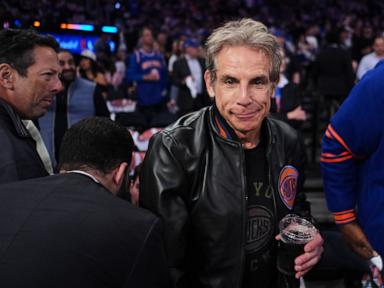
On one side of the hardwood stands Mike Brown, head coach of the Sacramento Kings, a man whose entire life is measured in possessions, defensive rotations, and high-stakes pressure. On the other side, sitting in the premium seats where tickets cost more than a modest sedan, is Ben Stiller. Stiller is New York basketball royalty, a fixture of the Garden baseline, his face as recognizable to Knicks fans as the iconic orange and blue logo.
To the casual observer watching the broadcast at home, these two worlds are entirely separate. One is the grueling business of professional sports. The other is the glitz of Hollywood.
But during a recent clash at the Garden, those worlds collided because of a quiet, deeply human vulnerability that happened entirely away from the ball.
The Fear of the Ask
We tend to look at the partners of prominent figures as extensions of their success. We assume that being married to an NBA Coach of the Year grants a person an automatic passport to confidence, an unshakeable armor against the intimidation of celebrity.
It does not.
Carolyn Brown, Mike Brown’s wife, sat in the stands that night. She is a woman used to the spotlight by proxy, accustomed to the intense scrutiny of professional basketball. Yet, when she spotted Ben Stiller sitting nearby, she froze. She wanted a photograph. It was a simple, normal human desire—the wish to capture a moment, to take home a piece of the magic that defines Madison Square Garden.
She could not bring herself to walk over.
Consider the internal monologue that happens in those seconds. It is the sudden, paralyzing weight of self-doubt. He is enjoying the game. I will be a burden. I will look foolish. My presence will be an interruption. It is a feeling anyone who has ever hesitated to speak to a hero knows intimately. The barrier feels insurmountable. The distance across a few feet of concrete might as well be an ocean.
When Mike Brown found out about his wife’s hesitation, he did what any partner would do. He used his platform. Not out of arrogance, but out of a fierce, protective affection. During his post-game media availability, amid tactical breakdowns and questions about field goal percentages, Brown let the curtain drop. He shared the story. He admitted, publicly, that his wife was too intimidated to ask for a picture with the Hollywood star.
He didn't expect what happened next.
The Response from the Baseline
The news reached Stiller. In the fast-paced ecosystem of sports media, a coach's press conference quote usually dissolves within twenty-four hours, replaced by the next day's injury report or trade rumor. But Stiller didn't let it slide.
He didn't send a sterile statement through a publicist. He didn't post a generic emoji on social media.
Instead, Stiller responded with the genuine warmth of a true New Yorker. He made it clear that the door was wide open, issuing a public, enthusiastic welcome for Carolyn to get that photo the very next time their paths crossed. He stripped away the artificial barrier of his celebrity status in a single move.
It was a small gesture. Tiny, even, when measured against the massive scale of an NBA season.
But small gestures possess an immense gravity.
Think about the contrast between the environment and the interaction. The Garden is a place of fierce competition, tribal loyalty, and brutal physical dominance. It is an industry built on wins and losses. Yet, the moment that captured the public's imagination had absolutely nothing to do with the scoreboard. It was about validation. It was about making someone feel seen in a room filled with twenty thousand people.
The Human Currency of the Arena
Basketball at this level is an entertainment product, a complex machine engineered to extract maximum revenue and maximum drama. We analyze the statistics. We debate the legacy of the players. We dissect every tactical decision made by men like Mike Brown.
But the secret truth of the arena is that everyone inside it is looking for a connection.
The fans look for it in the players. The players look for it in the crowd. And sometimes, the people who seem the most untouchable are just waiting for someone to treat them like human beings. Stiller’s immediate, enthusiastic response to Carolyn Brown’s fear broke the unspoken rules of celebrity isolation. It reminded everyone that beneath the expensive jackets and the courtside seats, the desire to be gracious is just as powerful as the desire to win.
The next time Sacramento rolls into New York, the cameras will undoubtedly find Mike Brown on the bench, shouting instructions, pacing the sidelines with intense focus. The cameras will also find Ben Stiller, leaning forward, living and dying with every possession.
But somewhere in that arena, a photograph will finally be taken.
It will be a simple image. Two people smiling into a smartphone lens. It won't change the standings in the Eastern or Western Conference. It won't alter the salary cap or dictate the future of a franchise.
But it will prove that even in the loud, unforgiving theater of professional sports, a quiet moment of empathy can still steal the show.