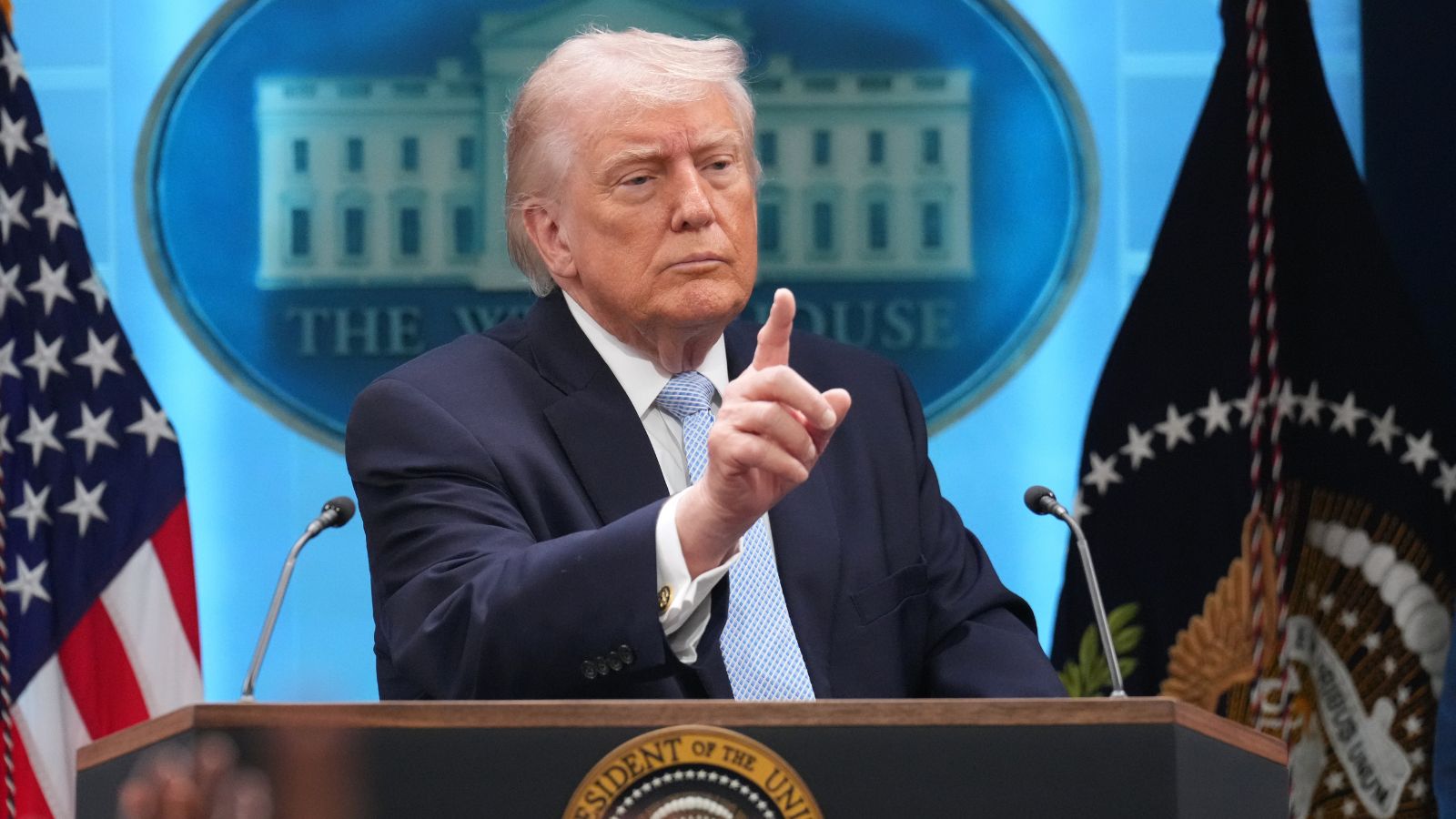
Geopolitical signaling frequently relies on absolute terminology to obscure complex systemic exposures. When political leadership asserts near-total control over a vital maritime corridor amidst active military engagements, the statement must be evaluated through the lens of naval logistics, insurance economics, and global supply chain elasticity. The Strait of Hormuz functions as a critical artery for global energy distribution, moving roughly a fifth of the world's petroleum consumption. Assessing operational command over this geography requires a shift away from political rhetoric and toward a rigorous examination of maritime choke point mechanics.
The intersection of military strikes and strategic assertions creates a false dichotomy between dominance and disruption. True control in a contested maritime corridor is not binary. It exists on a gradient defined by deterrence capacity, mine warfare vulnerability, air defense coverage, and the continuous flow of commercial tonnage. To dissect how external shocks transmit through this region, one must examine the operational vectors that govern maritime security, economic transmission channels, and the inherent limitations of naval power projection in confined waters. Also making waves lately: Why the Latest Middle East Security Alert Changes Everything for Travelers.
The Tripartite Framework of Maritime Security
Evaluating state control over a restricted waterway like the Strait of Hormuz demands a structural decomposition of operational capabilities. Military dominance in this environment is distributed across three distinct pillars: surface denial, subsurface threat mitigation, and air surveillance dominance.
Surface denial involves the capacity to restrict unauthorized vessel movement through kinetic or electronic means. While advanced naval assets can establish dominance over specific sea lines of communication, the narrow width of the shipping lanes complicates the maintenance of a persistent defensive perimeter. Commercial vessels traverse established traffic separation schemes that force predictable routing, rendering them vulnerable to asymmetric harassment, fast attack craft, and land-based anti-ship cruise missiles. Control in this context means the ability to project force, yet projecting force does not equate to eliminating asymmetric risk for commercial operators. Further information into this topic are covered by The Washington Post.
Subsurface threat mitigation represents the most acute technical hurdle in the Persian Gulf. Naval mine warfare remains an equalizer that neutralizes vast asymmetries in surface fleet tonnage. A relatively low-cost inventory of moored and drifting mines can be deployed rapidly by minor craft or submarines, turning a high-volume shipping channel into a high-liability zone. Neutralizing this threat requires specialized mine countermeasure vessels operating at slow speeds, creating operational bottlenecks that undermine any claim of total administrative or tactical control.
Air surveillance dominance completes the operational triad. Tracking and identifying every aircraft, drone, and missile signature across a multi-national airspace requires dense radar coverage and integrated command networks. While major military actors maintain superior sensor grids, the proliferation of low-altitude unmanned aerial systems creates persistent radar clutter. This environment prevents flawless interception rates, meaning that intermittent military strikes and electronic warfare interference can occur despite an overwhelming presence of regional strike groups.
The Economic Transmission Mechanism
Military rhetoric regarding strategic waterways frequently ignores the financial architecture that underpins global trade. Maritime commerce does not move based on military declarations; it moves based on risk assessment models calculated by marine underwriters, protection and indemnity clubs, and corporate risk officers.
When regional hostilities escalate and missile strikes target adjacent infrastructure, insurance premiums experience sharp structural adjustments. War risk surcharges escalate rapidly, transforming the economic equation of transit through the corridor. A shipowner evaluating a voyage through the Strait of Hormuz weighs the freight revenue against potential hull loss and crew endangerment. Even if a navy guarantees protection, the cost of capital and insurance underwriting can render transit commercially unviable, effectively halting traffic long before a physical blockade is established.
This friction introduces a cascading failure mode into global commodity pricing. Energy markets react immediately to perceived supply constraints rather than realized disruptions. Futures contracts adjust to account for the risk premium associated with potential transit delays or rerouting requirements. Consequently, claims of total control fail to account for market psychology. If commercial insurers refuse to underwrite voyages due to proximity to missile strikes, the physical presence of naval escorts becomes largely irrelevant to the flow of physical commodities.
Asymmetric Deterrence and Spatial Constraints
The geographical dimensions of the Strait of Hormuz impose severe tactical limitations on traditional naval power. The shipping channel is divided into inbound and outbound lanes, each only two miles wide, separated by a two-mile buffer zone. This narrow passage lies entirely within the territorial waters or economic zones of littoral states that may hold adversarial postures.
In confined maritime geography, large surface combatants face severe maneuverability restrictions. They operate within a confined operational box where land-based coastal defense systems hold the advantage of concealment, mobility, and short flight times for offensive payloads. This spatial reality generates a paradox for dominant military powers. To secure the strait, a state must deploy high-value assets into a confined zone where they present lucrative, concentrated targets for asymmetric strike packages.
Furthermore, the legal status of transit passage under international maritime law complicates enforcement actions. While naval forces can establish security zones or provide escort services, boarding and inspection rights are heavily constrained during peacetime or regional skirmishes. Attempting to exercise absolute administrative control over foreign-flagged commercial vessels risks triggering legal disputes, diplomatic friction, or accidental escalations that disrupt commercial schedules far more effectively than a direct embargo.
Systemic Vulnerability and Flow Dynamics
The vulnerability of global supply chains passing through this chokepoint stems from high capacity concentration. Unlike land networks that feature redundant routing options, maritime corridors aggregate massive volumes into singular geographic funnels. When throughput drops even marginally due to localized security incidents, the backlog propagates backward through production facilities, storage terminals, and extraction sites.
Extraction facilities in the upper Gulf possess finite storage capacity. If tanker throughput stalls due to security fears or insurance withdrawals, upstream producers face an immediate operational crisis. Once storage tanks reach capacity, extraction fields must be throttled down or shut in entirely. Restarting complex hydrocarbon extraction facilities is an expensive, technically demanding engineering process that can cause permanent reservoir damage. Therefore, a temporary interruption in maritime transit cascades into a structural supply reduction that extends weeks beyond the cessation of immediate military hostilities.
Command assertions of operational control disregard this downstream vulnerability. True systemic control requires not only securing the physical waterway against kinetic interference but also maintaining the economic confidence required for continuous commercial operations and preserving the operational continuity of upstream extraction infrastructure. When these variables decouple, political declarations of dominance diverge entirely from operational reality.
Execute regional maritime risk assessments by modeling supply chain exposure using alternative pipeline routing capacities and real-time marine insurance rate fluctuations rather than relying on aggregate military presence metrics.