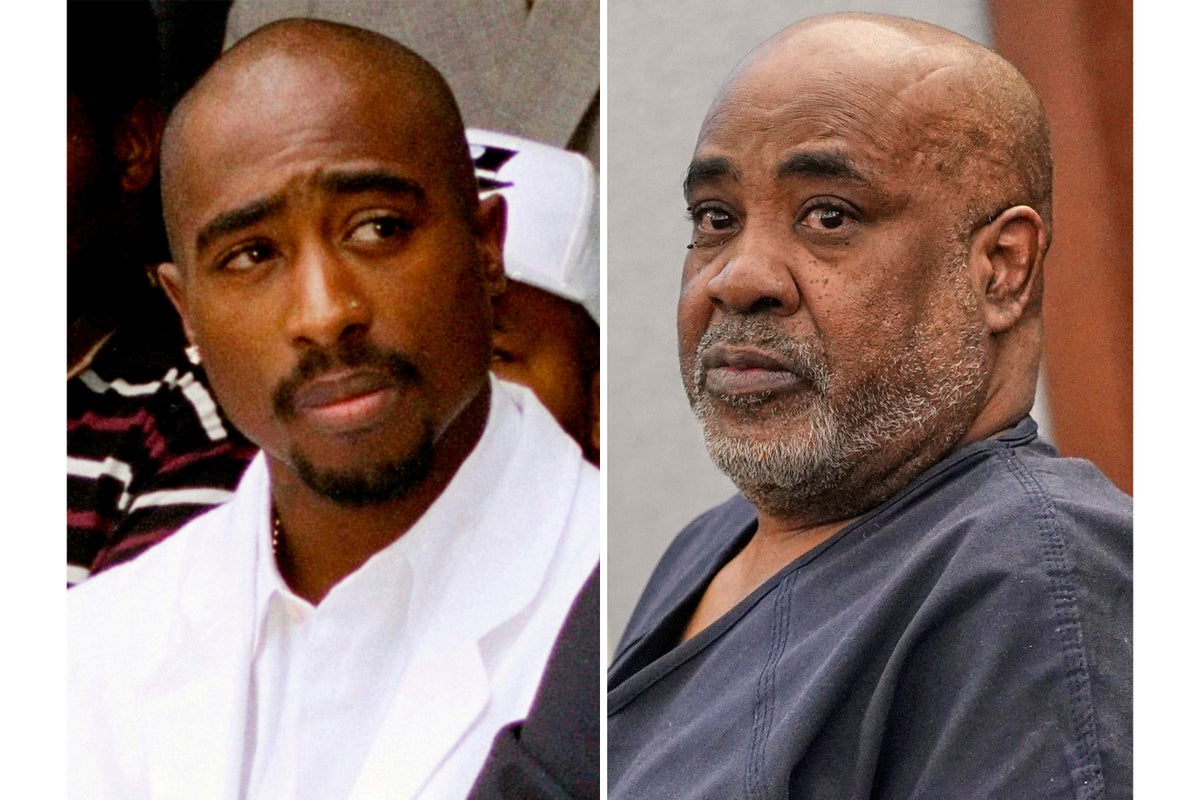
The September 7, 1996, drive-by shooting of Tupac Shakur at the intersection of Flamingo Road and Koval Lane in Las Vegas was never an unsolvable forensic mystery. It was a structural failure of law enforcement incentive alignment, multi-jurisdictional intelligence sharing, and witness cooperation metrics.
The September 2023 indictment of Duane "Keffe D" Davis on one count of murder with a deadly weapon did not stem from newly discovered ballistics or unexpected DNA matching. It was driven by the cumulative weight of public self-incrimination, shifting prosecutorial priorities, and a fundamental realignment of gang enforcement metrics.
Deconstructing the 27-year trajectory between the homicide and the formal indictment reveals the precise mechanics that derailed the initial investigation and the structural shifts that ultimately enabled prosecution.
+-----------------------------------------------------------------------------------+
|                        1996 HOMICIDE INCIDENT MATRIX                              |
+-----------------------------------------------------------------------------------+
| TARGET:          Tupac Shakur (Passenger, Black BMW 750iL)                        |
| DRIVER:          Marion "Suge" Knight (CEO, Death Row Records)                    |
| LOCATION:        East Flamingo Rd & Koval Lane, Paradise, Nevada                  |
| WEAPON:          .40-Caliber Glock 22 Semi-Automatic Pistol                       |
| IMPACT:          4 Rounds (2 Chest, 1 Arm, 1 Thigh); Deceased Sept 13, 1996      |
| SUSPECT VEHICLE: White 1996 Cadillac Sedan DeVille                                |
| OCCUPANTS:       Duane Davis, Orlando Anderson, Deandre Smith, Terrence Brown   |
+-----------------------------------------------------------------------------------+
The Three Structural Failure Points of the 1996 Investigation
The immediate aftermath of the shooting presented ideal conditions for clearance: a high-profile crime scene in a heavily monitored corridor, multiple co-conspirators, and immediate gang-intelligence cross-references available through the Compton Police Department. The breakdown occurred across three distinct operational layers.
1. The Jurisdictional Information Silo
The Las Vegas Metropolitan Police Department (LVMPD) approached the incident as an isolated, local gang dispute occurring on their entertainment strip. Concurrently, the Los Angeles Police Department (LAPD) and the Compton Police Department possessed extensive, real-time intelligence regarding the active war between the South Side Compton Crips and the Mob Piru Bloods—the specific faction affiliated with Death Row Records.
- Communication Asymmetry: Compton detectives received street-level intelligence within days naming Orlando "Baby Lane" Anderson as the primary shooter and identifying the vehicle as a white Cadillac.
- Failure to Aggregate: This intelligence failed to move rapidly into actionable Nevadan judicial filings due to a lack of joint task force infrastructure for non-federal street crimes in the mid-1990s.
2. Incentive Misalignment in Non-Cooperative Witnesses
A conviction in a gang-enhanced homicide requires either physical ballistics matching or verified witness testimony. The initial probe faced complete systemic friction across both channels:
- Victim Class Dynamics: Marion "Suge" Knight, the sole surviving eye-witness in the vehicle, explicitly refused to cooperate with law enforcement, adhering to street-code norms that prioritize retaliation over institutional justice.
- Perpetrator Code of Silence: The four occupants of the Cadillac—Duane "Keffe D" Davis, Orlando Anderson, Deandre "Big Dre" Smith, and Terrence "Bubble Up" Brown—maintained absolute silence during early investigative sweeps.
3. Ballistics and Physical Evidence Deficit
The perpetrators utilized a .40-caliber Glock 22. The shell casings recovered from the scene yielded no latent fingerprints. Without a recovered firearm directly tied to the suspect vehicle, physical evidence alone could not cross the threshold of proof beyond a reasonable doubt without a supporting confession or participant testimony.
The Proffered Immunity Trap and the Cost Function of Media Exposure
The primary pivot in the timeline occurred not in Las Vegas, but inside a federal proffer session in 2008.
                      +-----------------------------+
                      |  2008 Federal Drug Probe    |
                      +--------------+--------------+
                                     |
                                     v
                      +-----------------------------+
                      | Proffer Agreement Signed   |
                      | (Limited Federal Immunity)  |
                      +--------------+--------------+
                                     |
                                     v
                      +-----------------------------+
                      |  Davis Confesses to Role    |
                      |   in Shakur Assassination   |
                      +--------------+--------------+
                                     |
                                     v
+------------------------------------+------------------------------------+
|                                                                         |
v                                                                         v
PROFFER PROTECTION (State/Local Exception)       COMMERCIALIZATION STRATEGY
* Federal proffer protected admissions           * 2019: Self-published memoir
  strictly within that specific drug probe.        "Compton Street Legend"
* Nevada state murder charges remained           * Multiple YouTube & media interviews
  completely un-immunized.                       * Voided functional immunity protection
Faced with federal drug trafficking charges carrying life-sentence exposure, Duane Davis entered a proffer agreement with a joint LAPD-Federal task force headed by Detective Greg Kading. Under a proffer agreement, statements made by a suspect cannot be used against them in court for that specific proceeding, provided they are truthful.
Davis detailed the entire logistics chain of the murder:
- The Catalyst: The physical assault of his nephew, Orlando Anderson, by Tupac Shakur and Death Row associates inside the MGM Grand lobby.
- The Logistics: Securing a .40-caliber Glock firearm from an associate and commandeering a white Cadillac DeVille.
- The Execution: Positioning himself in the front passenger seat, handing the firearm to the rear seat where Anderson and Smith were seated, and executing the drive-by shooting at Flamingo and Koval.
The critical legal error committed by the defense side was mistaking federal proffer protection for universal immunity. The proffer did not grant immunity against state-level murder charges brought by Clark County, Nevada.
Following his proffer, Davis aggressively commercialized his involvement. Between 2018 and 2023, he participated in dozens of broad-reach interviews and published a memoir, Compton Street Legend. These public statements provided Clark County prosecutors with a massive volume of un-coerced, extrajudicial admissions that fell entirely outside the scope of his 2008 proffer agreement.
Prosecutorial Mechanics of the Indictment
Clark County District Attorney Steve Wolfson secured an indictment against Davis for one count of open murder with a deadly weapon with a gang enhancement. Analyzing the charge structure reveals a clear prosecution strategy designed to circumvent traditional evidentiary hurdles.
+-----------------------------------------------------------------------------------+
|                        VICARIOUS LIABILITY FRAMEWORK                              |
+-----------------------------------------------------------------------------------+
|                                                                                   |
|  DUANE "KEFFE D" DAVIS  --->  COMMAND & CONTROL  --->  ORLANDO ANDERSON (DECEASED) |
|   (Front Passenger)             * Procured Weapon             (Alleged Shooter)   |
|                                 * Organized Vehicle                               |
|                                 * Directed Positioning                            |
|                                                                                   |
|  LEGAL STANDARD: Nevada Revised Statutes (NRS) 195.020 (Aiding and Abetting)      |
|  PROOF REQUIREMENT: Directing, encouraging, or assisting the primary perpetrator  |
|                     carries EQUAL CRIMINAL LIABILITY to pulling the trigger.      |
|                                                                                   |
+-----------------------------------------------------------------------------------+
1. Aiding and Abetting Theory Under Nevada Law
Nevada law does not require the prosecution to prove that Davis physically pulled the trigger of the Glock 22. Under Nevada Revised Statutes (NRS) 195.020, a person who aids, abets, counsels, encourages, or hires another to commit a crime is a principal and punishable as if they executed the act directly.
By his own public statements, Davis established every legal element of aiding and abetting:
- Procurement: He admitted to sourcing the firearm used in the commission of the crime.
- Transportation: He admitted to coordinating the vehicle and sitting in the front passenger seat during the execution of the crime.
- Command Structure: He self-identified as the "shot caller" and leader of the South Side Crips contingent present in the vehicle.
2. The Gang Enhancement Penalty Framework
The inclusion of a criminal gang enhancement transforms the sentencing parameters dramatically. Prosecutors must establish that the crime was committed "for the benefit of, at the direction of, or in association with any criminal gang."
This creates an operational advantage for the prosecution:
- Admissibility of Pattern Evidence: It allows the introduction of decades of gang rivalries, organizational structures, and prior criminal acts into evidence to establish motive and framework.
- Corroboration via Secondary Sources: The gang context validates historical police records, field interview cards, and wiretap intelligence from the late 1990s as relevant context for the jury.
Limitations and Defense Vulnerabilities
While the public framing suggests an open-and-shut case based on self-incrimination, a rigorous legal risk analysis highlights several potential points of failure for the prosecution.
The Credibility Risk of Uncorroborated Admissions
The defense strategy relies on framing Davis's extensive media statements as hyperbolic fiction created for financial gain.
- The Monetization Defense: Counsel can argue that Davis fabricated or exaggerated his role in a historical crime to sell memoirs and secure paid media appearances.
- Lack of Direct Physical Evidence: Without a physical murder weapon directly tied to the Cadillac, or clear forensic material linking Davis to the spent casings, the case rests heavily on verbal statements.
Witness Availability and Evidentiary Age
All three other occupants of the Cadillac—Orlando Anderson, Deandre Smith, and Terrence Brown—are deceased.
- Confrontation Clause Deficits: The defense can highlight the inability to cross-examine any other purported co-conspirators.
- Degradation of Memory: Cross-examining surviving law enforcement officers regarding 1996 investigative procedures opens up significant lines of attack regarding lost evidence, incomplete initial reports, and unpursued alternative leads.
Strategic Outlook and Precedent Analysis
The prosecution of Duane Davis represents a fundamental shift in how cold-case homicides involving organized criminal structures are handled long after physical evidence has degraded.
+-----------------------------------------------------------------------------------+
|                     HISTORICAL COLD CASE PROSECUTION PIPELINE                     |
+-----------------------------------------------------------------------------------+
|                                                                                   |
|  [Degraded Physical Evidence]  --->  [Public Media Self-Incrimination]            |
|                                                    |                              |
|                                                    v                              |
|  [Jury Selection Strategy]     <---  [Vicarious Liability Application (NRS 195.020)] |
|                                                                                   |
+-----------------------------------------------------------------------------------+
- Expansion of Digital Footprint Exploitation: Modern cold case units no longer rely solely on newly surfaced DNA or physical evidence. They actively audit digital footprint expansion—podcasts, self-published books, and video interviews—where aging targets lower their defensive protocols for media engagement.
- Vicarious Liability as Primary Weapon: High-profile cases involving non-surviving shooters will increasingly rely on aiding-and-abetting statutes to prosecute surviving logistical coordinators.
- Operational Precedent: The outcome will set a clear benchmark for whether un-immunized public statements, absent fresh forensic discovery, are sufficient to sustain a first-degree murder conviction across a three-decade gap.
The strategic play for the defense remains anchored in dismantling the reliability of self-incriminating narratives, while the prosecution's objective is to maintain jury focus on the structural mechanics of vicarious liability: providing the weapon, directing the vehicle, and orchestrating the retaliation.
An analysis of the timeline and charges against Duane "Keffe D" Davis offers deep context on how this decades-old case was brought back into court CBS News breakdown on the Keffe D indictment. This video provides crucial reporting from journalists and legal experts detailing the specific evidence and public statements that led to his arrest.