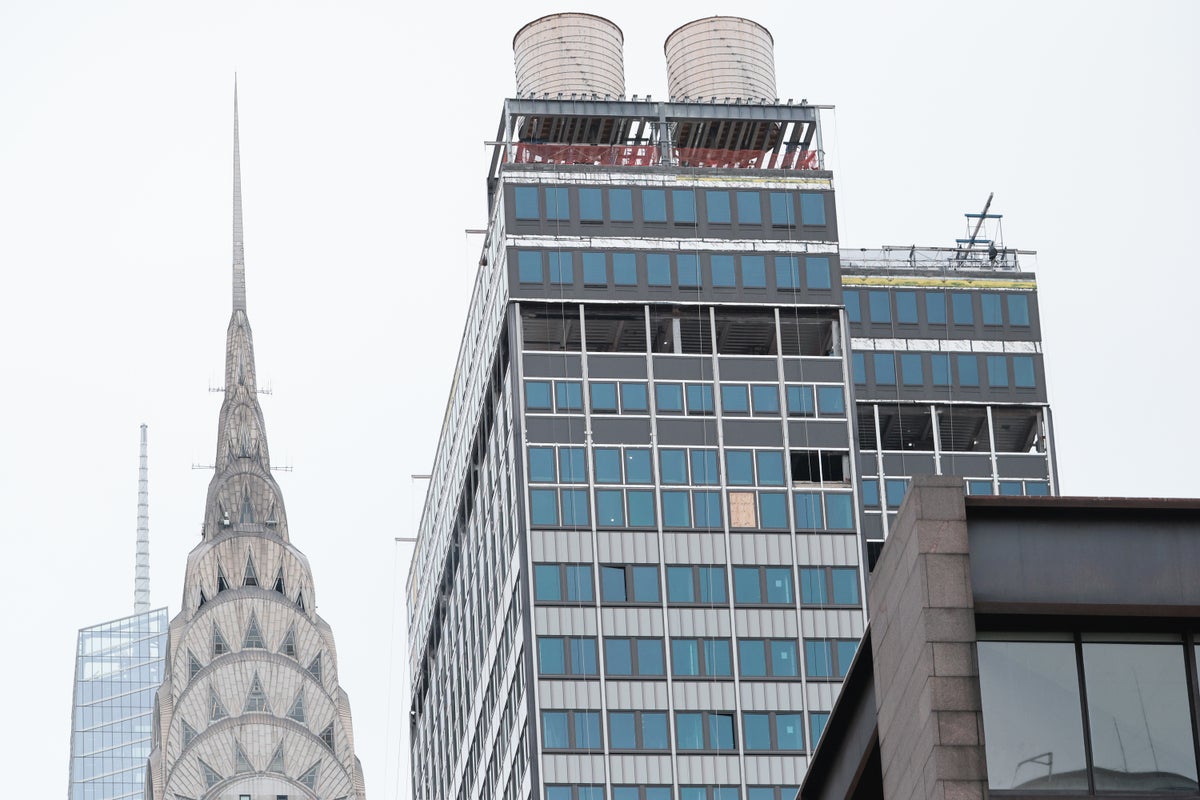
The compromise of a high-rise structure within a high-density urban core acts as a systemic forcing function, exposing the tight coupling between vertical real estate asset stability and municipal logistical continuity. When a structural anomaly prompts emergency closures around major Manhattan landmarks, the economic and operational fallout extends far beyond the immediate physical perimeter. Traditional reporting frames these events through the lens of localized disruption. A rigorous asset-management perspective, however, reveals that such incidents are manifestations of predictable structural risk cascades, driven by geometric constraints, regulatory friction, and subterranean infrastructure dependencies.
Evaluating the true impact of a compromised high-rise requires moving past superficial timelines and mapping the precise vectors through which structural degradation translates into macroeconomic friction.
The Three Vectors of Spatial Contagion
The immediate consequence of a vertical structural compromise is the creation of an exclusion zone. This zone is dictated not by the asset's footprint, but by its potential debris field and the mechanical tolerances of emergency stabilization equipment. This spatial contagion propagates across three distinct layers of urban operation.
Geometric Exclusion and Kinetic Risk Perimeters
The physical boundary of a closure is a function of the asset’s height, structural composition, and the specific nature of the failure (e.g., facade delamination, primary load-bearing compromise, or crane instability). The risk radius is calculated using kinetic trajectory modeling, which accounts for wind tunnel effects created by surrounding skyscrapers. When a high-rise undergoes structural duress, municipal authorities must establish a buffer that assumes worst-case structural shedding.
This geometric footprint invariably intersects with critical transit arteries and high-value commercial pedestrian corridors. In a highly concentrated environment like Midtown Manhattan, a 100-foot lateral shift in an exclusion zone can disconnect a primary subway node from an office district, instantly severing the daily transit pipeline for tens of thousands of workers.
Subterranean Utility Interdependency
Skyscrapers do not sit passively on bedrock; they are deeply integrated into a subterranean web of high-pressure steam lines, fiber-optic trunks, electrical substations, and water mains. The structural integrity of an unstable high-rise poses a direct threat to these lower strata.
- Load Redistribution: As a building's primary framework shifts or settles unevenly, it alters the stress distribution on its retaining walls and foundation pads. This shifting exerts unquantified lateral pressures on adjacent municipal vaults.
- Vibrational Resonance: Emergency remediation—such as shoring, micro-piling, or controlled deconstruction—introduces high-frequency vibrations into the surrounding soil. This kinetic energy risks fracturing aging cast-iron water mains or disrupting sensitive fiber-optic arrays that anchor nearby financial trading infrastructure.
- Thermal and Fluid Dynamics: A breach in adjacent underground steam loops, common in older urban centers, can alter the ambient temperature of foundational concrete in neighboring structures, inducing localized thermal expansion and secondary structural risks.
Regulatory and Forensic Friction
The timeline for reopening a compromised urban zone is rarely limited by engineering speed alone. It is bottlenecked by the forensic validation process required by municipal regulatory bodies, insurers, and independent engineering firms.
Before an exclusion zone can be retracted, a multi-party sign-off must occur. This process involves structural engineers of record, Department of Buildings inspectors, third-party risk assessors, and legal representatives for both the asset owner and neighboring properties. The competing incentives of these actors—where municipal entities prioritize zero-risk public safety and insurers seek to minimize liability exposure—creates a structural bottleneck. The result is a prolonged operational freeze that persists long after the physical stabilization of the asset has been achieved.
The Cost Function of Urban Disruption
The economic penalties of a localized infrastructure failure are non-linear. They can be modeled through an explicit cost function that aggregates direct operational losses, supply-chain diversion costs, and systemic velocity degradation.
$$C_{total} = D_{direct} + V_{diversion} + I_{velocity} + \Sigma L_{reputational}$$
Where:
- $D_{direct}$ represents the immediate capital expenditure for structural stabilization and municipal emergency services.
- $V_{diversion}$ represents the economic friction of rerouting commercial traffic, logistics, and mass transit.
- $I_{velocity}$ represents the quantified drop in transaction volume within the economic impact zone.
Quantifying Transit Diversion Friction
When major transit corridors or street grids around landmarks are closed, the surrounding network must absorb the displaced volume. In a grid system optimized for high capacity, this displacement causes immediate saturation of secondary and tertiary routes.
The cost of this diversion is measured by the increase in commuter transit time and the disruption of just-in-time commercial logistics. For service-based economies, a 15-minute average delay across a workforce of 200,000 individuals equates to 50,000 lost productive hours per day. Furthermore, logistical carriers face increased fuel burn, missed delivery windows, and surcharges that are ultimately passed down to local commercial tenants, compounding the inflationary pressure on urban operations.
The Landmark Proximity Multiplier
The closure of zones adjacent to major landmarks introduces a specific variable into the cost function: the suppression of discretionary spending and experiential commerce. High-density tourist and commercial landmarks rely on predictable foot-traffic velocity.
When access is restricted, the economic impact is not merely deferred; it is permanently lost. Foot traffic does not double the following week to compensate for a week of closure. Small-to-medium enterprises operating within the shadow of the exclusion zone experience immediate cash-flow compression, while larger hospitality and retail assets face booking cancellations and reduced asset utilization metrics.
Structural Health Monitoring and Preventive Vulnerability
The vulnerability of modern high-rises to sudden structural closures points to a systemic deficit in real-time asset visibility. Traditional municipal building codes rely heavily on periodic visual inspections—a methodology that is inherently reactive and poorly suited for detecting subsurface or internal structural degradation.
The Limitations of Visual Inspection Protocols
Visual assessments capture only surface-level pathologies, such as concrete spalling, visible masonry cracking, or obvious facade displacement. They fail to identify internal stress accumulation, rebar corrosion within reinforced concrete, or microscopic shifts in foundational stability. By the time a structural defect manifests visually to an inspector, the asset has frequently crossed a critical threshold of mechanical deformation, necessitating the immediate emergency interventions that trigger municipal shutdowns.
The Modernization of Structural Asset Management
To mitigate the systemic risk of unexpected closures, institutional asset managers and municipal authorities must transition toward continuous, data-driven structural health monitoring. This framework relies on a triad of sensor technologies deployed permanently across high-risk vertical assets:
- Interferometric Synthetic Aperture Radar (InSAR): Utilizing satellite-based radar data to measure millimeter-scale displacements in building envelopes and foundations over time, providing early warning of structural settling or tilt.
- Fiber-Optic Bragg Grating Sensors: Embedded directly within high-stress structural elements to monitor real-time strain, temperature variations, and internal load redistribution.
- Acoustic Emission Monitoring: Deploying continuous micro-seismic sensors to detect the high-frequency energy waves emitted by micro-cracking in concrete or the snapping of internal steel tendons before structural failure becomes macroscopically apparent.
Implementing these systems changes the risk profile of the asset. Instead of reactive emergency closures managed by municipal edict, asset owners can execute predictive maintenance windows during off-peak hours, isolating structural interventions before they escalate into civic crises.
Tactical Mandate for Institutional Operators
To insulate operations from municipal structural cascades, institutional real estate investors, asset managers, and logistical coordinators must shift from a posture of reactive compliance to one of proactive risk decoupling.
The primary step requires a comprehensive auditing of portfolio assets against subterranean and geometric dependency maps. Operators must explicitly identify which third-party structural assets command their primary transit and utility corridors. If a portfolio asset relies on a logistical artery flanked by unmonitored, pre-war high-rises, that asset carries an unpriced operational risk.
The second step demands the integration of structural risk variables into business continuity plans. This means establishing secondary data routing, redundant power access points that do not share vaults with adjacent structures, and pre-negotiated remote-work protocols that activate the moment a localized exclusion zone is declared.
The final strategic play is the enforcement of structural data transparency in commercial leasing and insurance underwriting. Insurers must begin discounting premiums for assets that feature continuous structural health monitoring and open-data APIs shared with municipal emergency systems. Conversely, tenants should demand structural health certifications as a standard clause in triple-net leases, shifting the financial burden of municipal disruption potential back onto asset owners who fail to modernize their structural infrastructure. Real estate resilience is no longer about weatherproofing; it is about the quantifiable mechanical integrity of the entire urban matrix.