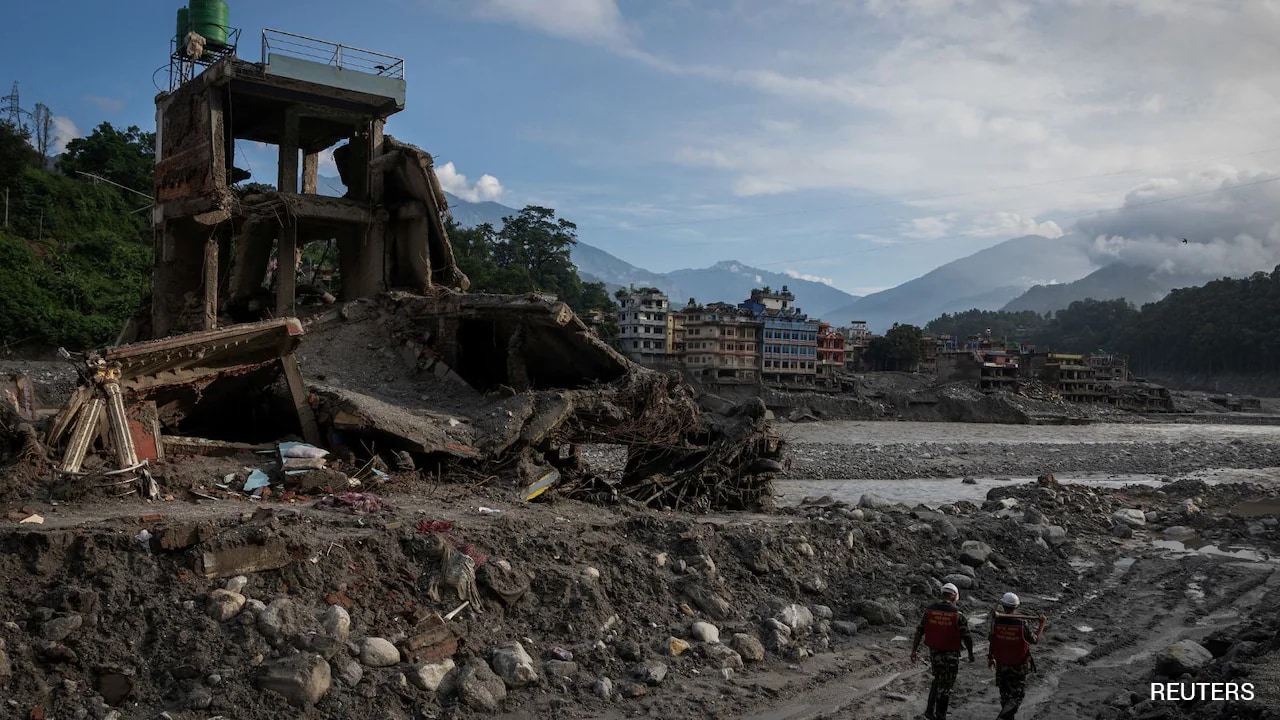
Disaster recovery in the American West operates on a perverse financial ledger where private corporate profit extraction coexists with socialized public remediation. When the Eaton Fire incinerated thousands of structures across Altadena, California, the immediate human catastrophe was matched instantly by an institutional collision between utility liability, municipal finance, and real estate speculation. Public discourse often frames these collisions as tragic accidents exacerbated by climate volatility. Closer inspection of the legislative and economic machinery reveals a more calculated friction: a systematic transfer of financial risk from corporate balance sheets to public tax rolls. Understanding how Altadena faces subsequent disasters requires dismantling the structural mechanics of liability shifting, insurance withdrawal, and speculative land acquisition that threaten to dissolve the community's socio-economic fabric.
The Mechanics of Fiscal Transference
The foundational economic driver of modern wildfire crises in California is the doctrine of inverse condemnation, which holds utilities strictly liable for property damage if their equipment sparks a fire. Following investigations by state forestry and county fire authorities finding Southern California Edison responsible for the Eaton Fire, financial exposure mounted into the billions. For a utility corporation, this liability represents an existential threat to credit ratings, equity valuation, and capital expenditure costs. For an alternative look, read: this related article.
To mitigate this exposure, utility lobbyists and political architects frequently pursue legislative interventions designed to cap damages or restructure debt. The core mechanism of these proposals involves shifting the fiscal burden away from shareholders and onto rate payers or public entities. If a municipality incurs millions in fire-suppression costs resulting from corporate negligence, and subsequent legislative packages bar the city from recovering those expenditures from the utility, the deficit does not vanish. It is absorbed directly by local taxpayers through municipal debt obligations, reduced public services, or higher utility rates.
This creates an inverted incentive structure. Private utilities maintain operational models where safety infrastructure investments are weighed against potential litigation penalties. If the legislative backstop ensures that public entities or state funds absorb catastrophic tail-risks, the rational economic choice for the corporation is to under-invest in grid hardening up to the threshold where regulatory penalties exceed mitigation costs. Taxpayers essentially underwrite the insurance policy for corporate risk management. Related analysis on the subject has been shared by USA Today.
The Three Vectors of Post-Disaster Displacement
Recovery following a catastrophic burn zone is governed by three distinct economic vectors that determine whether an indigenous population can reoccupy its land or whether displacement becomes permanent.
Vector One: The Insurance Solvency Loop
The primary bottleneck in post-disaster rebuilding is not physical debris clearance; it is capital liquidity driven by property insurance availability. In communities like Altadena, where historical redlining and working-class demographics intersect with high-risk wildfire perimeters, private carriers have systematically non-renewed policies or exited the California market entirely.
Survivors who remained insured frequently discovered valuation gaps between policy limits and actual replacement costs driven by post-disaster construction inflation. Those unable to secure private coverage are forced onto the California FAIR Plan—the state's insurer of last resort—which offers limited coverage at substantially higher premiums. When insurance payouts stall or fall short of reconstruction cost vectors, homeowners face a binary choice: sell their land at a fraction of its pre-fire value or take on high-interest debt that exceeds their service capacity.
Vector Two: Speculative Land Acquisition
Disasters create acute market distortions characterized by asymmetric liquidity. Long-term residents, stripped of liquid assets and facing years of rebuilding delays, possess high land value but zero income-generating capacity from their destroyed parcels. Outside real estate investors and speculative developers step into this liquidity vacuum with cash offers.
This dynamic triggered intense legislative friction, culminating in measures such as Senate Bill 1090, which established a multi-year cooling-off period exempting Altadena from certain state housing density laws designed to fast-track development. Without such protective firewalls, speculative entities acquire cleared lots in bulk, replacing modest, multi-generational housing stock with high-density market-rate structures. The structural outcome is the monetization of tragedy: the original demographic is priced out, and the geographic footprint of the community is re-engineered for higher-income brackets.
Vector Three: Infrastructure Deficit and Federal Lag
Municipal infrastructure recovery operates on a protracted timeline compared to private property transactions. Water systems, electrical grids, and public right-of-ways require capital outlays that local tax bases cannot independently support. While local officials lobby for federal disaster recovery grants, bureaucratic latency creates a multi-year gap between emergency response and structural restoration.
Philanthropic capital can deploy millions rapidly, but municipal stabilization requires billions. When federal appropriations stall or arrive with restrictive conditions, local governments are forced to finance bridge repairs through municipal bonds, further encumbering future taxpayers. The community pays twice: first through the destruction of its physical assets, and second through the long-term debt service required to rebuild public infrastructure.
The Cost Function of Rebuilding
Reconstruction in a modern regulatory environment introduces a steep cost function that penalizes working-class property owners. Building codes enacted after initial construction—mandated fire-resistant materials, defensible space clearances, advanced stormwater management systems—add significant percentage premiums to baseline construction costs.
For a middle-class or lower-income homeowner whose property was insured under older, undervalued policies, these code compliance upgrades represent an unfunded mandate. The economic equation breaks down as follows:
Total Reconstruction Cost = (Baseline Square Footage * Current Material Inflation) + Mandatory Code Compliance Delta + Debris Removal Residuals.
When this total exceeds the available insurance settlement plus accessible liquid capital, the owner is structurally insolvent. If state and federal financing programs fail to bridge this deficit through direct, unconditional grants rather than repayable loans, the property is forfeited to the market. Low-income renters face an even starker reality; pre-fire rental stock characterized by below-market rates is replaced by newly constructed units commanding market rents that exceed the median income of displaced tenants by exponential margins.
Structural Prognosis
The trajectory of Altadena illustrates a broader systemic vulnerability in disaster-prone regions across the United States. When risk is externalized by corporate entities and underwritten by public bailouts, communities bear the moral and financial hazard of disasters they did not cause. Legislative interventions like cooling-off periods and localized anti-speculation statutes offer temporary friction against predatory acquisition, but they do not solve the underlying solvency crisis.
Municipalities facing similar climate-driven exposures must implement structural reforms that bypass corporate liability shields. Future policy mechanisms must require mandatory, uninsurable corporate performance bonds for grid maintenance, tie utility executive compensation directly to safety compliance audits, and establish permanent, federally backed social housing land trusts that acquire land from distressed sellers before speculative capital can intervene. Without these structural corrections, every future disaster will function as an involuntary wealth transfer, converting generational neighborhood equity into corporate balance-sheet recovery.