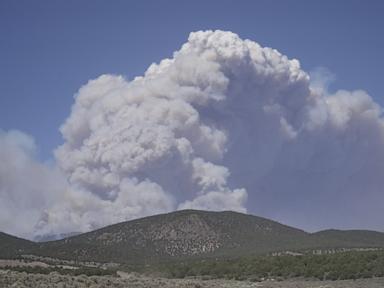
The operational efficacy of wildfire suppression in the western United States is experiencing an asymmetric breakdown. Traditional reactive fire-suppression models assume a baseline predictability in weather patterns and fuel conditions. However, the simultaneous occurrence of historic wind events, single-digit relative humidity, and accelerated fuel desiccation has exposed systemic bottlenecks in current containment frameworks. This structural vulnerability is acutely illustrated by the Cottonwood Fire in Utah, which rapidly expanded to over 112 square miles, rendering conventional suppression tactics obsolete and forcing an unprecedented shift toward preventative municipal mandates, such as blanket fireworks restrictions and Public Safety Power Shutoffs (PSPS).
To evaluate why modern interdiction systems fail under these conditions, the problem must be deconstructed into its distinct operational limitations: aerial suppression thresholds, fuel-loading dynamics, and anthropogenic ignition vectors.
The Tri-Variable Fire Weather Function
Wildfire behavior is governed by a precise mathematical relationship between ambient temperature, relative humidity, and wind velocity. When these variables cross critical thresholds, the fire behavior transitions from surface propagation to extreme canopy advancement, known as crown runs.
Critical Weather State = f(Wind Velocity > 25 mph, Relative Humidity < 10%, Fuel Moisture < Historical Minimums)
During the recent meteorological events across Utah, Arizona, and Nevada, wind gusts reached 45 miles per hour while humidity fell into the single digits. This combination triggers a physical phase change in fire mechanics:
- Spotting Acceleration: High wind velocities lift embers ahead of the main fire front, bypassing established fuel breaks and establishing new independent ignitions.
- Fuel Moisture Equilibrium: Single-digit humidity rapidly strips moisture from both dead and live vegetation, lowering the thermal energy required for ignition to near-zero.
- Crown Runs: The extreme vertical thermal column, combined with horizontal wind shear, pushes flames directly into the forest canopy, increasing the rate of spread beyond the physical capabilities of ground crews.
The Structural Breakdown of Aerial Suppression
The primary failure point in extreme fire weather is the immediate neutralization of aerial firefighting assets. Resource allocation models rely heavily on Type 1 air tankers and heavy helicopters to drop fire retardant and water, creating artificial containment lines.
This creates a tactical bottleneck when sustained winds exceed 30 miles per hour. At this velocity, atmospheric turbulence introduces severe mechanical risks to low-flying aircraft, forcing incident commanders to ground the entire aerial fleet. Furthermore, high winds cause chemical retardant drops to drift and atomize before reaching the target canopy, reducing the deposition efficiency to near zero.
When aerial suppression is neutralized, ground crews lose their force multiplier. Firefighters are forced to retreat from direct attack strategies to passive, defensive positions far downstream from the active front. The rate of fire spread outpaces the physical speed of mechanical line construction, transforming a containment operation into a purely evacuation-focused logistical exercise.
Anthropogenic Ignition Vectors and Preventative Policy Shifts
Because reactive containment is physically constrained by extreme weather, municipal strategy must pivot exclusively to mitigating the probability of ignition. In Utah, early snowpack melting and premature peak streamflows in March caused a prolonged drying cycle, leaving landscapes highly receptive to sparks.
Statistically, humans cause the vast majority of early-season wildland ignitions. As the United States approaches high-risk holiday periods, the exposure risk increases exponentially due to recreational pyrotechnics.
Municipalities are responding by implementing temporary bans on personal fireworks through executive orders. This intervention is designed to lower the baseline human-caused ignition curve during peak critical weather windows.
A secondary, highly technical preventative measure is the deployment of Public Safety Power Shutoffs by regional utilities like Rocky Mountain Power. Electrical distribution infrastructure serves as a major ignition vector during high-wind events, where structural failures can cause live lines to contact dry vegetation. Utilities weigh three primary variables to trigger a preemptive blackout:
- Sustained Wind Thresholds: Wind speeds capable of causing structural failure or bringing external debris into contact with power lines.
- Fuel Dryness Indices: Energy Release Component (ERC) metrics that indicate how violently a fire will burn if ignited.
- Topographical Wind Funneling: High-risk corridors where geographic features accelerate wind velocities beyond regional averages.
While effective at reducing the probability of an ignition event, these preemptive power shutoffs introduce significant economic disruptions and disrupt localized communication arrays, presenting a clear trade-off between infrastructure reliability and catastrophic risk mitigation.
The Limitations of Historical Prediction Models
The core challenge facing state foresters and incident management teams is that current fire behavior defies historical baseline data. Linear predictive models fail to capture exponential feedback loops. For example, when a fire achieves an extreme energy output, it creates its own localized microclimate, generating pyrocumulus clouds and indrafts that override regional weather forecasts.
The traditional 10-year average for burned acreage is no longer an accurate metric for resource planning. As total burned area nationally surpasses 3 million acres ahead of historical curves, resource scarcity becomes an operational reality. Incident commanders face a zero-sum game, competing for a finite pool of interagency Hotshot crews, smokejumpers, and heavy equipment.
The strategic imperative for wildland fire management requires moving away from the assumption that all fires can be contained reactively. Resource allocation models must transition to dynamic, automated risk-tiering, where preventative municipal bans, utility de-energization, and pre-positioned ground assets are deployed based on real-time fuel moisture content and atmospheric wind vectors rather than calendar-based seasonal schedules.