The modern conflict in Yemen is frequently misdiagnosed as a sudden eruption born entirely of the 2011 Arab Spring uprisings or a simple proxy confrontation between external powers. Structural data and institutional analysis reveal a different reality. The hostilities are the culmination of a six-decade cycle of state failure, driven by the collapse of central governance, the mechanics of rentier extraction, and the systematic exclusion of peripheral populations from economic and political resource allocation.
To deconstruct the mechanics of this multi-layered conflict, one must examine the baseline variables governing internal fragmentation, the economic cost functions of the warring factions, and the regional theater dynamics that transformed a domestic civil dispute into an internationalized maritime crisis.
The Three Pillars of State Collapse
The fragility of the Yemeni state did not materialize in 2014 when Houthi insurgents seized the capital of Sanaa. It was engineered over generations through three compounding structural vulnerabilities.
1. Extractive Resource Governance
Since the establishment of the modern Yemeni republic structures in the 1960s, ruling authorities relied on rentier economic models. Rather than building productive domestic taxation bases or inclusive institutions, successive administrations sustained power by distributing hydrocarbon revenues and foreign aid through patronage networks. This created a zero-sum political economy where capturing the central administrative apparatus was the sole mechanism for regional survival and enrichment.
2. Fractured Institutional Legitimacy
The unification of North and South Yemen in 1990 fused two ideologically and structurally incompatible systems—a tribal-military confederation in the north and a post-socialist apparatus in the south. The failure to successfully integrate these military commands and civil administrations generated permanent friction. The 1994 civil war temporarily preserved the unified state by force, but it entrenched a victor-vanquished dynamic that permanently alienated southern populations from the central government.
3. Peripheral Marginalization
The Zaydi Shia revivalist movement, formalized politically as Ansar Allah (the Houthi movement), emerged in the northern highlands as a direct response to political and economic marginalization. Decades of perceived economic neglect, coupled with fears of encroaching Salfi-Saudi ideological dominance via state-backed religious infrastructure, created a mobilized constituency ready to exploit state weakness when the transition under President Abdrabbuh Mansur Hadi stalled in 2011.
The Economic Cost Function of the Belligerents
The durability of the conflict relies on the distinct financial models sustained by the primary actors. Each faction operates under specific economic constraints that dictate its military threshold.
The Houthi de facto authorities in Sanaa transitioned from a localized insurgency to a centralized governing authority by mirroring the extractive behaviors of their predecessors. They capture domestic revenue streams through taxation on telecommunications, fuel imports routed via the port of Hodeidah, and commercial enterprise levies within their zone of control. This self-financing capacity reduces their vulnerability to external financial pressure, allowing protracted military positioning despite widespread domestic humanitarian distress.
Conversely, the Internationally Recognized Government (IRG), backed by the Saudi-led coalition, has suffered from severe fiscal fragmentation. Following the 2019 bifurcation of the banking system, government-controlled areas experienced extreme currency depreciation. The IRG's primary revenue source—formal crude oil exports from eastern governorates like Marib and Hadramawt—has faced acute disruptions due to Houthi drone and missile strikes targeting export infrastructure. This asymmetric economic warfare systematically starves the IRG of foreign currency reserves, impairing its ability to provide basic public services or maintain civil servant payrolls in southern territories.
Regional Entanglement and the Maritime Chokepoint
While domestic grievances initiated the civil war, the intervention of the Saudi-led coalition in March 2015 transformed the operational theater. Riyadh’s strategic calculus was governed by strict containment logic: preventing the consolidation of a hostile, Iran-aligned political entity directly on its southern border. The resulting air campaign and naval blockade created one of the severe humanitarian emergencies cataloged by international monitors, yet failed to dislodge the Houthi administration from the densely populated northern highlands.
A structural shift occurred following the 2022 United Nations-brokered truce. Large-scale ground combat subsided, but the underlying political settlement stalled, freezing the internal territorial status quo.
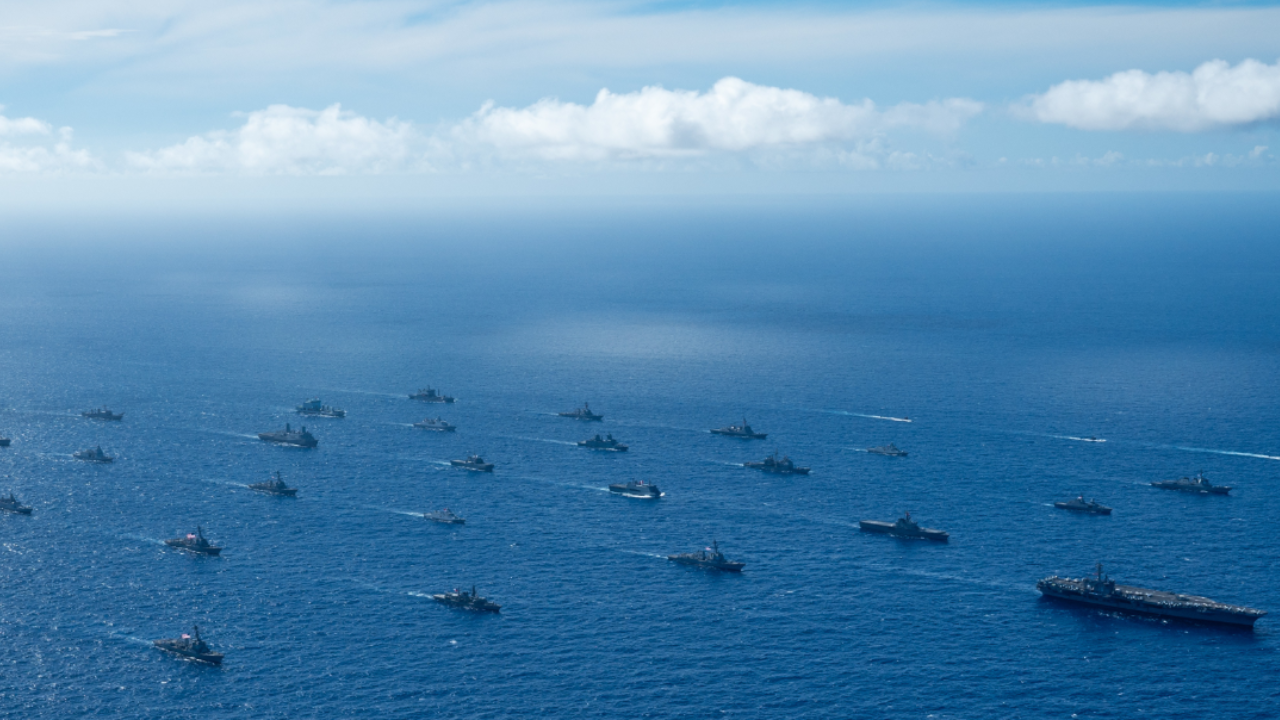
The conflict subsequently broke containment boundaries via the Red Sea theater. Utilizing accumulated asymmetric capabilities—including ballistic missiles, anti-ship cruise missiles, and uncrewed surface vessels—the Houthi movement leveraged its geographic position along the Bab el-Mandeb strait. By targeting international commercial shipping in response to the Gaza conflict, the de facto authorities elevated a localized domestic insurgency into a systemic disruption of global supply chains. This forced a direct U.S. and allied naval response, embedding Yemen’s internal collapse into wider geopolitical confrontations.
Strategic Outlook
The trajectory of the Yemeni crisis points away from unified state reconstruction and toward institutional permanence of partition. The fragmentation of monetary policy, the entrenchment of distinct security architectures across northern and southern territories, and the diversification of Houthi revenue streams independent of traditional state channels render a return to the pre-2014 status impossible. Future stability, if measurable, will depend entirely on managing low-intensity friction along demarcation lines while addressing the localized economic bottlenecks that continue to punish civilian populations across both zones of control.