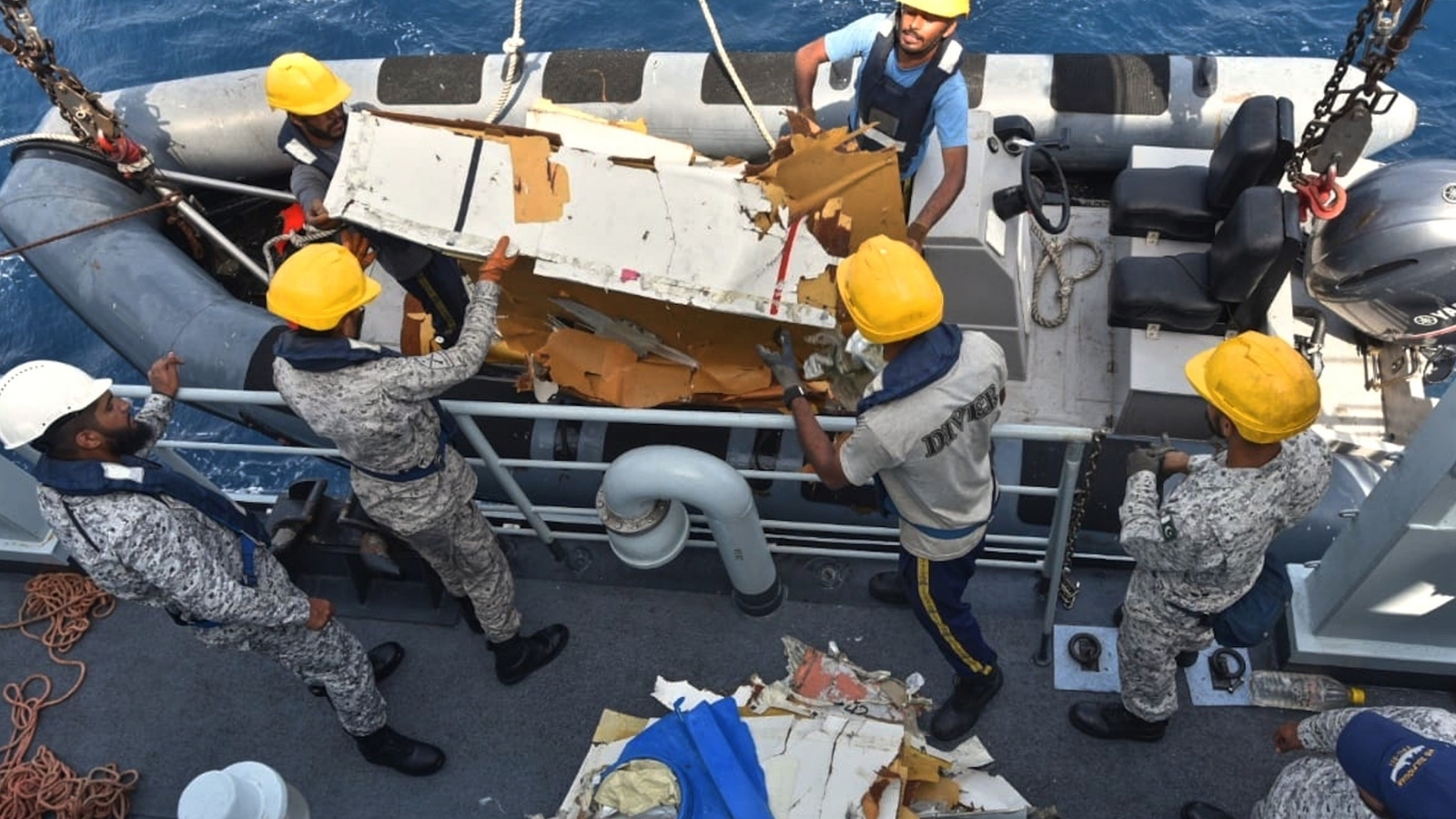
The wreckage of a Pakistani cargo aircraft discovered in the Arabian Sea reveals a crisis far deeper than a single mechanical failure or sudden weather anomaly. Search and rescue teams located the debris field days after the aircraft vanished from radar screens during its final descent toward Karachi, leaving five crew members missing. While initial official statements point toward sudden structural failure over water, the reality of air freight operations in the region suggests a systemic breakdown in aging fleet oversight and maintenance enforcement. This loss underscores an ongoing, unaddressed safety deficit in regional cargo corridors.
Air cargo operations frequently fly beneath the radar of public scrutiny until a hull loss occurs. Unlike commercial passenger airlines, which face immense consumer pressure and stringent international auditing, secondary freight carriers often operate on razor-thin margins. They utilize aging airframes cascaded down from passenger fleets. The investigation into this latest disappearance must look beyond the immediate telemetry data. It must examine the structural integrity of the regional supply chain itself.
The Mirage of Routine Oversight
Aviation authorities often treat cargo incidents as isolated operational anomalies. They are not. The vanished airframe was part of a class of aircraft under intensifying scrutiny for metal fatigue and corrosion, specifically accelerated by prolonged operation in high-humidity, high-salinity marine environments. Flying low over the Arabian Sea on routine freight runs subjects aluminum structures to relentless corrosive stress.
When a plane disappears from radar without a distress call, structural failure or catastrophic explosive decompression dominates the technical hypothesis. In the airspace surrounding Karachi, air traffic control centers have fought legacy communication dead zones for years. A crew battling an onboard emergency such as a sudden cargo shift or uncontained main-deck fire has seconds to react. If the electrical bus fails simultaneously, the aircraft drops off the scope, leaving investigators with a massive underwater grid and very few answers.
The commercial pressure on these crews remains immense. Turnaround times dictate profitability. In many regional hubs, cargo manifest verification relies heavily on self-reporting by freight forwarders rather than independent, rigorous weighing by airport authorities. An improperly secured pallet or an understated cargo weight can alter the center of gravity during descent, rendering an aircraft uncontrollable at low speeds.
The Blind Spots in Regional Air Freight
International aviation watchdogs have repeatedly warned about the disparity in safety cultures between passenger transport and non-scheduled cargo operators. The data speaks for itself.
| Metric | Passenger Operations (Regional) | Non-Scheduled Cargo Operations |
|---|---|---|
| Average Airframe Age | 11.4 Years | 26.8 Years |
| Regulatory Audit Frequency | Annual / Bi-Annual | Discretionary / Complaint-Driven |
| Flight Data Monitoring Integration | 98% | Less than 40% |
This statistical divide produces predictable, tragic outcomes. The age of the hull alone does not make a cargo plane inherently dangerous. Airworthiness depends entirely on the quality of maintenance and adherence to strict inspection intervals. However, when an operator faces economic headwinds, the deferral of non-critical maintenance items becomes a common, dangerous survival tactic.
The Problem With Deferred Maintenance Logs
Inspectors frequently encounter logs filled with "Minimum Equipment List" deferrals. These are non-essential systems that can legally remain broken for a set period to avoid grounding the aircraft.
In isolation, a single deferred item poses little threat. Cumulative degradation is another story entirely. A broken cargo hold temperature sensor, combined with a slightly degraded hydraulic pump and an uncalibrated weight sensor, creates a latent trap. When an unexpected emergency arises in mid-air, the crew discovers their redundant safety margins have vanished.
Infrastructure Deficiencies Along the Coast
Karachi remains a vital economic gateway, yet the approach corridors over the Arabian Sea lack the dense radar redundancy found in Western airspace. Once an aircraft drops below a certain altitude away from the primary radar head, it enters a tracking gray zone.
Modern Automatic Dependent Surveillance-Broadcast (ADS-B) technology has mitigated this somewhat, but its efficacy relies on the aircraft transmitting data continuously. If a catastrophic structural failure cuts the main power lines before the backup battery can kick in, the data stream dies instantly. Search teams are left guessing, analyzing ocean currents rather than flight tracks.
Deconstructing the Official Narrative
The immediate response from state aviation bodies follows a familiar script. Promises of thorough investigations are issued alongside expressions of grief for the missing crew. These statements serve to manage public perception rather than address systemic flaws. They frame the tragedy as an unpredictable act of God or a sudden, unpreventable mechanical anomaly.
This narrative ignores the paper trail. Aviation safety requires an aggressive, adversarial approach to auditing. When regulators rely on paperwork reviews rather than physical, unannounced ramp inspections of cargo holds, they miss the micro-fractures in the bulkhead. They miss the signs of improper cargo tie-downs. They miss the fatigue lines in the engines.
The hunt for the black boxes in the deep waters of the Arabian Sea will take weeks, possibly months. The acoustic pingers on flight data recorders have a limited battery life, and the sea floor topography in that region presents significant recovery challenges. Even if recovered, the data will only tell us what happened in those final, terrifying minutes. It will not document the years of regulatory indifference that allowed the aircraft to take off in that condition.
The Cost of Cheap Air Freight
Global supply chains demand cheap, rapid transport for electronics, textiles, and perishable goods. The low shipping rates celebrated by corporations are subsidized directly by the reduced operating costs of legacy freight carriers.
To break this cycle, the aviation industry requires a fundamental realignment of accountability. Freight forwarders must be held legally liable if they contract with carriers that fail basic safety benchmarks. Shippers can no longer hide behind third-party logistics buffers to shield themselves from the ethical consequences of choosing the lowest bidder.
The five crew members lost over the Arabian Sea were flying a route mapped out by economic necessity and governed by lax oversight. Their disappearance shouldn't be treated as a mystery. It is a predictable consequence of a system that values the cheap movement of goods over the rigid enforcement of safety standards. True reform will not come from searching the ocean floor for answers we already possess. It will come from grounding the planes that should have never been allowed to fly in the first place.