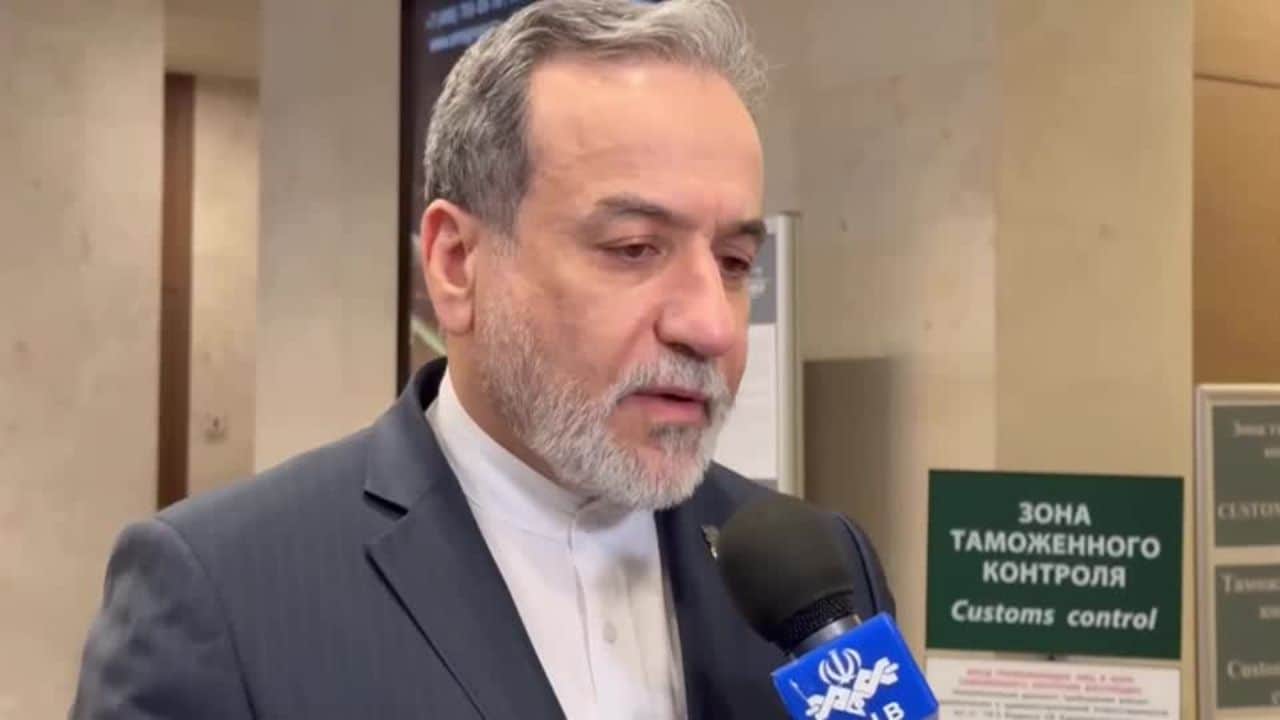
Iran’s top diplomat just reminded the world that the Strait of Hormuz isn't as secure as your local highway. Abbas Araghchi, Iran’s Foreign Minister, recently sat down to clarify a point that usually makes oil traders sweat. He claims the Strait of Hormuz remains open to all commercial vessels. It’s a bold statement. But he didn’t stop there. He added a "but" that carries the weight of global energy security.
You’ve seen this movie before. Every time tensions flare in the Middle East, the same waterway ends up in the crosshairs. Araghchi’s comments aren't just empty rhetoric; they're a calculated signal to the West and regional rivals. He’s essentially saying that while the gate is open today, Iran keeps its hand on the lock. If you’re watching gas prices or wondering why shipping insurance is skyrocketing, this is the reason why.
The Strategic Reality of the Strait of Hormuz
The geography here is a nightmare for logistics. We’re talking about a narrow strip of water that connects the Persian Gulf to the Gulf of Oman and the Arabian Sea. At its narrowest point, the shipping lanes are only two miles wide in each direction. Think about that. About 20% of the world's total petroleum liquids pass through this tiny chokepoint every single day.
Araghchi knows this. When he says the waterway is open "but" warns against provocations, he’s leveraging a geographic reality. If the Strait closes, there aren't many viable detours. Pipelines across Saudi Arabia or the UAE can handle some of the load, but they can't replace the sheer volume of the tankers.
Why Araghchi is Talking Now
The timing matters. Iran is navigating a complex web of sanctions, regional proxy conflicts, and a shifting relationship with the United States. Araghchi’s job is to project strength without accidentally starting a war he can't win. By stating that commercial traffic is safe, he's trying to look like the "reasonable" actor on the world stage. He wants to signal that Iran isn't the one looking for a fight.
However, the underlying message is clear. "We could stop this if we wanted to." It’s the ultimate geopolitical flex. By emphasizing that the Strait is open to those who follow the rules, he's leaving himself a massive loophole. Who defines those rules? In Tehran's eyes, they do.
What the "But" Actually Means for Shipping
When a high-ranking Iranian official adds a qualifier to a statement about free navigation, the shipping industry listens. It's not just about the Iranian Navy. It's about the IRGC (Islamic Revolutionary Guard Corps) and their fast boats.
Security in these waters isn't binary. It’s not just "open" or "closed." It’s about the cost of doing business.
- Insurance Premiums: Every time Araghchi mentions the Strait, insurance underwriters at Lloyd's of London adjust their risk models. Higher risk equals higher costs for every barrel of oil.
- Security Details: Tankers often have to hire private maritime security teams.
- Route Divergence: Some companies decide the stress isn't worth it and look for alternatives, though few exist for Gulf oil.
Araghchi’s "but" refers to perceived threats from the U.S. or Israel. If Iran feels backed into a corner—specifically regarding its own oil exports—it views the Strait as its primary defensive tool. It’s a "if we can't sell our oil, nobody can" mentality. It's aggressive, but from their perspective, it's the only card they have left to play.
Misconceptions About Closing the Strait
People often think "closing the Strait" means a physical blockade with ships lined up across the water. That’s not how it works in 2026. You don't need a wall of ships. You just need to make the area a "no-go zone."
A few well-placed mines, a couple of drone strikes, or even just a credible threat of missile fire is enough. No commercial captain is going to sail a billion-dollar cargo into a live combat zone. Iran doesn't have to physically block the water; they just have to make it uninsurable.
The Global Economic Fallout
If the rhetoric ever turns into reality, the shockwaves would hit your wallet faster than you think. Economists at places like the International Energy Agency (IEA) have run the numbers. A total blockage of the Strait could send oil prices north of $150 per barrel almost instantly.
This isn't just about gas prices. It's about the cost of plastic, the cost of shipping food, and the stability of global stock markets. Araghchi’s words are a reminder that the global economy is still incredibly fragile and dependent on a tiny stretch of water controlled by a government that feels it has nothing to lose.
The Role of International Navies
The U.S. Fifth Fleet, based in Bahrain, is the primary counterweight here. They spend billions to ensure that Araghchi’s "but" stays just a word and doesn't become an action. Operation Prosperity Guardian and other maritime coalitions are constantly patrolling these waters.
But there's a catch. International law is messy. While the UN Convention on the Law of the Sea (UNCLOS) protects "transit passage," Iran hasn't ratified the full treaty. They claim they only have to follow customary international law, which they interpret to their advantage. This legal gray area is exactly where Araghchi operates.
Tracking the Reality on the Water
If you want to know what’s actually happening, don't just read the headlines. Watch the AIS (Automatic Identification System) data. When you see tankers "going dark"—turning off their transponders—you know the tension is high.
Araghchi’s statement is meant to reassure, but it’s also a warning. He’s balancing on a knife’s edge. If he sounds too aggressive, he risks a pre-emptive strike. If he sounds too weak, he loses his leverage.
The reality is that as long as Iran is under heavy sanctions, the Strait of Hormuz will be used as a bargaining chip. It’s the most effective way for Tehran to get the world’s attention. They aren't going to give up that power easily.
Stay informed by watching the specific movements of the IRGC Navy in the Persian Gulf. If their activity spikes near the shipping lanes, Araghchi's "commercial vessels are safe" promise might be nearing its expiration date. Check the weekly reports from the United Kingdom Maritime Trade Operations (UKMTO) for real-time incidents. They provide the most accurate look at whether the words from Tehran match the actions at sea. If the incident rate climbs, start preparing for a spike in energy costs and potential supply chain disruptions. Don't wait for the official announcement of a closure; by then, the market will have already moved.