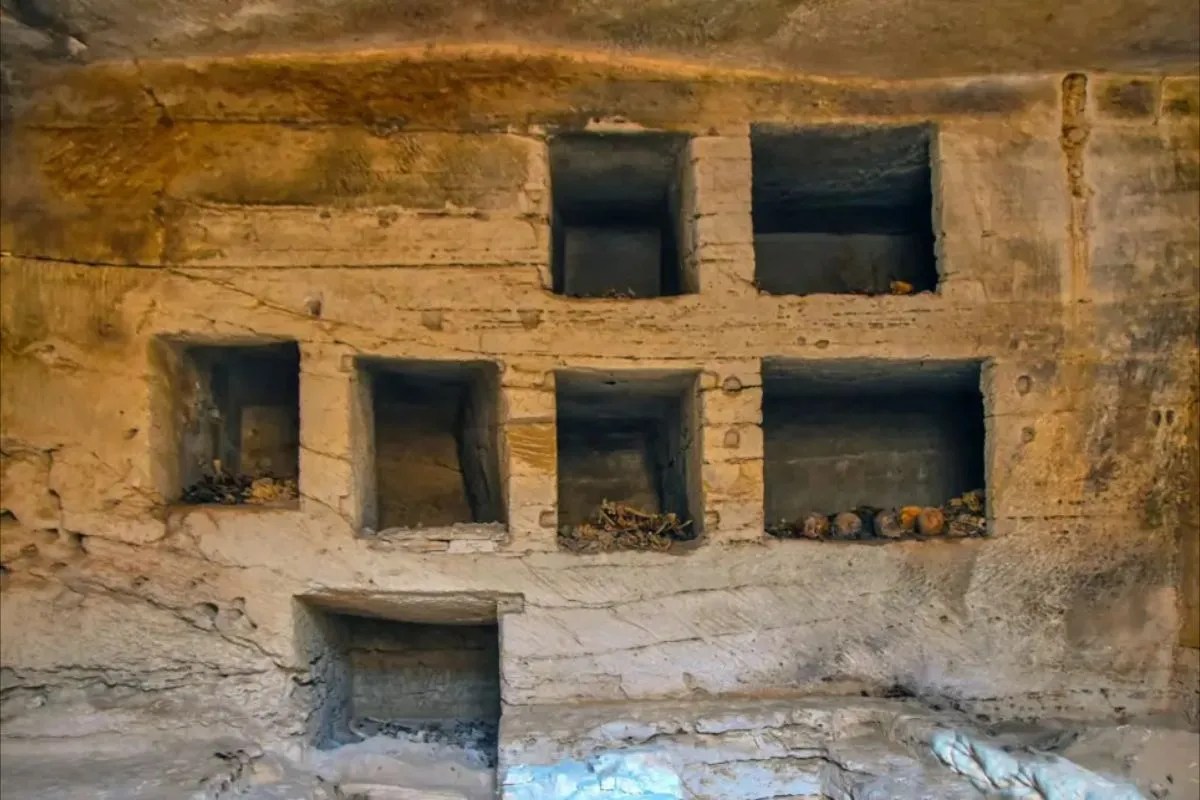
The mainstream media is suckered by a predictable script. Every time ground-penetrating radar hits a anomaly in the Egyptian sand, out come the breathless headlines. A 1,600-year-old city found perfectly preserved under the desert. Pristine walls. Intact pottery. The narrative sells an illusion: time froze, and we just uncovered a flawless time capsule.
It is a comforting fairy tale. It is also bad history.
The lazy consensus in modern archeology reporting treats "perfect preservation" as the ultimate prize. We are conditioned to marvel at the sheer luck of a city buried by the sand, remaining exactly as its citizens left it. But focusing on the immaculate physical structure misses the actual human mechanics of how ancient hubs operated, degraded, and died. A perfectly preserved city isn't a triumph of ancient engineering or a miraculous gift from the climate.
It is usually the signature of a catastrophic failure.
The Myth of the Pristine Discovery
When archeologists find a site that looks like the inhabitants walked out five minutes ago, the public gasps. They should be questioning the context.
Healthy cities do not get buried whole while looking brand new. They get recycled. They get cannibalized. They evolve. Throughout history, thriving urban centers are messy, continuous construction zones. If a 4th-century Roman-Egyptian settlement remains totally intact beneath the dunes, it means the regional economic engine failed so spectacularly fast that even the neighboring nomadic tribes did not bother to strip the timber or reuse the limestone.
Imagine a scenario where a modern tech hub is abandoned because the local aquifer dries up overnight. If nobody returns to salvage the copper wiring or the steel beams for a century, it does not mean the city was built to last forever. It means the entire region became a dead zone.
True historical insight does not live in pristine, untouched walls. It lives in the modifications, the hasty repairs, the garbage heaps, and the desperate retrofitting of a society trying to survive a crisis. When we obsess over how "secure" and "safe" a city looks after 1,600 years in the dirt, we are celebrating a ghost town that lost its utility long before the sand swallowed it.
Why the Desert Preservation Narrative is Flawed
Popular reporting loves to credit the harsh Egyptian desert for acting as a magical vault. The dry air and shifting sands get all the praise. This completely ignores the taphonomic realities of how sites actually decay.
- Subsurface Erosion: Just because a structure is underground does not mean it is static. Salt weathering (haloclasty) destroys stone from the inside out, driven by minor shifts in relative humidity beneath the sand.
- The Looting Variable: A site that remains entirely untouched for over a millennium suggests a total lack of local human geography for centuries. It tells us more about the shifting trade routes that abandoned the area than the durability of the buildings themselves.
- The Silt Factor: Many "desert" cities were actually built on seasonal waterways or agricultural fringes. Their burial is often the result of sudden catastrophic flash floods or rapid environmental degradation, not just a slow, poetic dusting of golden sand.
When we look at sites analyzed by heavy hitters in the field, like the meticulous stratigraphic work done across classic Oxyrhynchus or Amarna, the real data shows that preservation is highly uneven. A wall looks perfect on camera; the foundation is often total mush due to centuries of chemical interactions with the soil.
Stop Looking for Time Capsules
People looking into ancient discoveries always ask variations of the same flawed question: "What did the city look like at its peak?"
This is the wrong question entirely. A city never had a singular "peak." It was a chaotic, shifting experiment. By asking for a frozen snapshot, we force archeologists to prioritize aesthetic preservation over historical sequence. We end up with museums filled with beautiful, isolated artifacts that tell us absolutely nothing about the day-to-day systemic struggles of the people who made them.
I have seen research teams waste entire field seasons carefully uncovering a single, highly photogenic Roman-era mosaic while ignoring the layered, complicated Byzantine and early Islamic trash strata directly above it. Why? Because the pristine mosaic gets funding from donors and clicks from news outlets. The ugly, broken pottery fragments that show how a community survived a 5th-century trade embargo get thrown into a storage crate to gather dust.
This bias toward the beautiful creates a skewed understanding of our own resilience. If we only study the monuments that stayed pretty, we never learn how societies actually break down, pivot, and rebuild.
The Brutal Reality of Excavation
Let us be entirely honest about the downside of the contrarian approach. If we stop focusing on pristine discoveries and start focusing on the messy transitions, the public loses interest. Funding drops. It is incredibly difficult to raise millions of dollars to excavate a site that looks like a jumbled pile of mudbrick and broken glass, even if that site holds the key to understanding how an ancient province managed a massive agricultural collapse.
But continuing down the current path is a dead end. We are running out of unexcavated, pristine sites. The future of historical science is not going to be driven by finding another buried city under the dunes. It will be driven by re-evaluating the chaotic, ugly data we already dug up and threw in the basement because it did not look good in a press release.
Uncover the garbage heaps. Analyze the poorly patched walls. Stop worshiping the sand that buried them.