The air inside the Palais Coburg in Vienna always smells faintly of old wax, damp wool, and stale coffee. When the heavy doors swing shut, the noise of the Austrian capital vanishes. You are left with a silence that feels heavy, almost suffocating. For weeks at a time, men and women in dark suits pace these corridors, carrying folders stuffed with highly technical breakdowns of centrifuge efficiencies and enrichment percentages.
To the casual observer, international diplomacy looks like a chess match. It is not. Chess has clear rules, visible pieces, and an inevitable end. This is more like a psychological endurance test played in a dark room where the floor moves beneath your feet.
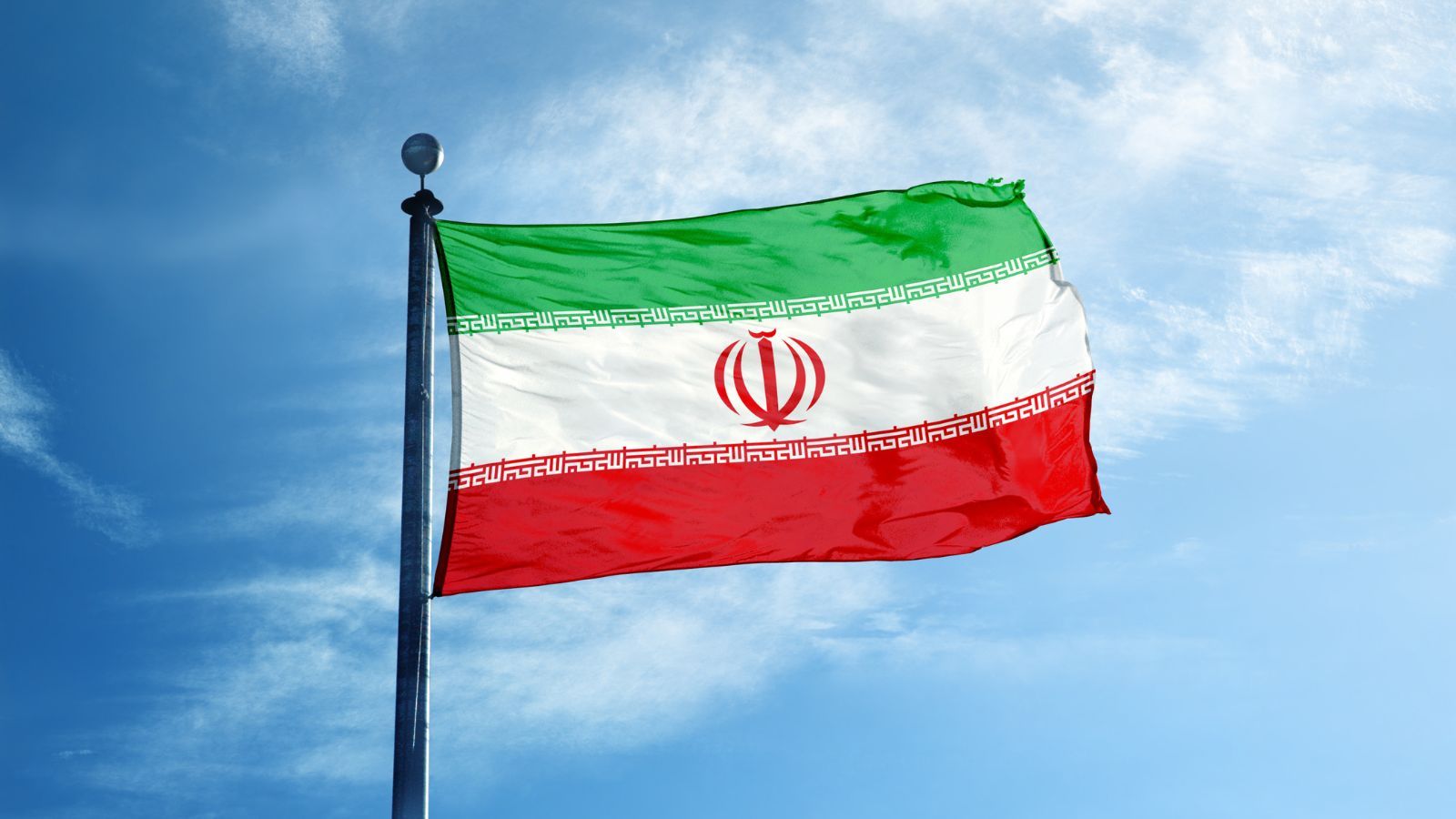
At the center of the latest standoff sits Iran’s chief negotiator. When he speaks to the cameras, his voice is flat. His expression remains entirely unreadable. The official wire reports, written in the sterile language of international journalism, sum up his latest press conference with a predictable headline: Tehran will not compromise in talks with US.
It is a collection of words that tells you absolutely nothing about what is actually happening.
To understand why a nation locks its jaw and refuses to budge, you have to look past the press releases. You have to look at what a stalemate actually costs the people who have to live through it.
The Weight of a Closed Door
Imagine a small, poorly lit pharmacy in a northern suburb of Tehran.
Let us call the pharmacist Dariush. This is a composite scenario, but the reality it describes is repeated thousands of times every single day across the Iranian plateau. Dariush spends his mornings on the phone, arguing with distributors, his fingers tracing the dust on near-empty shelves. He is trying to source specialized chemotherapy drugs for a regular customer whose daughter is running out of time.
Technically, medical supplies are exempt from international sanctions. The human reality is far more complicated. Because the global banking system has effectively cut Iran off, Western pharmaceutical companies cannot receive payments from Iranian banks. Shipping companies refuse to dock at Iranian ports out of fear of massive American fines.
Dariush has to explain to a desperate father why a package of life-saving medicine is stuck in a warehouse in Dubai, caught in a legal limbo that no one in the neighborhood fully understands.
This is the invisible baseline of the negotiations. When the American delegation sits down across the table from the Iranian team, this immense pressure is the primary tool the West relies on. The strategy is simple: make life so uncomfortable, so restrictive, and so economically painful for the ordinary citizen that the government is forced to bend.
But human psychology rarely works the way economists think it does.
When you push a community into a corner, they do not always blame the entity closest to them. Often, the pressure hardens the collective spine. The defiance we see from the top diplomats in Tehran is not just a political tactic; it is a calculated reflection of a domestic narrative that has been carefully cultivated for over forty years. That narrative says quite clearly: If we give them an inch today, they will take a mile tomorrow.
The Ghost at the Table
Every diplomatic negotiation is crowded with ghosts. You cannot understand the current deadlock without understanding the specter that haunts every single room the Iranians walk into. That ghost is the year 2018.
Consider the sheer amount of political capital it took to forge the original Joint Comprehensive Plan of Action (JCPOA) in 2015. It required years of back-channel meetings, secret flights to Oman, and grueling late-night sessions where diplomats literally shouted at each other until their voices cracked. Iran agreed to dismantle chunks of its nuclear infrastructure, pour concrete into the core of its heavy-water reactor, and open its facilities to the most intrusive international inspections in human history.
In exchange, the world promised economic normalization. For a brief, shining moment, European business executives flooded into Tehran hotels. Young Iranians celebrated in the streets, believing the walls were finally coming down.
Then, with the stroke of an American pen in 2018, the deal was dead.
The United States walked away, re-imposed every single sanction, and added hundreds more for good measure. From the perspective of the Iranian political establishment, they had played by the rules, delivered on their promises, and received nothing but economic devastation in return.
Now, put yourself in the shoes of that chief negotiator in Vienna.
Your critics back home—the hardliners who always argued that the West could never be trusted—are watching your every move. They are waiting for you to blink. If you offer a concession without a foolproof, legally binding guarantee that the next American administration won’t simply tear up the agreement again, your career is over. More importantly, your country's leverage is gone.
The Americans demand that Iran stop its advanced uranium enrichment before sanctions are lifted. The Iranians demand that the sanctions disappear before they slow down their centrifuges. It is a classic chicken-and-egg dilemma, but the stakes involve ballistic missiles and regional hegemony.
The Art of the Unyielding Stance
There is a distinct rhythm to Iranian diplomacy, deeply rooted in a cultural tradition of negotiation that predates the modern state by millennia. In the West, a negotiation is often viewed as a problem-solving exercise. You identify the issues, split the difference, and sign a contract.
In the Middle East, negotiation is an art form centered on endurance and the projection of absolute self-sufficiency.
When the top negotiator states that Tehran will not compromise, he is practicing a form of strategic stubbornness. It is designed to signal to Washington that Iran has adapted to the pain. It is a declaration that the "maximum pressure" campaign has reached the point of diminishing returns.
To make this point believable, Iran has spent the last several years building what it calls a "resistance economy."
- Smuggling routes have been formalized and streamlined.
- Dark-market oil tankers switch off their transponders to sell crude to eager buyers in Asia.
- Local manufacturing has stepped in to replace boycotted Western brands.
Is it efficient? No. Is it a healthy way to run a society? Absolutely not. Inflation is rampant, the currency is in a state of perpetual collapse, and the middle class is being systematically erased. But for the ruling elite, the resistance economy has done exactly what it was designed to do: it has kept the system alive long enough to deny the United States a total victory.
The diplomat’s refusal to compromise is backed by the hum of thousands of advanced centrifuges spinning deep underground in facilities like Fordow and Natanz. Every day the talks remain stalled, Iran’s breakout time—the period required to produce enough weapon-grade material for a nuclear device—shrinks.
The message is unspoken but crystal clear: Time is not working for you. It is working for us.
The Human Cost of a Stalled Clock
The danger of this high-stakes game of chicken is that both drivers believe the other will swerve first.
Washington assumes that the threat of internal unrest, driven by economic misery, will eventually force Tehran to make concessions. Tehran assumes that America’s deep aversion to another major conflict in the Middle East will prevent them from taking military action to stop the nuclear program.
Both assumptions are incredibly fragile.
While the men in Vienna argue over legal definitions and verification protocols, the fabric of everyday life continues to fray. The tragedy of modern sanctions is that they are a blunt instrument designed to hit a precise target. They rarely hit the politicians or the generals. The elites always find a way to secure their wealth, their foreign goods, and their medicine.
The weight falls squarely on the shoulders of the ordinary. It falls on the university graduate who cannot find a job that pays a living wage. It falls on the small business owner watching their life savings evaporate as the rial plummets. It falls on Dariush, looking at his empty pharmacy shelves, wondering if the next shipment will ever clear customs.
The negotiator steps back from the microphone, ignores the shouted questions from the international press corps, and walks back into the quiet, carpeted depths of the palace. The doors close, cutting off the sound of the world outside. The stalemate continues, frozen in a monument of absolute certainty, while outside those walls, the real world waits, holds its breath, and slowly burns.