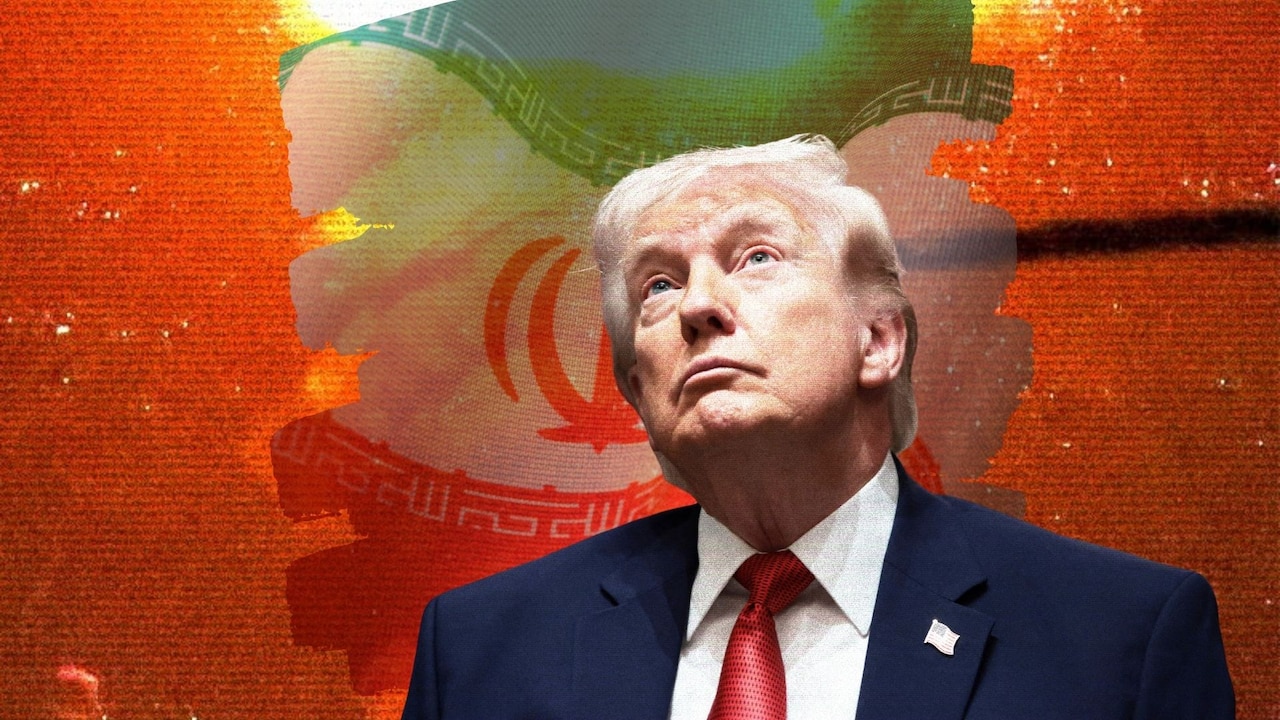
The map of the desert does not care who drew the lines. It shifts beneath the wind, erasing tracks, burying the rusted hulks of old iron and broken promises, waiting for the next surveyor with a red pencil.
Ask anyone who has stood in the stinging dust of the Levant or watched the twilight turn the Tigris the color of bruised copper: peace in this part of the world is never an arrival. It is merely a breath held between explosions. When reports surface from Washington and allied capitals that a returning administration is drafting a blueprint for something significantly larger in the wake of an Iran conflict, the immediate reflex in the West is to look for troop movements, carrier strike groups, and missile trajectories. But the true architecture of what comes next is rarely built with steel. It is built with ledgers, supply chains, and quiet agreements sealed in rooms where windows do not open.
Consider a hypothetical merchant in the port city of Aqaba. His grandfather traded spices by camel; his father traded manufactured goods by container ship; he trades in digital logistics and energy futures. To him, the abstract policy papers of foreign ministries are not geopolitical theories. They are the difference between whether his trucks cross a border in twenty minutes or rot in a three-mile queue of idling diesel engines. When distant capitals speak of a grand strategy for the Middle East following a major regional conflagration, the merchant listens for one thing above all else: integration.
For decades, foreign policy toward the region operated on a simple, flawed binary. You managed crises as they flared, dropped bombs when red lines were crossed, and doled out foreign aid like aspirin to a patient with a chronic fever. The strategy was reactive, exhausted, and fundamentally blind to the gravitational pull of regional economics.
Then came the Abraham Accords—flawed, incomplete, yet undeniably transformative. They proved that commercial self-interest could sometimes outpace historical grievance. Trade routes began to bypass traditional bottlenecks. Fiber-optic cables started cutting through the sand, linking financial centers that once treated each other as ghosts.
Now, intelligence and diplomatic circles suggest the blueprint is expanding. The ambition is no longer merely normalization between isolated states. It is the construction of a comprehensive economic and security security architecture that binds the Gulf, the Levant, and the Mediterranean into a singular, interdependent grid.
Water. Energy. Artificial intelligence data centers. Logistics corridors connecting the Indian Ocean to the Mediterranean through the heart of the Arabian Peninsula. These are the boring, unsexy nouns that actually dictate the survival of empires.
Yet, any honest assessment of this grand design must confront the shadow it casts. You cannot simply pave over decades of trauma, proxy warfare, and sectarian suspicion with a commercial contract. The ghosts of the past have a habit of showing up at the ribbon-cutting ceremonies.
When structural changes happen at this velocity, the human cost is measured in displacement and cultural vertigo. A young programmer in Tehran or a displaced farmer in the Bekaa Valley does not care about the grand trade corridors if their currency is losing value by the hour and their children cannot find clean water. If the new American-backed architecture for the region is built solely from the top down—negotiated in glass towers and enforced by distant security guarantees—it will fracture the moment the next crisis hits. Real durability requires stitching together the frayed edges of local economies, giving ordinary people a stake in stability that outweighs the romantic pull of perpetual resistance.
We have seen this movie before. The British drew lines in the sand with rulers and ink. The Americans arrived later with doctrines and coalition forces, trying to manage the fallout of collapsing states. Each iteration promised a final solution to the eternal Eastern Question. Each iteration discovered that the region has an infinite capacity to absorb foreign ambitions and digest them.
This time, however, the incentives are changing. The global economy is pivoting away from fossil fuel dependence toward critical minerals, tech infrastructure, and diversified supply chains. The Gulf states are racing against a post-oil clock, investing billions in domestic transformation that requires regional stability to survive. They cannot afford another decade of proxy wars that turn their gleaming skyscrapers into cautionary tales.
This is why the talk of something larger is different. It is driven less by ideological crusades and more by cold, existential panic. If the nations of the region do not build an integrated future together, the centrifugal forces of climate change, demographic explosion, and radicalism will tear them apart from within.
The danger, of course, is overreach. To attempt to redesign an entire civilization's ecosystem through executive orders and backroom deals is an act of breathtaking hubris. History is littered with the bones of statesmen who thought they could pacify the Middle East by rearranging its furniture.
Walk through the old souk in any ancient city across this geography, and you will understand the resilience of the human spirit here. Empires come and go. Caliphates rise and crumble. Superpowers project power, grow tired, and withdraw. Through it all, the baker bakes his bread, the merchant counts his coins, and life finds a way to fill every available crack in the ruins.
The next chapter will not be dictated by a single speech in Washington or a breakthrough agreement signed on a lawn in Washington. It will be decided in the daily friction between what leaders want and what reality permits. It will be won or lost in the dusty border crossings, the desalination plants, the classrooms, and the quiet choices of millions of people who simply want to wake up, go to work, and watch their children grow old without ducking for cover.
The desert wind rises outside the window, rattling the glass. The old maps are already yellowing at the edges. Somewhere in the dark, the pencils are moving again, drawing lines for a future that has not yet learned how to forgive.



