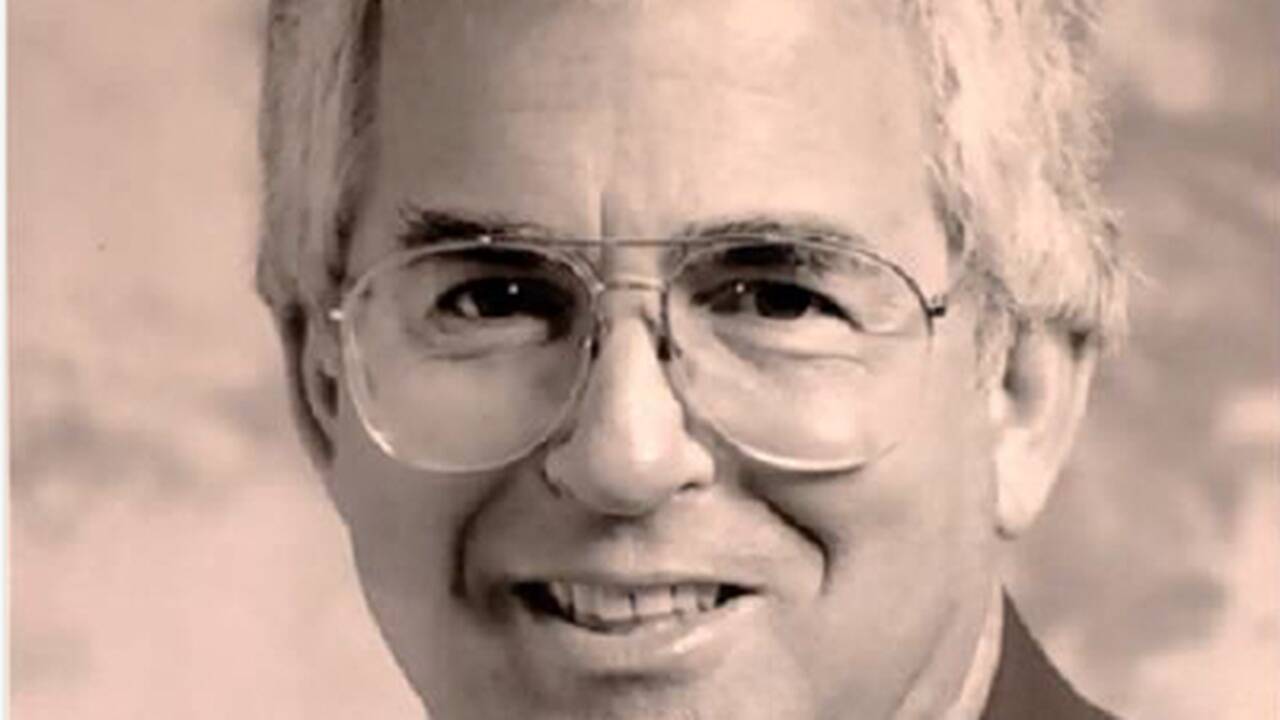
Philanthropic impact is typically evaluated through the lens of episodic emotion rather than structural engineering. When philanthropic capital is deployed reactively, it suffers from severe friction losses, administrative overhead, and temporal decay. A fundamental economic restructuring of how ordinary wealth is accumulated, preserved, and directed can fundamentally alter these dynamics. The case of Geoffrey Woofter—a retired carpenter who quietly accumulated nearly three million dollars while funding college tuition for thirty-three strangers posthumously—provides a rare empirical case study in extreme capital efficiency, aggressive savings discipline, and delayed-gratification portfolio construction.
Deconstructing this financial footprint reveals a masterclass in behavioral arbitrage, compound growth velocity, and asset protection. By analyzing the mechanics behind this accumulation model, wealth managers and systematic savers can derive replicable principles for long-term resource generation outside traditional institutional frameworks. Read more on a related subject: this related article.
The Cost Function of Working Class Accumulation
The primary constraint facing individuals outside the top income deciles is not necessarily absolute earnings potential, but the ratio of fixed consumption to discretionary cash flow. Modern consumer economies are engineered to capture marginal capital immediately via lifestyle inflation, subscription models, and short-duration credit instruments.
To accumulate a multi-million-dollar portfolio on a standard wage-earner salary, an individual must achieve a structural inversion of this cost function. This requires three distinct variables: Further journalism by Forbes explores similar perspectives on this issue.
- Consumption Minimization via Asset Utility: Prioritizing utility over signaling. Tools, housing, and transportation must be treated strictly as depreciating instruments of production rather than status markers.
- Asymmetric Savings Rates: Moving past the standard financial advisory benchmark of ten to fifteen percent savings, achieving effective savings rates exceeding fifty to seventy percent of net income.
- Frictionless Capital Retention: Eliminating financial intermediaries, advisory fees, and transactional velocity that erode principal over decades.
When a baseline earner operates with these constraints, the math shifts. The accumulation of three million dollars over a working lifetime on a carpenter's salary is not an anomaly of luck; it is the logical output of sustained, low-beta index accumulation paired with zero structural debt. Every dollar retained at age twenty-five possesses a compounded terminal value that dwarfs current purchasing power due to the exponential nature of equity returns over forty-year horizons.
Capital Preservation and Equity Accumulation Mechanics
The transformation of modest, steady earnings into a multi-million-dollar bequest requires exposure to productive assets. Cash held in institutional deposit accounts acts as a depreciating asset due to systemic monetary expansion. Therefore, capital must be migrated into vehicles that capture broad market productivity.
The structural mechanics of this process rely on passive equity accumulation. By channeling surplus capital into broad-market equity indices or high-integrity real estate assets, the individual bypasses the administrative drag of active fund management. Active management introduces a structural drag through management expense ratios, transaction costs, and tax inefficiency caused by high portfolio turnover.
The Compounding Velocity Equation
The rate of portfolio expansion is governed by the formula for compound interest, adjusted for tax friction:
$$A = P \left(1 + \frac{r}{n}\right)^{nt}$$
In an optimized retail portfolio, minimizing $n$ (transaction frequency) and maximizing $r$ (holding low-cost index products) while reducing tax realization events creates an optimal growth environment. Woofter’s strategy functioned precisely within this framework. By avoiding premature liquidity events, capital continued to compound free of capital gains drag. The absence of high-interest consumer liabilities ensured that the net rate of return was never subverted by negative arbitrage, where the cost of borrowing exceeds asset yield.
The Execution of Posthumous Philanthropic Mandates
Directing accumulated capital toward educational endowments after death requires precise legal structuring. Philanthropy executed via wills and testamentary trusts bypasses the emotional and administrative biases that often plague living donors.
Living philanthropy is frequently hijacked by immediate social feedback loops, institutional vanity, and administrative bloat. Educational funding, when structured through designated bequest instruments, operates with clinical precision. By specifying exact disbursement parameters—such as tuition coverage for individuals lacking generational wealth—the donor establishes a rules-based execution algorithm that removes human discretion from the distribution phase.
The Mechanics of Endowed Human Capital
Funding education for strangers is an investment in human capital externalities. Unlike direct charitable aid, which can create dependency loops, educational capital injection alters the lifetime earning capacity and productivity ceiling of the recipient.
- Input: Fixed capital allocation deployed via a third-party estate executor or trust.
- Throughput: Zero administrative extraction by utilizing existing institutional financial aid offices to identify candidates based on merit and financial need.
- Output: Permanent elimination of student debt servicing friction for thirty-three distinct economic actors, generating a decentralized network of high-yield human capital.
The efficiency of this model lies in its low overhead. Modern non-profit entities often consume thirty to fifty percent of incoming capital in administrative salaries, fundraising overhead, and marketing. A direct posthumous educational trust bypasses these intermediaries, ensuring that nearly one hundred percent of the principal and accumulated yield reaches the end beneficiary.
Behavioral Arbitrage and Social Signaling Defiance
The psychological profile required to sustain this level of capital discipline demands complete independence from social signaling norms. Modern society relies on conspicuous consumption as a proxy for competence and social standing. Choosing to live below one's means while possessing the capacity for higher consumption requires an internal value framework that rejects external validation.
This behavioral trait is the ultimate asset in personal finance. Individuals who master delayed gratification decouple their self-worth from material accumulation. Consequently, they avoid the psychological traps that force middle- and upper-middle-income earners into bankruptcy or chronic debt.
The sacrifice is front-loaded, while the optionality and legacy are back-loaded. Most individuals invert this, choosing immediate consumption and deferred anxiety. The structural architect of long-term wealth accepts immediate obscurity for the sake of ultimate optionality and systemic impact.
Systemic Limitations and Strategic Boundaries
No financial model is without vulnerability. Concentrating life energy into capital accumulation carries inherent structural risks that must be analyzed objectively.
- Sequence of Returns Risk in Reverse: While accumulation relies on consistent input, an unexpected macro-economic shock or health crisis late in life can force capital liquidation under unfavorable market conditions.
- Opportunity Cost of Extreme Abstinence: Every dollar withheld from consumption is a trade-off against immediate lived experience. Extreme frugality carries a human cost that cannot be quantified purely on a balance sheet.
- Counterparty and Execution Risk: Posthumous execution depends entirely on the integrity of legal instruments, executors, and institutional trustees. If the legal framework governing the will or trust is ambiguously drafted, legal challenges can consume a significant portion of the principal before distribution occurs.
These limitations demonstrate that the strategy is not a universal prescription for human flourishing, but rather a hyper-specialized optimization algorithm for capital creation and legacy deployment.
Strategic Execution Blueprint
To operationalize the principles extracted from this model, asset builders must implement a systematic framework:
- Audit Fixed Consumption: Dissect all monthly expenditures into survival utility versus discretionary signaling. Eliminate or automate the reduction of the latter.
- Automate Equity Allocation: Establish direct, programmatic transfers from earnings to low-cost, broad-market equity instruments on every pay cycle, removing human decision-making from the investment process.
- Eliminate Toxic Liabilities: Purge all non-revenue-generating debt immediately. Treat interest payments as a direct tax on future freedom.
- Codify Legacy Intent Early: Construct explicit, legally binding testamentary instructions that bypass intermediate bureaucratic layers, ensuring capital is deployed directly to high-leverage human capital targets upon exit.
The legacy of a carpenter who accumulated millions through silent discipline is a testament to the power of systemic consistency over episodic brilliance. Wealth is not a function of income magnitude; it is the mathematical residual of discipline, time, and structural efficiency.